Bloomberg News
@Bloomberg-News·2.8M subscribers·40.1K videos
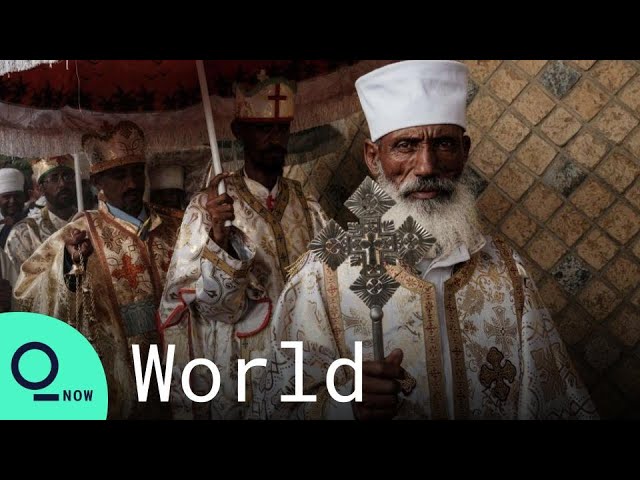
Ethiopians Pray For a Peaceful Presidential Election
Posted
June 20, 2021
Views
3,745
Likes
58
Comments
27
Engagement
2.27%
June 20, 2021
3,745
58
27
2.27%
Every word spoken in this episode is indexed. Type any phrase to jump straight to the moment it was said.
Type any word or phrase that may have been spoken. Click a result to seek the player to that exact moment.
Try a name, a topic, or a quoted line
See what was published immediately before and after this episode.
 1:12Now Playing
Ethiopians will vote Monday in a landmark election overshadowed by reports of famine in the country’s war-hit Tigray region and beset by logistical problems that mean some people won’t be able to vote until September.
The election is the centerpiece of a reform drive by Prime Minister Abiy Ahmed, whose rise to power in 2018 seemed to signal a break with decades of authoritarian rule and led to his Nobel Peace Prize the following year. He has described the poll as “the nation’s first attempt at free and fair elections.”
Abiy’s ruling Prosperity Party, formed in 2019 by merging groups who made up the previous ruling coalition, is widely expected to cement its hold on power. The party that wins a majority of seats in the House of Peoples’ Representatives will form the next government.
“We will secure Ethiopia’s unity,” Abiy said ahead of his final campaign rally on Wednesday, repeating his vow of a free and fair election after past votes were marred by allegations of fraud.
But opposition groups have accused Ethiopia’s ruling party of harassment, manipulation and threats of violence that echo abuses of the past.
And Abiy is facing growing international criticism over the war in Ethiopia’s northern Tigray region. Thousands of civilians have been killed and more than 2 million people have been displaced since fighting broke out in November between Ethiopian forces, backed by ones from neighboring Eritrea, and those supporting the now-fugitive Tigray leaders.
Last week, humanitarian agencies warned that 350,000 people in Tigray are on the brink of famine, a crisis that several diplomats have described as “manmade” amid allegations of forced starvation. Ethiopia’s government has rejected the figure and says food aid has reached 5.2 million in the region of 6 million.
No date has been set for voting in Tigray’s 38 constituencies, where military personnel who usually play a key role in transporting election materials across Africa’s second-most populous country are busy with the conflict.
Meanwhile, voting has been postponed until September in 64 out of 547 constituencies throughout Ethiopia because of insecurity, defective ballot papers and opposition allegations of irregularities. Outbreaks of ethnic violence have also killed hundreds of people in the Amhara, Oromia and Benishangul-Gumuz regions in recent months.
Some prominent opposition parties are boycotting the election. Others say they have been prevented from campaigning in several parts of the country.
“There have been gross violations,” Yusef Ibrahim, vice president of the National Movement of Amhara, said earlier this month. He said his party had been “effectively banned” from campaigning in several regions, with some party members arrested and banners destroyed.
Neither officials with the Prosperity Party nor Abiy’s office responded to requests for comment on such allegations.
Ethiopia last year postponed the election, citing the COVID-19 pandemic, adding to the tensions with Tigray’s former leaders. Recently the vote was delayed again by several weeks amid technical problems involving ballot papers and a lack of polling station officials.
Abiy’s Prosperity Party has registered 2,432 candidates in the election, which will see Ethiopians voting for both national and regional representatives. The next largest party, Ethiopian Citizens for Social Justice, is fielding 1,385 candidates. A total of 47 parties are contesting the election.
But on Sunday, five opposition parties released a joint statement saying that campaigning outside the capital, Addis Ababa, “has been marred by serious problems, including killings, attempted killings and beatings of candidates.”
Two prominent opposition parties, the Oromo Liberation Front and the Oromo Federalist Congress, are boycotting the vote. “It’s going to be a sham election,” OFC chairman Merera Gudina said earlier this month.
Subscribe to our YouTube channel
Bloomberg Quicktake brings you live global news and original shows spanning business, technology, politics and culture. Make sense of the stories changing your business and your world.
To watch complete coverage on Bloomberg Quicktake 24/7, visit or watch on Apple TV, Roku, Samsung Smart TV, Fire TV and Android TV on the Bloomberg app.
Have a story to tell? Fill out this survey for a chance to have it featured on Bloomberg Quicktake
Connect with us on…
Breaking News on YouTube
Sentinel Indexing in Progress
Metadata and chapters are available. Claim extraction for this episode is pending.
All video content is delivered via YouTube embedded players in accordance with the YouTube Terms of Service. Sentinel provides research tools that promote discovery and accountability across political media.