
Bloomberg News
@Bloomberg-News·2.8M subscribers·40.1K videos
MRNA Vaccine Access Carves Up World Into Haves and Have-Nots
Posted
July 16, 2021
Views
29
Likes
1
Engagement
3.45%
July 16, 2021
29
1
3.45%
Every word spoken in this episode is indexed. Type any phrase to jump straight to the moment it was said.
Type any word or phrase that may have been spoken. Click a result to seek the player to that exact moment.
Try a name, a topic, or a quoted line
See what was published immediately before and after this episode.
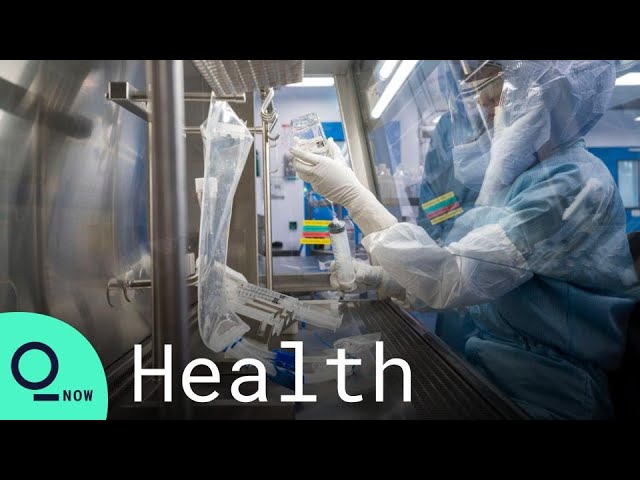 2:43Now Playing
The latest surge in Covid-19 cases is widening one of the biggest inequities of the pandemic era: The gap between nations that have messenger RNA vaccines and those that don’t.
The cutting-edge technology, which made its debut during the pandemic, has proven more effective than any other in staving off infections and serious illness from the coronavirus. Yet just a handful of facilities in the U.S. and Western Europe account for almost all of the world’s mRNA vaccine supply -- leaving many countries in a desperate race to catch up.
From South Korea to Indonesia and South Africa, governments are seeking to set up mRNA production and develop other collaborations in the space, but they’re also realizing it could take them years to master the new science, leaving their countries reliant on less potent vaccines that potentially expose them to repeated waves of Covid and delay their economies from re-opening.
In South Africa, where Covid shots are in such short supply they’ve only distributed enough to cover about 5% of the population, the government last month teamed up with the World Health Organization and local drug manufacturers on an ambitious plan to turn the country into a hub for the first Made-in-Africa mRNA vaccines.
One critical element was missing from the plan: A company that knows how to make mRNA vaccines. For the fastest access, the South African hub would need one of the three developers already producing mRNA Covid shots to transfer their knowhow, but so far Cambridge, Mass.-based Moderna Inc. hasn’t committed, and neither has New York-headquartered Pfizer Inc. or its German partner BioNTech SE.
“These are businesses, we know that it’s not very easy for them to make decisions,” Bartholomew Dicky Akanmori, the WHO’s regional advisor on vaccine regulation, quality and safety for Africa, said in an interview. “They are reluctant.”
Without that kind of access, scientists in places like South Africa would need to perfect the tricky process of making an mRNA vaccine, which involves steps like the production of lipid nanoparticles, the vehicles used in an mRNA shot to deliver genetic code that helps trigger the body’s immune response.
They’d then have to then develop, test and mass-produce the vaccines, which could potentially take years and require resources that many nations, especially poorer ones, don’t have access to. With mRNA technology set to be used in everything from shots to combat other viruses to cancer drugs, that lack of infrastructure could put them on the pharmaceutical back-foot for years.
The mRNA supply gap is most obvious in Africa, where few people have access to them, said Hannah Wanjie Ryder, chief executive officer at Development Reimagined, a Beijing-based NGO focused on Africa and China. That’s left them reliant on vaccines which use older technology like those made by Sinopharm Group, Sinovac Biotech Ltd. or AstraZeneca Plc which largely protect against severe cases of Covid-19, but are less effective at stopping transmission and combating the contagious new variants that are emerging.
But it’s not just the poorest nations concerned about mRNA access. Achieving domestic production of mRNA shots has become a national security issue in some countries, given the supply-chain glitches, export curbs and demand spikes that have beset the wider Covid vaccine rollout.
Biggest Vaccine Maker’s Problems Keep World Short of Covid Shots
“People in Korea say to the government why don’t we have such vaccines of our own?” said Sun Woo Hong, CEO of a new vaccine subsidiary of OliX Pharmaceuticals Inc., which is based near South Korea’s capital Seoul. “As a Korean, to have the mRNA vaccine development platform in Korea is very important.” The company last month agreed to collaborate on an mRNA vaccine with local conglomerate Samyang Holdings Corp. and on mRNA products for other diseases with GC Pharma.
Subscribe to our YouTube channel
Bloomberg Quicktake brings you live global news and original shows spanning business, technology, politics and culture. Make sense of the stories changing your business and your world.
To watch complete coverage on Bloomberg Quicktake 24/7, visit or watch on Apple TV, Roku, Samsung Smart TV, Fire TV and Android TV on the Bloomberg app.
Have a story to tell? Fill out this survey for a chance to have it featured on Bloomberg Quicktake
Connect with us on…
Breaking News on YouTube
Sentinel Indexing in Progress
Metadata and chapters are available. Claim extraction for this episode is pending.
All video content is delivered via YouTube embedded players in accordance with the YouTube Terms of Service. Sentinel provides research tools that promote discovery and accountability across political media.


