Bloomberg Podcasts
@bloombergpodcasts·503K subscribers·32.4K videos
There Are Still Opportunities in Financial Markets: Jeff deGraaf
Posted
April 22, 2025
Views
3,474
Likes
44
Comments
3
Engagement
April 22, 2025
3,474
44
3
1.35%
Every word spoken in this episode is indexed. Type any phrase to jump straight to the moment it was said.
Type any word or phrase that may have been spoken. Click a result to seek the player to that exact moment.
Try a name, a topic, or a quoted line
 11:40Now Playing
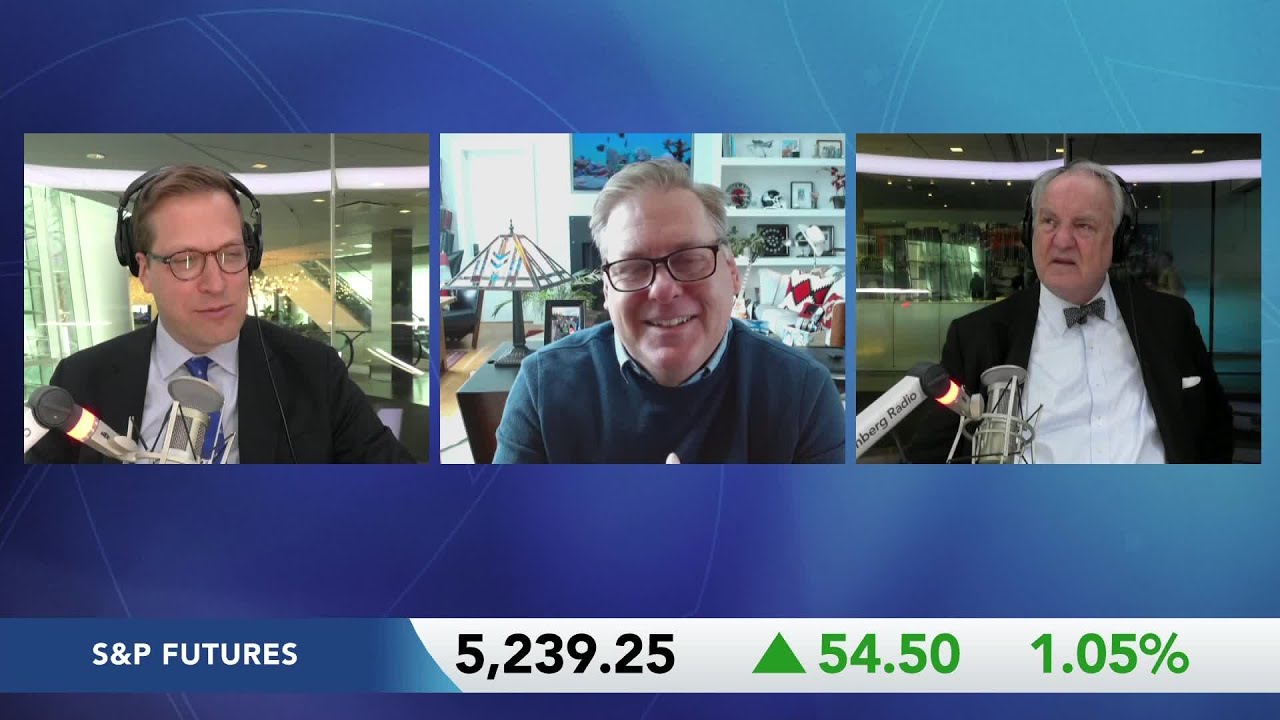
Jeff deGraaf, Chairman and Head: Technical Research at Renaissance Macro Research, joins for a discussion on Jay Powell, market risks, and tariffs. US stocks were higher in futures trading this morning as equities are set to bounce back from Monday's losses and investors weigh progress on trade talks with India and Tesla's upcoming earnings. He speaks with Bloomberg's Tom Keene and David Gura.
The International Monetary Fund sharply lowered its forecasts for world growth this year and next, warning the outlook could deteriorate further as US President Donald Trump’s tariffs spark a global trade war.
The downgrades add weight to similar warnings from several Wall Street banks in recent weeks, with JPMorgan Chase & Co. and Goldman Sachs Group Inc. saying the chances of a recession in the US have spiked.
The IMF cut its projection for global output growth this year to 2.8% in its updated World Economic Outlook released Tuesday. That’s lower than its January forecast of 3.3% and would be the slowest expansion of gross domestic product since the Covid-19 pandemic in 2020. It would also be the second-worst figure since 2009.
The fund reduced its estimate for next year to 3%, a drop of 0.3 percentage points.
For the US, the trade war will stoke a supply shock that drives up prices and weighs on productivity, the IMF said. For trading partners, the higher duties will translate as a demand shock that hits output and prices.
Effective tariff rates in the US have jumped to levels not seen in a century, the IMF said. While the US will probably avoid a recession this year, the IMF has raised the possibility to 40% from 27% in October.
“We are entering a new era,” IMF Chief Economist Pierre-Olivier Gourinchas said in a briefing with reporters. “The global economic system that has operated for the last 80 years is being reset.”
US stocks, the dollar and long-dated Treasuries have been under heavy pressure amid the Trump onslaught. They all sunk further on Monday as he upped calls for the Federal Reserve to slash interest rates, which exacerbated concerns among traders about the central bank’s independence and the direction of the world’s biggest economy. The S&P 500 Index pared losses on Tuesday, but has still plunged around 11% since the end of 2024. The dollar is down 7% versus a basket of major currencies.
The US and China were among countries to see the biggest IMF downgrades.
The US is forecast to grow 1.8% this year and 1.7% in 2026, a cut of 0.9 and 0.4 percentage points, respectively. The IMF increased its forecast for US inflation in 2025 by roughly one percentage point to 3%.
China is tipped to grow 4% this year and next, down by 0.6 and 0.5 percentage points. Its expansive fiscal policy will go some way to easing the impact of tariffs, according to Gourinchas.
The world’s growth prospects would improve immediately if trade tensions calmed and long-standing complaints about non-tariff barriers and trade-distorting measures by some countries were addressed, the IMF said.
Still, it said the near-term risk is of further trade-war escalation with knock on consequences for growth. The Washington-based fund cut its forecast for global trade growth this year by 1.5 percentage points and sees only a slight recovery next year.
“The risks to the global economy have increased and are firmly to the downside,” Gourinchas said.
The IMF cautioned that many scenarios are possible given the uncertainty surrounding trade policy. It said it jettisoned projections that had been nearly finalized before April 2, when Trump announced sweeping tariffs on the world, and was forced to compress a forecasting cycle that typically takes over two months into 10 days.
In an explainer of how it compiled the new forecasts amid the turmoil, the IMF said it used a reference forecast — or a central scenario — based on information available as of April 4, rather than a baseline forecast.
--------
Watch Bloomberg Radio LIVE on YouTube
Weekdays 7am-6pm ET
Follow us on X
Subscribe to our Podcasts:
Bloomberg Daybreak
Bloomberg Surveillance
Bloomberg Intelligence
Balance of Power
Bloomberg Businessweek
Listen on Apple CarPlay and Android Auto with the Bloomberg Business app:
Apple CarPlay
Android Auto
Visit our YouTube channels:
Bloomberg Podcasts
Bloomberg Television
Bloomberg Originals
Sentinel Indexing in Progress
Metadata and chapters are available. Claim extraction for this episode is pending.
All video content is delivered via YouTube embedded players in accordance with the YouTube Terms of Service. Sentinel provides research tools that promote discovery and accountability across political media.