Bloomberg Podcasts
@bloombergpodcasts·503K subscribers·32.4K videos
US-China Truce 'Dramatically' Reduces Recession Odds: Lazar
Posted
May 12, 2025
Views
1,390
Likes
12
Comments
13
Engagement
May 12, 2025
1,390
12
13
1.80%
Every word spoken in this episode is indexed. Type any phrase to jump straight to the moment it was said.
Type any word or phrase that may have been spoken. Click a result to seek the player to that exact moment.
Try a name, a topic, or a quoted line
 9:48Now Playing
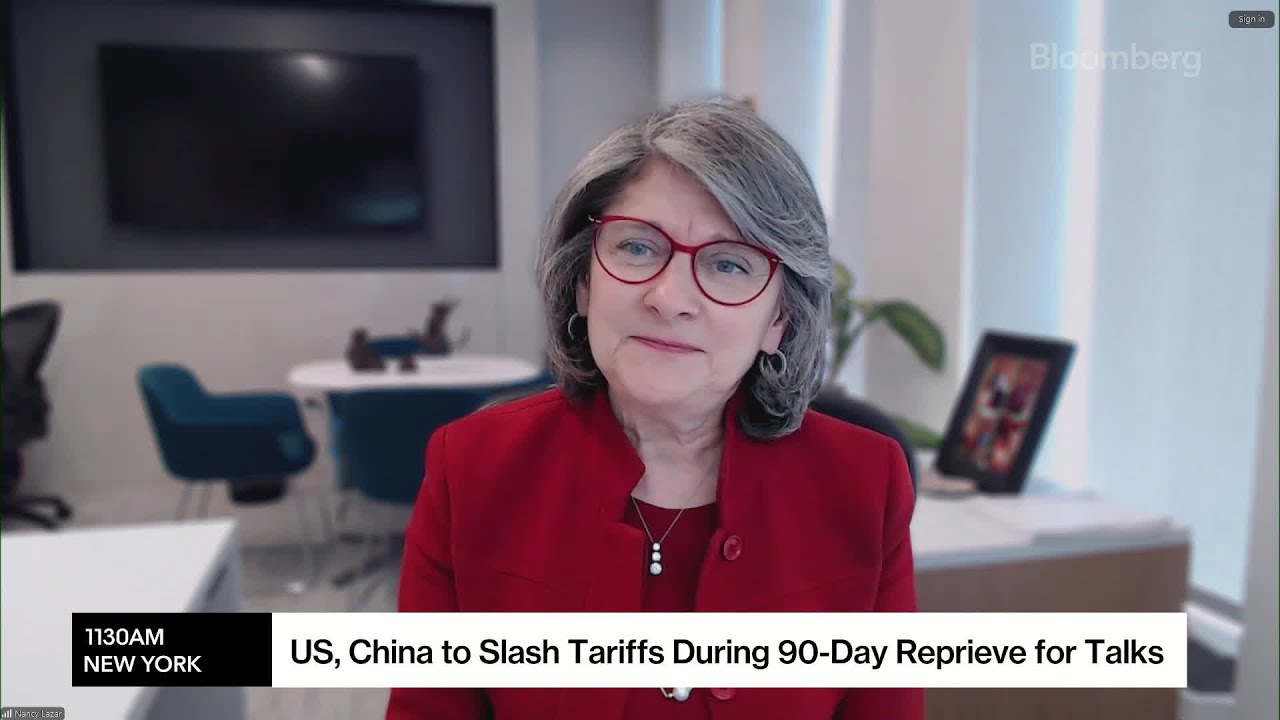
Nancy Lazar, chief global economist at Piper Sandler, talks the economic impact of the temporary trade truce between the US and China and why she's taking an optimistic outlook on tariff negotiations.
With Wall Street kicking off another rally, American stocks are now trading like Donald Trump’s “Liberation Day” shock never happened.
The S&P 500 jumped 2.6%, and the Nasdaq 100 Index was on the cusp of a bull market, powered by a resurgence in megacap tech shares. The dollar rose and Treasuries fell, while traders pared back their expectations for US interest-rate cuts this year.
The easing of trade tensions between the US and China gives investors their clearest indication yet that the Trump administration is taking a softer approach to the clashes that upended global markets just a few weeks ago. With hopes riding high that the US economy can avoid a recession, traders now expect the Federal Reserve to lower rates just twice in 2025.
“People are taking off some of the recession trades they had,” said Mark Dowding, chief investment officer of BlueBay Fixed Income. “This all makes sense as there had been this legitimate fear that we could end up with some sort of cliff-edge event, where the US economy really hit the buffers hard with trade coming to a bit of a sudden halt. And that has now been pushed back.”
Big tech stocks, which had been hammered in the selloff, led the advance. Meanwhile, safe haven assets dropped, with gold, the Japanese yen and the Swiss franc sinking in unison. The euro fell as much as 1.6% to $1.1072, putting it on track for its worst day this year.
Swaps tied to Fed meetings now favor a quarter-point reduction in September. Last week, they indicated three cuts this year, with a change likely as soon as July.
Some investors were wary about the lack of detail in Monday’s announcement and the risk of another flare-up between Beijing and Washington. US President Donald Trump said he would likely speak to Chinese leader Xi Jinping later this week.
While the two countries have three months to work through their differences, that’s not a lot of time to negotiate a complex trade dispute. It’s also unclear what the goal is at the end of the cooling-off period. Asked what would happen at the end of 90 days to avoid tariffs ratcheting back up, Treasury Secretary Scott Bessent indicated there’s a chance to extend the truce further.
In the meantime, Chinese exporters will likely use the time to ship even more products to the US or through other countries, exacerbating imbalances.
--------
Watch Bloomberg Radio LIVE on YouTube
Weekdays 7am-6pm ET
Follow us on X
Subscribe to our Podcasts:
Bloomberg Daybreak
Bloomberg Surveillance
Bloomberg Intelligence
Balance of Power
Bloomberg Businessweek
Listen on Apple CarPlay and Android Auto with the Bloomberg Business app:
Apple CarPlay
Android Auto
Visit our YouTube channels:
Bloomberg Podcasts
Bloomberg Television
Bloomberg Originals
Sentinel Indexing in Progress
Metadata and chapters are available. Claim extraction for this episode is pending.
All video content is delivered via YouTube embedded players in accordance with the YouTube Terms of Service. Sentinel provides research tools that promote discovery and accountability across political media.