Bloomberg Podcasts
@bloombergpodcasts·503K subscribers·32.4K videos
CBO Says GOP Tax Bill Would Add $2.4 Trillion to US Deficits
Posted
June 4, 2025
Views
5,206
Likes
49
Comments
31
Engagement
June 4, 2025
5,206
49
31
1.54%
Every word spoken in this episode is indexed. Type any phrase to jump straight to the moment it was said.
Type any word or phrase that may have been spoken. Click a result to seek the player to that exact moment.
Try a name, a topic, or a quoted line
See what was published immediately before and after this episode.
 11:30Now Playing
The House-passed version of President Donald Trump's tax and spending bill would add $2.42 trillion to US budget deficits over the next decade, according to a new estimate from the Congressional Budget Office.
The bill faces opposition in the Senate, where lawmakers have expressed varying demands for changes, and Trump administration officials have dismissed CBO projections as inaccurate.
The bill would make permanent Trump's 2017 income-tax cuts, provide new benefits, and feature federal spending cuts, including to clean-energy credits, and new work requirements for Medicaid beneficiaries and new guidelines for the Supplemental Nutrition Assistance Program.
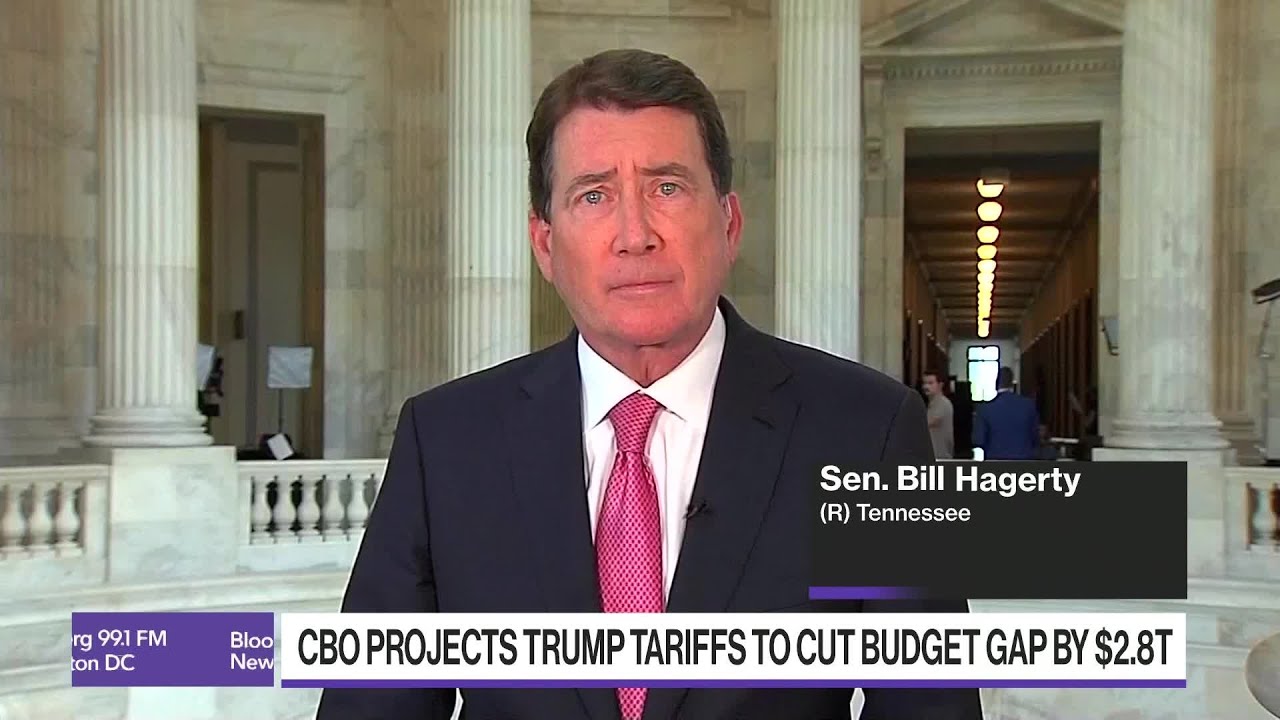
Senator Bill Hagerty, Republican from Tennessee joins to discuss the future of the tax bill and what changes might be in store for the House-passed tax-cut and spending bill.
The nonpartisan Congressional Budget Office handed Republicans a major political talking point Wednesday, with projections that showed the possibility for President Donald Trump’s tariffs to bring in more federal revenue than will be lost by his giant tax-cut plan.
One notable caveat: the CBO assessment assumes that tariffs remain at very high levels for the next decade — something administration officials have not explicitly said is their intention. Treasury Secretary Scott Bessent has said that Trump “uses tariffs to negotiate.”
The two highly tentative CBO estimates show Trump’s tariffs, as of levels in effect in mid-May, shrinking the budget gap by $2.8 trillion over a decade, whereas the tax bill would add only $2.4 trillion to the gap. Those figures may feature in Republican arguments as they seek to assuage bond investors concerned about the US borrowing trajectory, and to convince fiscal hawks in their own party to back the legislation.
The math isn’t simple, however. The CBO’s so-called scoring of the “One Big Beautiful Bill” doesn’t account for dynamic impacts — in other words, how it may affect variables such as growth and interest rates, which could ultimately drive the expected cost higher or lower. But the estimates on how much revenue the tariffs could create does take into account the dynamic impacts.
Adding to the uncertainty, House Republicans narrowly passed the bill last month and it now faces opposition in the Senate, where multiple lawmakers have expressed varying demands for changes.
The tax-bill assessment reflects a $3.67 trillion decrease in expected revenues and a $1.25 trillion decline in spending over the decade through 2034, relative to baseline CBO projections.
--------
Watch Bloomberg Radio LIVE on YouTube
Weekdays 7am-6pm ET
Follow us on X
Subscribe to our Podcasts:
Bloomberg Daybreak
Bloomberg Surveillance
Bloomberg Intelligence
Balance of Power
Bloomberg Businessweek
Listen on Apple CarPlay and Android Auto with the Bloomberg Business app:
Apple CarPlay
Android Auto
Visit our YouTube channels:
Bloomberg Podcasts
Bloomberg Television
Bloomberg Originals
Sentinel Indexing in Progress
Metadata and chapters are available. Claim extraction for this episode is pending.
All video content is delivered via YouTube embedded players in accordance with the YouTube Terms of Service. Sentinel provides research tools that promote discovery and accountability across political media.