Bloomberg Podcasts
@bloombergpodcasts·503K subscribers·32.4K videos
Trump Tariffs Are Already Stunting World Growth
Posted
July 28, 2025
Views
25,191
Likes
355
Comments
242
Engagement
2.37%
July 28, 2025
25,191
355
242
2.37%
Every word spoken in this episode is indexed. Type any phrase to jump straight to the moment it was said.
Type any word or phrase that may have been spoken. Click a result to seek the player to that exact moment.
Try a name, a topic, or a quoted line
See what was published immediately before and after this episode.
 5:05Now Playing
- As Donald Trump barrels toward his latest tariff deadline, the damage to the global economy from American protectionism is becoming increasingly evident, even if financial markets seem to have decided they can live with it.
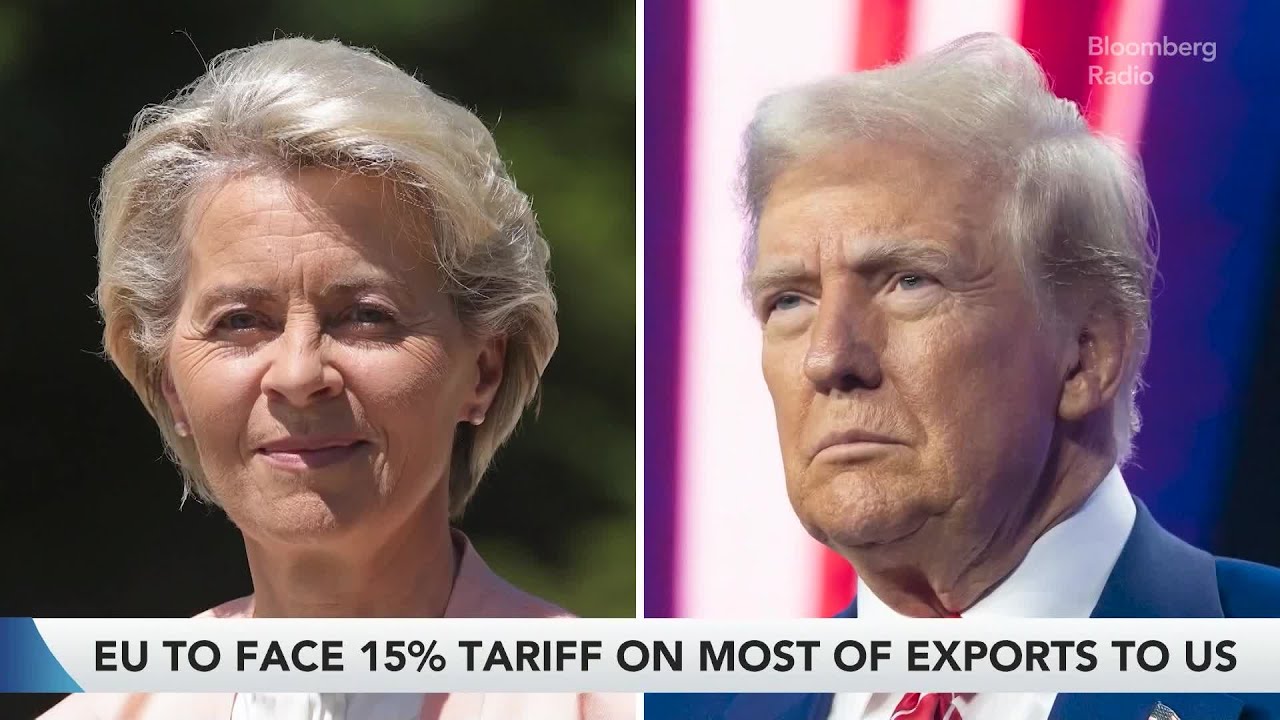
The US president has announced preliminary agreements with the European Union, Japan and a handful of others that raise tariff rates, and he’s promising to impose even higher duties on Aug. 1 for countries that haven’t cut deals. It all amounts to another step change in the trade barrier that Trump has erected around America, which is starting to reshape trade and investment patterns worldwide.
The overall US tariff level is now the highest since the 1930s and about six times what it was when Trump took office at the start of this year. Markets seem convinced the president is holding back from the worst of his threats, and they’ve rebounded from the brief slump triggered by his “Liberation Day” rollout in April. But the sequel is coming as companies freeze capital spending, reroute supply chains that took years to establish, and trim margins to absorb the shock of rising costs. Bloomberg's Brendan Murray reports.
From Japanese auto firms to US tomato growers and Vietnamese sportswear plants, tariffs under Trump’s “America First” doctrine are proving a blunt weapon, with some early winners but even more inadvertent casualties. The hit to the world economy will reach $2 trillion by the end of 2027 relative to its pre-trade war path, Bloomberg Economics projects. Looking further ahead, some of those losses would be recouped as production and supply chains realign. (See the analysis here.)
“It’s becoming clear that President Trump’s tariff negotiations are bad for investment,” perhaps especially so in the US, says Daniel Harenberg, lead economist with Oxford Economics. “In the end, tariffs may not be as high as feared. Still, they are essentially a tax that puts sand in the wheels of supply chains and global trade.
Heading into a key week for his trade plans — starting Monday with China talks in Stockholm and ending with the tariff deadline Friday — Trump has been bullish about the impact at home. He points to record-high stock markets, and a windfall of Treasury revenue thanks, he always stops short of pointing out, to the American importers that pay the duties. “Because of Tariffs, our Economy is BOOMING!” the president wrote in a June social media post.
It’s true that Wall Street economists have nudged their forecasts for the US a little higher in recent months, and dialed back recession warnings that peaked amid the market turmoil in April. But the consensus is still for a slowdown rather than a takeoff.
Tariffs are already taking a bite out of earnings at US business giants like General Motors Co., Dow Inc. and Tesla Inc. They haven’t delivered a big inflation shock so far, and American shoppers — the engine of the economy — are holding up, while also showing some signs of strain.
In consumer spending, “the trend in 2025 has been a noticeable flat-lining after strong post-pandemic gains,” says James Knightley, ING’s New York-based chief international economist. “Households worry about the impact of tariff-induced price hikes,” as well as a cooling job market.
The latest growth snapshot will arrive on Wednesday, when the second-quarter GDP report is due out. They’ll be tricky to read, largely because trade war has scrambled the data.
American companies rushed to front-run tariffs by buying more foreign goods in the first quarter, which counts as negative for GDP, and caused the economy to shrink. Imports retreated after Trump’s “Liberation Day,” so headline growth is expected to bounce back in the April-June period.
To look through the swings in trade and inventories, some analysts focus on a category known as inflation-adjusted final sales to domestic purchasers. It grew at a 1.9% rate in the first quarter, down from 2.9% in the final three months of 2024.
--------
Watch Bloomberg Radio LIVE on YouTube
Weekdays 7am-6pm ET
Follow us on X
Subscribe to our Podcasts:
Bloomberg Daybreak
Bloomberg Surveillance
Bloomberg Intelligence
Balance of Power
Bloomberg Businessweek
Listen on Apple CarPlay and Android Auto with the Bloomberg Business app:
Apple CarPlay
Android Auto
Visit our YouTube channels:
Bloomberg Podcasts
Bloomberg Television
Bloomberg Originals
Sentinel Indexing in Progress
Metadata and chapters are available. Claim extraction for this episode is pending.
All video content is delivered via YouTube embedded players in accordance with the YouTube Terms of Service. Sentinel provides research tools that promote discovery and accountability across political media.