
Bloomberg Podcasts
@bloombergpodcasts·503K subscribers·32.4K videos
Lawmakers Face Sour Mood, Shutdown Deadline on Return to Washington
Posted
August 7, 2025
Views
213
Likes
1
Comments
1
Engagement
August 7, 2025
213
1
1
0.94%
Every word spoken in this episode is indexed. Type any phrase to jump straight to the moment it was said.
Type any word or phrase that may have been spoken. Click a result to seek the player to that exact moment.
Try a name, a topic, or a quoted line
See what was published immediately before and after this episode.
 4:29Now Playing
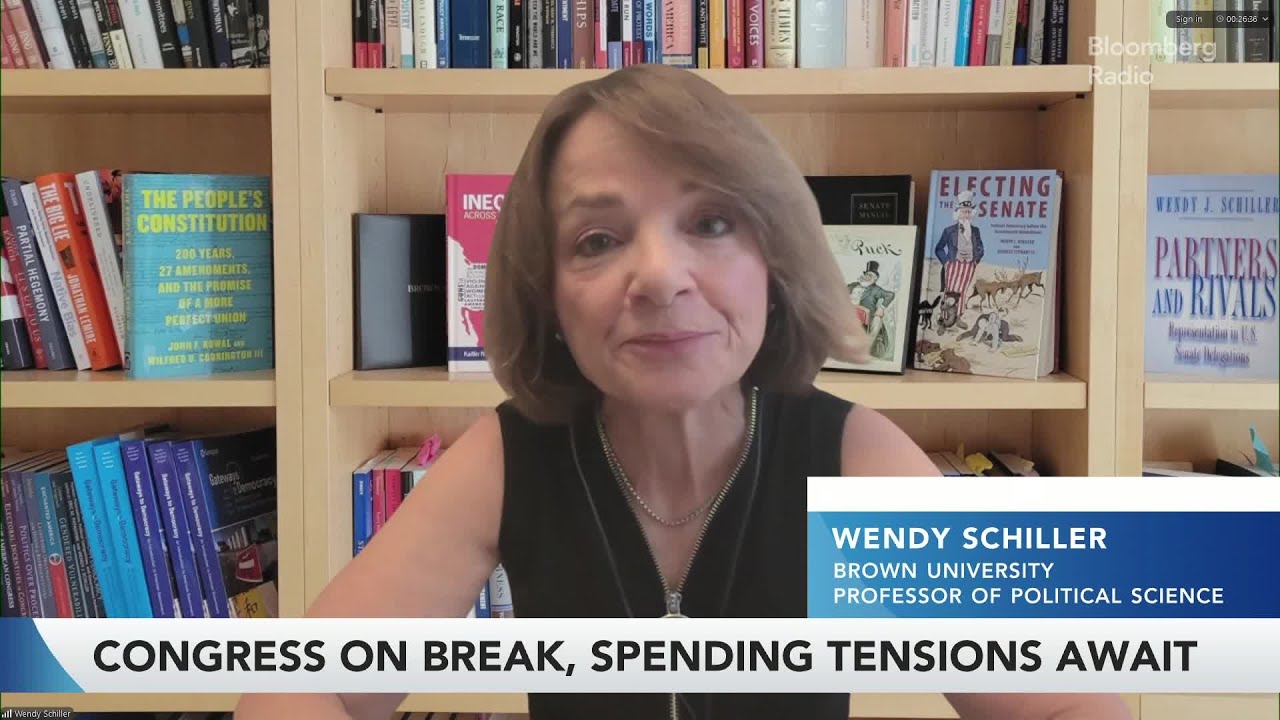
Wendy Schiller, professor at Brown University, discusses the President's global tariffs going into effect and what lawmakers face when they return to Washington.
Lawmakers will face countervailing forces when they return to Washington in September to try and avoid an October shutdown — a historically sour mood in the Capitol and a rare burst of productivity in the Senate.
The debate over government-funding bills has mostly featured accusations about obstruction and partisanship. The Trump administration’s use of partisan — and sometimes unilateral — methods to block spending has driven an especially large wedge between Republicans and Democrats. And bickering over niche issues has stalled progress on spending legislation.
“People talk a game of wanting to do appropriations bills,” Sen. Jerry Moran (R-Kan.) said after his Commerce-Justice-Science appropriations bill was pulled from the Senate floor before the recess. “We work hard to do them. And then people come up with excuses to not allow them to be considered.”
The pessimism on Capitol Hill has already prompted House Republicans to predict a continuing resolution keeping agencies running at their current levels, possibly for the entirety of fiscal 2026. Leaders in both parties have accused each other of setting the stage for a shutdown.
On the other hand, senators had an unusually productive July, compared to recent history. They managed to pass three of their 12 annual government-funding bills before August — the first time since summer 2018 that the chamber has passed bills before the typically annual recess. Members cleared a low bar by passing three of the easier appropriations bills spanning Agriculture-FDA, Legislative Branch, and Military Construction-VA funds. But they proved it’s possible to pass bills on time.
“I think as the normal appropriations process has geared back up and we’re having appropriations bills for the first time in a long time being brought to the Senate floor, that that shows that we can do the work,” Senate Appropriations Chair Susan Collins (R-Maine) told reporters.
The next step could be much bigger. Senate appropriators advanced their two largest funding bills, covering Defense and Labor-HHS-Education programs, in a committee vote shortly before leaving Washington. Sen. Tammy Baldwin (D-Wis.), the top Democrat on the Labor-HHS-Education appropriations subcommittee, called for those measures to be paired together on the floor, a more than $1 trillion package that would comprise nearly two-thirds of discretionary spending.
Bicameral Talks
Negotiations between the House and Senate may start soon. Senate Minority Leader Chuck Schumer (D-N.Y.) and House Minority Leader Hakeem Jeffries (D-N.Y.) sent Speaker Mike Johnson (R-La.) and Senate Majority Leader John Thune (R-S.D.) a letter Monday calling for a meeting among the four leaders to discuss government funding. It also lamented that “many within your party are preparing to ‘go it alone’ and continue to legislate on a solely Republican basis.”
House Appropriations Chairman Tom Cole (R-Okla.) said he’s hopeful the two chambers can hash out their differences quickly. He said the more moderate Senate was slightly more conservative in its top-line spending levels than he expected, while the more conservative House set higher funding levels.
“I think we’re probably higher than they expected and I think they’re probably lower than we expected,” Cole said. “So we’re a little closer together than I thought we might be.”
The broader conversation around funding bills has been much more pessimistic lately. Senators gave up trying to pass their Commerce-Justice-Science funding bill due to a fight over relocating FBI headquarters. Democrats unsuccessfully pushed for assurances that agreed-upon funds won’t be clawed back by partisan rescission proposals.
“It’s one obstruction after another,” Sen. John Hoeven (R-N.D.) said of the Senate floor. “I mean, it’s just obstruction, just to stop the work.”
--------
Watch Bloomberg Radio LIVE on YouTube
Weekdays 7am-6pm ET
Follow us on X
Subscribe to our Podcasts:
Bloomberg Daybreak
Bloomberg Surveillance
Bloomberg Intelligence
Balance of Power
Bloomberg Businessweek
Listen on Apple CarPlay and Android Auto with the Bloomberg Business app:
Apple CarPlay
Android Auto
Visit our YouTube channels:
Bloomberg Podcasts
Bloomberg Television
Bloomberg Originals
Sentinel Indexing in Progress
Metadata and chapters are available. Claim extraction for this episode is pending.
All video content is delivered via YouTube embedded players in accordance with the YouTube Terms of Service. Sentinel provides research tools that promote discovery and accountability across political media.