
Bloomberg Podcasts
@bloombergpodcasts·503K subscribers·32.4K videos
EU, US Lay Out Next Steps on Tariffs
Posted
August 21, 2025
Views
5,421
Likes
20
Comments
7
Engagement
0.50%
August 21, 2025
5,421
20
7
0.50%
Every word spoken in this episode is indexed. Type any phrase to jump straight to the moment it was said.
Type any word or phrase that may have been spoken. Click a result to seek the player to that exact moment.
Try a name, a topic, or a quoted line
See what was published immediately before and after this episode.
 4:04Now Playing
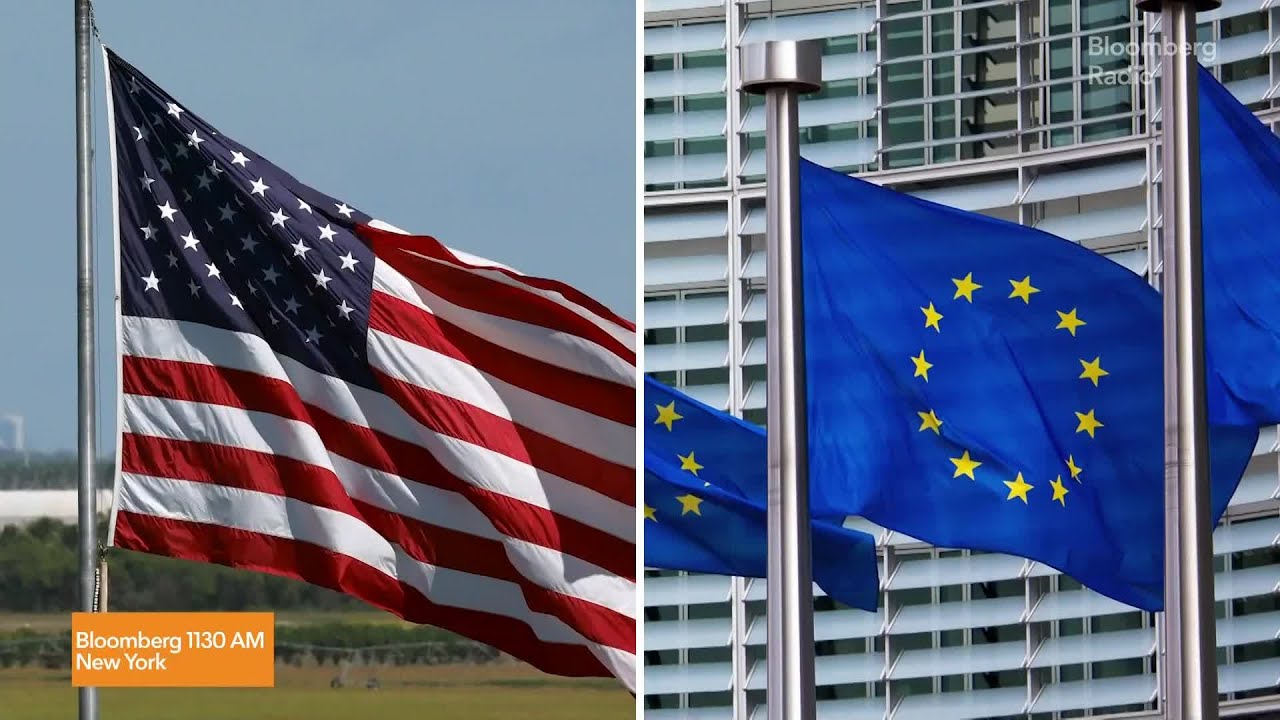
Enda Curran, Bloomberg Global Economy Reporter, discusses efforts made by the EU and US to rebalance trade ties and potentially reduce tariffs on some European goods.
The US and European Union took the next steps to formalize their trade pact, detailing plans that could reduce tariffs on European automobiles within weeks while opening the door to new potential discounts for steel and aluminum.
The joint statement issued Thursday advances the preliminary deal announced a month ago, by including specific benchmarks for the EU to secure its promised sectoral tariff discounts on cars, pharmaceuticals and semiconductors, as well as new commitments to cooperate on economic security matters, food standards and digital trade.
President Donald Trump has repeatedly praised the sweeping US-EU trade framework, extolling it as “a big deal” in a Monday White House meeting with foreign leaders including European Commission President Ursula von der Leyen.
The deal provides predictability and “delivers for our citizens & companies, and strengthens transatlantic relations,” von der Leyen said in a post on the social-media platform X.
The development underscores the nature of trade talks under Trump, with some initial, broad pronouncements of deals giving way to weeks — or more — of work to hammer out detailed agreements. Many of them are also tied to sweeping policy changes that could take time to materialize.
For example, Trump already imposed a flat 15% rate on most European goods — half the 30% he’d previously threatened. But the US promise to extend that lower levy to autos and auto parts now hinges on the EU formally introducing a legislative proposal to eliminate a host of its own tariffs on US industrial goods and provide “preferential market access” for some US seafood and agricultural products.
Car Relief
The statement outlines choreographed action on both sides of the Atlantic, with the US codifying reduced auto tariffs once the EU “formally introduces the necessary legislative proposal to enact” its own promised tariff reductions. The discounted 15% tariffs on European auto imports — down from the current 27.5% — would be effective from the start of the same month that legislation is advanced.
They could be in place within weeks, said a senior Trump administration official who briefed reporters on the initiative. The shift has been anxiously anticipated by some EU member states, particularly Germany, which exported $34.9 billion of new cars and auto parts to the US in 2024.
The legislative trigger is designed to help ensure the EU delivers on its promised tariff reductions — and ensure the 27-nation bloc has sufficient pressure to obtain the political mandate needed to make the changes, the administration official said.
The US is committing to apply lower most-favored-nation, or MFN, tariffs to a slew of other European products — including aircraft and aircraft parts, generic pharmaceuticals and their ingredients and some natural resources such as cork.
More carve-outs could be added in future, the statement says, but for now the EU has not succeeded in receiving the same treatment for wines, spirits and medical devices. The US is also renewing its commitment to cap future sectoral tariffs on European pharmaceutical products, semiconductors and lumber at 15%.
Metals Quotas
It’s also opening the prospect for discounted rates on some steel, aluminum and derivative products under a quota system. That’s a shift from the White House’s stated plans in July, when the Trump administration insisted those metal tariffs would remain at 50%, helping to lower trade deficits with the EU and bring revenue to US coffers.
On steel and aluminum, the EU and US now assert they “intend to consider the possibility to cooperate on ring-fencing their respective domestic markets from overcapacity, while ensuring secure supply chains between each other,” according to the joint statement.
Under the terms agreed by the two sides, the EU faces a 15% tariff on most of its exports.
--------
Watch Bloomberg Radio LIVE on YouTube
Weekdays 7am-6pm ET
Follow us on X
Subscribe to our Podcasts:
Bloomberg Daybreak
Bloomberg Surveillance
Bloomberg Intelligence
Balance of Power
Bloomberg Businessweek
Listen on Apple CarPlay and Android Auto with the Bloomberg Business app:
Apple CarPlay
Android Auto
Visit our YouTube channels:
Bloomberg Podcasts
Bloomberg Television
Bloomberg Originals
Sentinel Indexing in Progress
Metadata and chapters are available. Claim extraction for this episode is pending.
All video content is delivered via YouTube embedded players in accordance with the YouTube Terms of Service. Sentinel provides research tools that promote discovery and accountability across political media.