Bloomberg Podcasts
@bloombergpodcasts·503K subscribers·32.4K videos
Markets 'Always' Overreact to Jackson Hole, Says Christopher Smart
Posted
August 25, 2025
Views
742
Likes
8
Comments
3
Engagement
August 25, 2025
742
8
3
1.48%
Every word spoken in this episode is indexed. Type any phrase to jump straight to the moment it was said.
Type any word or phrase that may have been spoken. Click a result to seek the player to that exact moment.
Try a name, a topic, or a quoted line
See what was published immediately before and after this episode.
 9:01Now Playing
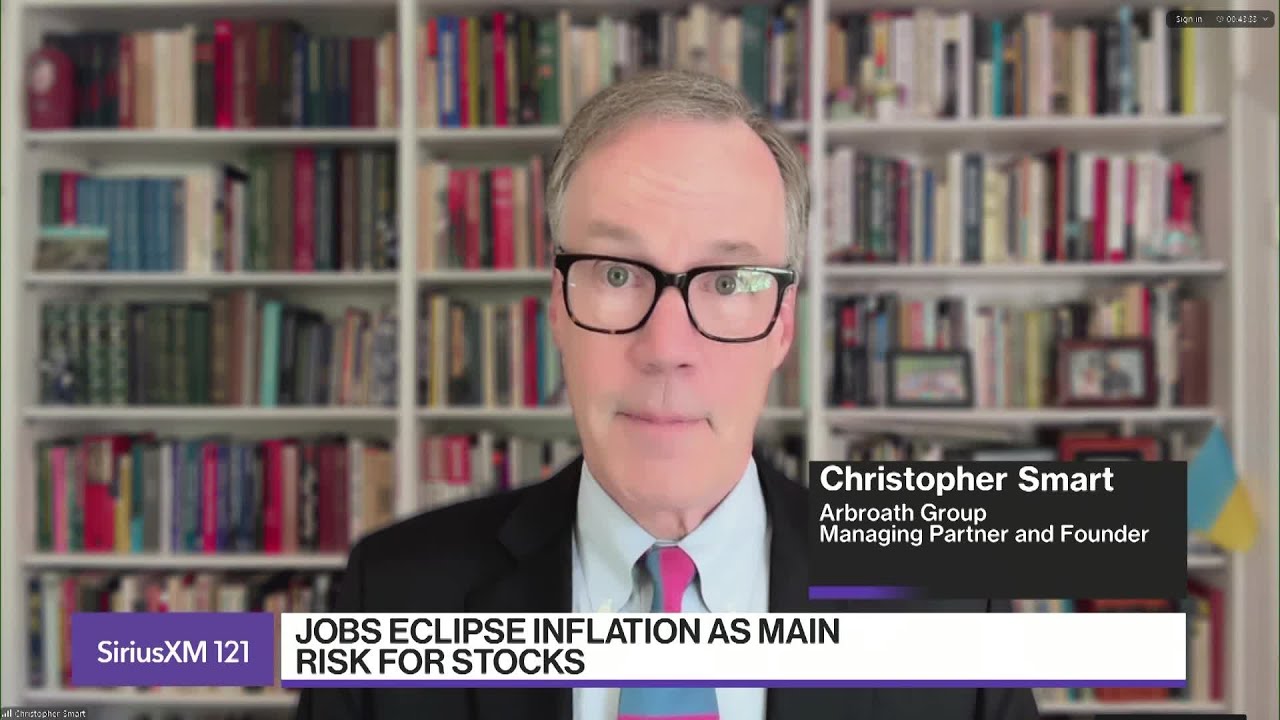
Christopher Smart, founder of the Arbroath Group and former Obama administration official, discusses the market reaction to Fed chair Jerome Powell and how he expects the Fed to act on future economic indicators.
A rally that put stocks on the brink of all-time highs sputtered and bond yields rose as euphoria around Federal Reserve rate cuts eased ahead of a key inflation reading.
While Jerome Powell on Friday signaled a September rate cut is likely on the way amid downside risks to jobs, doubts over the pace of those reductions lingered on Wall Street. In addition to officials remaining divided, traders are bracing for a not-so-friendly price reading later this week.
Policymakers are grappling with inflation that’s still above their 2% goal — and rising — and a labor market that’s showing signs of weakness. That unnerving reality, which pulls policy in opposite directions, is made worse by a high degree of uncertainty about how each of those factors will evolve over the coming months.
The Fed’s preferred measure of underlying inflation probably ticked higher last month, with the personal consumption expenditures price index excluding food and energy rising 2.9% from a year ago. That would be fastest annual pace in five months.
“Now the discussion will likely turn to how aggressive the Fed may be,” said Chris Larkin at E*Trade from Morgan Stanley. “Signs of a slowing labor market currently appear to be outweighing inflation concerns, but the Fed hasn’t abandoned its 2% target.”
The S&P 500 fell 0.2%. While about 400 shares dropped, Nvidia Corp. paced gains in megacaps ahead of its results. Short-term Treasuries underperformed, with two-year yields rising three basis points to 3.73%. The dollar climbed.
“Today’s trading lacks catalysts, which explains much of the muted sentiment throughout the indices, although rate-sensitive, cyclically oriented areas are underperforming,” said Jose Torres at Interactive Brokers. “Part of that sluggishness results from traders reevaluating Chair Powell’s dovishness.”
Money markets are pricing in roughly 80% odds of a Fed rate cut in September, and a total of two reductions by the end of the year.
“While folks are generally in consensus about a September cut, October and December are still live, data-dependent meetings,” Torres noted.
To Krishna Guha at Evercore, the repricing of a September rate cut after Powell’s Jackson Hole speech Friday was “not excessive.”
“If we are right, the focus shifts to what happens after September,” Guha said. “If the next set of labor data is not too bad, we think the Fed will begin to frame out the cautious recalibration cut, while seeking to contain expectations of ‘too much too soon’.”
Dovish or Hawkish Cut?
“While we still see the Fed cutting in September, we now have to figure out whether it will be a ‘dovish cut’ or a ‘hawkish cut’,” said Andrew Brenner at NatAlliance Securities. “We don’t want one to think that inflation is not that important, but the real unknown risk to the economy is the employment situation.”
The exact path forward, particularly the pace of rate cuts, is still up for debate as Fed officials hold diverging views on the potential impact of tariffs and the overall state of the economy, according to Jason Pride and Michael Reynolds at Glenmede.
“Upcoming leadership changes at the Fed may mark a dovish shift over the long-term, with most candidates under consideration for chair broadly viewed as more accommodative than Powell,” they said.
National Economic Council Director Kevin Hassett indicated President Donald Trump’s decision on who should succeed Powell is months away. His term as Fed chair is set to expire in May.
“We expect Powell to advocate for easing at the September meeting unless incoming data, such as a strong August labor report or higher-than-expected inflation, provide reason to stay on hold,” said Ulrike Hoffmann-Burchardi at UBS Global Wealth Management. “Against this backdrop, we anticipate four quarter-point rate cuts through January 2026, starting in September.”
--------
Watch Bloomberg Radio LIVE on YouTube
Weekdays 7am-6pm ET
Follow us on X
Subscribe to our Podcasts:
Bloomberg Daybreak
Bloomberg Surveillance
Bloomberg Intelligence
Balance of Power
Bloomberg Businessweek
Listen on Apple CarPlay and Android Auto with the Bloomberg Business app:
Apple CarPlay
Android Auto
Visit our YouTube channels:
Bloomberg Podcasts
Bloomberg Television
Bloomberg Originals
Sentinel Indexing in Progress
Metadata and chapters are available. Claim extraction for this episode is pending.
All video content is delivered via YouTube embedded players in accordance with the YouTube Terms of Service. Sentinel provides research tools that promote discovery and accountability across political media.