Bloomberg Podcasts
@bloombergpodcasts·503K subscribers·32.4K videos
Congress Has Few Working Days to Stop Sept. 30 Government Shutdown
Posted
September 15, 2025
Views
528
Likes
5
Comments
2
Engagement
September 15, 2025
528
5
2
1.33%
Every word spoken in this episode is indexed. Type any phrase to jump straight to the moment it was said.
Type any word or phrase that may have been spoken. Click a result to seek the player to that exact moment.
Try a name, a topic, or a quoted line
 6:41Now Playing
Three Paths to Avoid a Shutdown
Democratic leaders have set the stage for a showdown at the end of September, as their demands for health-care concessions as part of any government funding deal raises the chances of an Oct. 1 shutdown.
But a shutdown isn’t inevitable, even as congressional leaders stake out opposing positions. Lawmakers in both parties have cautiously identified off ramps that could diffuse the tension and allow for a bipartisan deal to fund the government. Leaders in either party could fail to rally their members for the fight and be forced to make concessions. Or President Donald Trump could shake up the current state of play.
The chance to avert a shutdown comes down to three main possibilities:
1. Democrats Back Down
Democrats aim to avoid a repeat of the funding fight earlier this year when Senate Democrats blindsided House Democrats to support a full-year continuing resolution. House Minority Leader Hakeem Jeffries (D-N.Y.) and Senate Minority Leader Chuck Schumer (D-N.Y.) told reporters they were on the same page this time around, vowing to oppose any funding bill without changes to health-care policy.
Democrats have pointed specifically to an extension of Affordable Care Act subsidies that are set to expire Dec. 31, which could cause premiums to spike. Although Schumer hasn’t pegged the chances of a funding deal solely to a demand for an extension of those specific policies.
“If they try to jam something down our throats without any compromise, without a real bipartisan discussion, they ain’t gonna get the votes, plain and simple,” Schumer said.
But as the threat of a shutdown nears, Senate Democrats could cave again. Schumer ultimately supported the full-year stopgap because a government shutdown would give immense discretion to the White House and let Trump decide which government functions are essential and nonessential.
Senate Majority Leader John Thune (R-S.D.) was skeptical Democrats wouldn’t support a clean stopgap when faced with a vote, telling reporters last week Schumer’s remarks were “odd.”
“That’s an odd statement to make actually. I don’t think that’s a view that’s shared by his members,” Thune said, essentially calling Senate Democrats’ bluff.
Even if Schumer follows through on his demands, his caucus could fracture under pressure. Republicans hold 53 seats in the Senate and would theoretically only need to peel off seven Democrats to end a filibuster, though that total could rise if any GOP senators — such as hard-line conservative Sen. Rand Paul (R-Ky.) — oppose a stopgap. Schumer was among 10 Democrats who backed the full-year stopgap in March.
2. Republicans Fail to Pass a Stopgap
The GOP plan to hold out against Schumer’s demand is based on the assumption they can pass a clean stopgap funding measure through the House without significant Democratic support. That would put the onus on Senate Democrats to filibuster the House-passed measure, taking the blame for a shutdown.
But the narrowness of House Republicans’ majority is still a dominant concern in the outlook for legislation this Congress. Speaker Mike Johnson’s (R-La.) conference has a 219-213 majority, meaning they can only afford to lose two votes, if all members are present.
Continuing resolutions are more popular than ever among hard-line conservatives. House Freedom Caucus Chairman Andy Harris (R-Md.) has called for another full-year stopgap. That makes Johnson’s job easier.
3. Trump Calls for a Deal
Democrats see an outside chance that Trump will weaken GOP leaders’ opposition to a deal on health-care subsidies, if he sees the possibility of rising premiums as a political weakness.
“What this president tweets out can change things on a dime,” Rep. Mike Levin (D-Calif.) said. “So if he tweets out, ‘Time for a deal. Thank you for your attention to this matter.’ Guess what? We’re going to get a deal.”
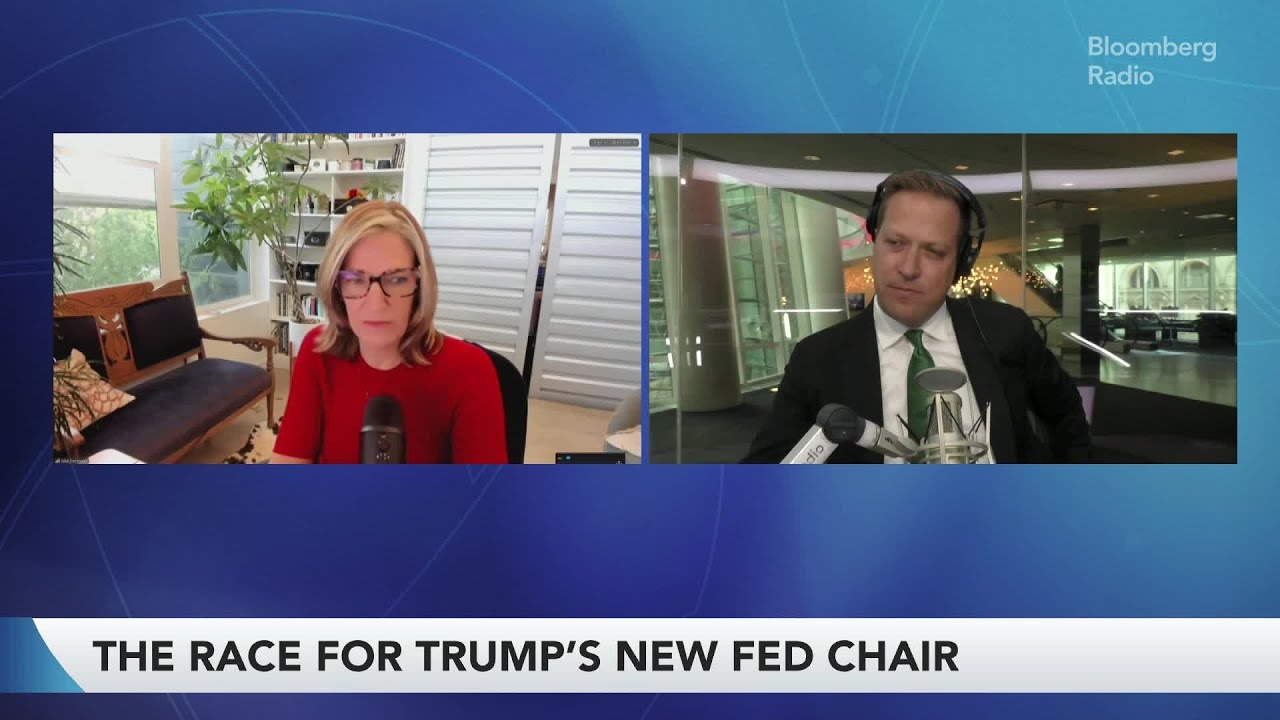
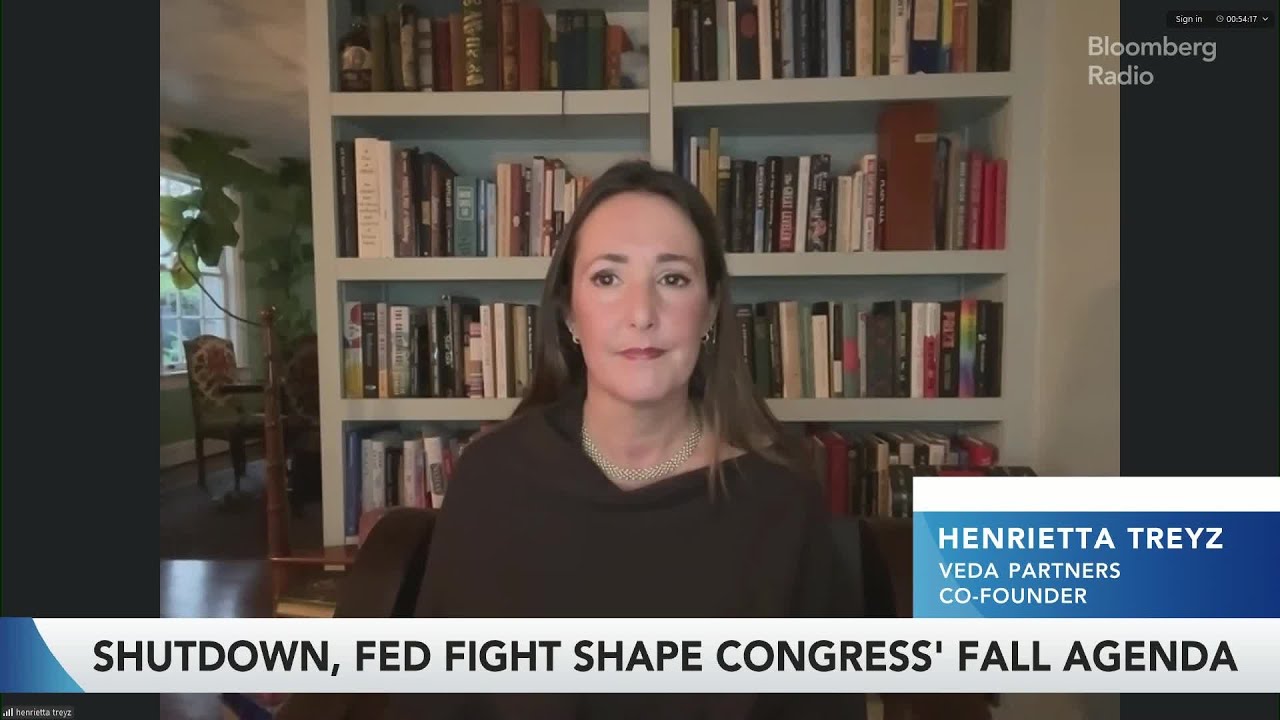
Henrietta Treyz, co-founder at Veda Partners discusses Congressional priorities and potential for a September shutdown.
--------
Watch Bloomberg Radio LIVE on YouTube
Weekdays 7am-6pm ET
Follow us on X
Subscribe to our Podcasts:
Bloomberg Daybreak
Bloomberg Surveillance
Bloomberg Intelligence
Balance of Power
Bloomberg Businessweek
Listen on Apple CarPlay and Android Auto with the Bloomberg Business app:
Apple CarPlay
Android Auto
Visit our YouTube channels:
Bloomberg Podcasts
Bloomberg Television
Bloomberg Originals
Sentinel Indexing in Progress
Metadata and chapters are available. Claim extraction for this episode is pending.
All video content is delivered via YouTube embedded players in accordance with the YouTube Terms of Service. Sentinel provides research tools that promote discovery and accountability across political media.