Bloomberg Podcasts
@bloombergpodcasts·503K subscribers·32.4K videos
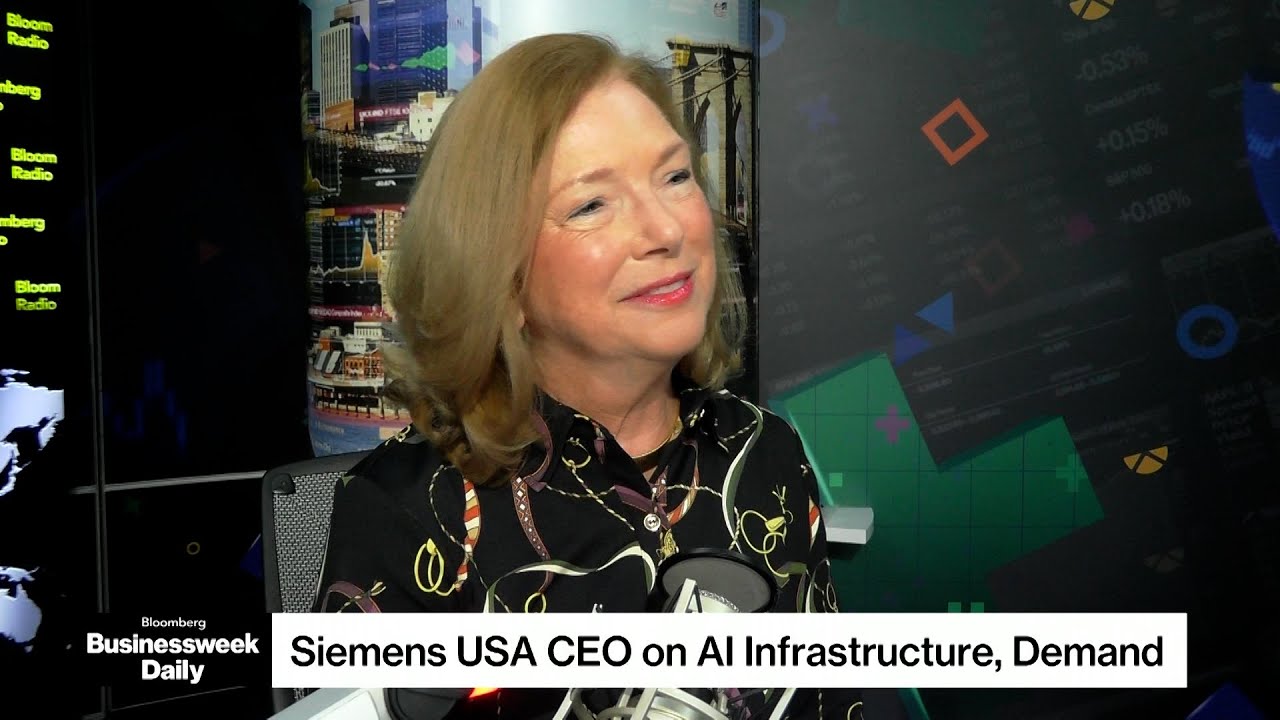
Siemens USA CEO: 'Critical' for US to Lead in AI
Posted
September 22, 2025
Views
506
Likes
8
Engagement
1.58%
September 22, 2025
506
8
1.58%
Every word spoken in this episode is indexed. Type any phrase to jump straight to the moment it was said.
Type any word or phrase that may have been spoken. Click a result to seek the player to that exact moment.
Try a name, a topic, or a quoted line
 5:53Now Playing
Siemens USA CEO Barbara Humpton joins Carol Massar and Tim Stenovec on 'Bloomberg Businessweek Daily' to discuss AI uses cases in manufacturing as demand continues to grow, and why it is critical for the US to maintain leadership in AI.
Labor and employment attorneys are seeing heightened demand this year for counsel on AI use in employment and workforce management issues, according to a recent Bloomberg Law survey. Federal and state policies regarding AI regulation, employer compliance concerns, and developments in a major AI age-discrimination case that could influence how regulators and courts may assess AI-related employment discrimination likely all play a role in the increase in demand.
Client Inquiries Increasing
Bloomberg Law’s spring State of Practice Survey asked law firm attorneys with employment or labor practices whether they had observed any changes in the frequency of clients seeking advice on using AI in employment and workforce issues in the last six months. Thirty percent reported an increase in such inquiries.
This was up 11 percentage points from a State of Practice survey conducted one year earlier. Of those respondents, 19% said that there was an increase in the frequency of client inquiries about AI use in employment and workforce issues.
While the 2025 survey question imposed the six-month time limit, there was none for the 2024 survey.
The data show that demand for legal counsel on AI decision‑making tools in employment is rising, and several factors may help explain why.
AI Accountability Rising
Along with this increase, there’s also likely to be a shift in the coming year in the type of advice labor and employment attorneys are asked to give. Clients will seek more AI-specific nondiscrimination guidance as well as answers to more targeted legal inquiries involving AI due to the federal policy shift on AI, compliance concerns due to the lack of uniformity in AI laws, and a major employment/AI litigation.
Federal Policy Shifts and Impacts
Federal policy changes this year may be one driver behind the increased inquiries reflected in the survey. In January, President Donald Trump issued an executive order on artificial intelligence, followed by another on disparate impact liability in discrimination law in April. The implications of these orders are mixed for leveraging AI in employment decisions.
The AI executive order, which aims to speed up innovation by easing regulatory barriers, will likely raise questions by employers about the obligations of vendors of employment-related AI tools in preventing algorithmic bias in employment-related outcomes. The disparate impact order instructs agencies like the Equal Employment Opportunity Commission to end investigating disparate impact claimsunder federal anti-discrimination laws, greatly limiting investigations into alleged AI-related workplace bias.
A lighter regulatory touch could, in some cases, reduce the chances of federal legal challenges tied to AI use in hiring. Plaintiff may still pursue employment disparity claims under federal or state law, which could lead to more private lawsuits related to AI driven discrimination.
Compliance Concerns
Many companies use machine learning and generative AI for résumé screening, interview scheduling, and employee performance analysis—areas that can raise compliance questions. These tools can streamline processes, accelerate decision‑making, reduce errors, and cut time and costs, but they also introduce potential legal risks such as algorithmic bias that may be driving the increased demand reflected in the survey.
--------
Watch Bloomberg Radio LIVE on YouTube
Weekdays 7am-6pm ET
Follow us on X
Subscribe to our Podcasts:
Bloomberg Daybreak
Bloomberg Surveillance
Bloomberg Intelligence
Balance of Power
Bloomberg Businessweek
Listen on Apple CarPlay and Android Auto with the Bloomberg Business app:
Apple CarPlay
Android Auto
Visit our YouTube channels:
Bloomberg Podcasts
Bloomberg Television
Bloomberg Originals
Sentinel Indexing in Progress
Metadata and chapters are available. Claim extraction for this episode is pending.
All video content is delivered via YouTube embedded players in accordance with the YouTube Terms of Service. Sentinel provides research tools that promote discovery and accountability across political media.