Bloomberg Podcasts
@bloombergpodcasts·503K subscribers·32.4K videos
Dick Cheney, Driver of Militant US Response to 9/11, Dies at 84
Posted
November 4, 2025
Views
2,008
Likes
8
Comments
12
Engagement
November 4, 2025
2,008
8
12
1.00%
Every word spoken in this episode is indexed. Type any phrase to jump straight to the moment it was said.
Type any word or phrase that may have been spoken. Click a result to seek the player to that exact moment.
Try a name, a topic, or a quoted line
See what was published immediately before and after this episode.
 2:13Now Playing
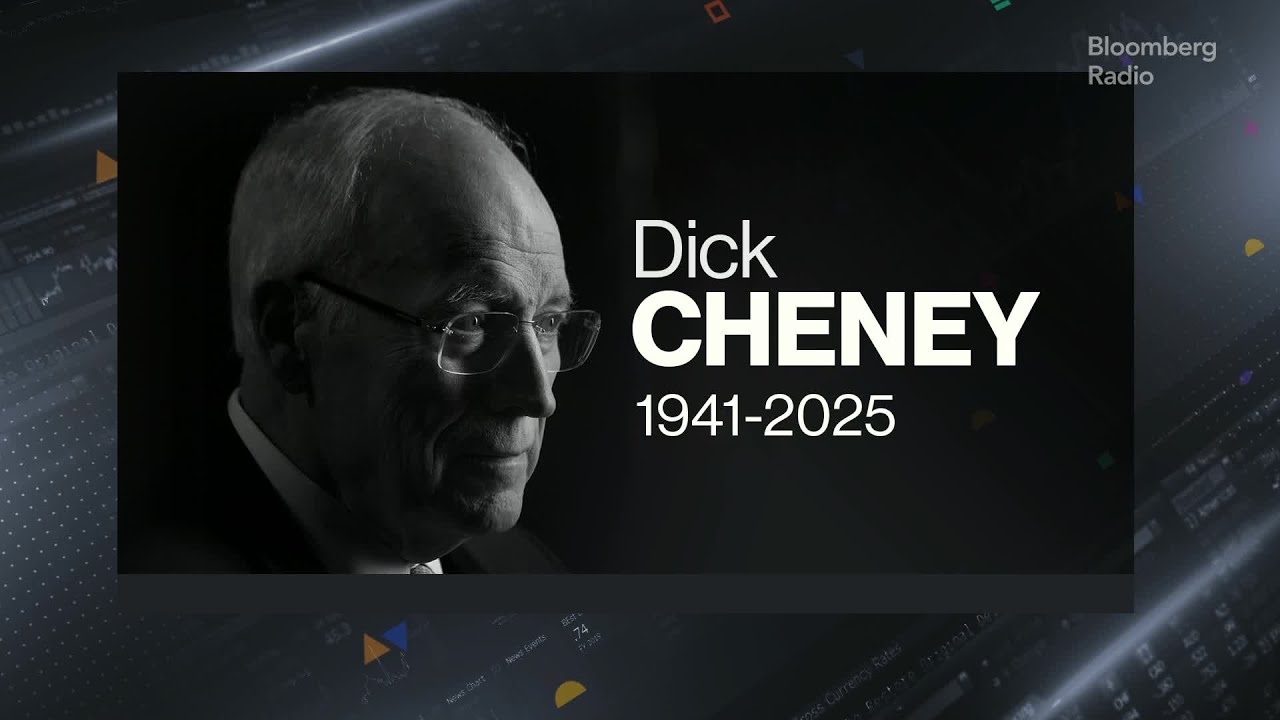
Dick Cheney, whose campaign for a military response to the 9/11 terror attacks cleared the path for an unpopular war in Iraq and established his reputation as one of the most powerful and polarizing vice presidents in US history, has died. He was 84.
“The former vice president died due to complications of pneumonia and cardiac and vascular disease,” according to a family statement released early Tuesday. His wife, Lynne, and daughters Liz and Mary as well as other relatives were with him when he died on Monday night, the family said.
As George W. Bush’s vice president from 2001 to 2009, Cheney embodied the single-minded determination to do whatever was necessary to prevent further acts of terrorism on US soil. A veteran of three previous presidential administrations, including a stint as secretary of defense for Bush’s father, he was given wide berth and deference on the military issues that dominated Bush’s tenure, accumulating influence rarely seen in a vice president.
Former Rep. Patrick McHenry, (R - North Carolina), former Chairman of the House Financial Services Committee and Bloomberg Contributor, joins to discuss Dick Cheney's legacy.
He had come to office intent on reinvigorating the US presidency, which he believed had been weakened by the War Powers Act and other legislation in the 1970s inspired by the Vietnam War and the Watergate scandal. The Sept. 11, 2001, attack by al-Qaeda, which killed about 3,000 people, infused Cheney’s long-standing political goal with a new focus on terrorism and weapons of mass destruction.
Cheney “would have worked through the whole lot, Iraq, Syria, Iran, dealing with all their surrogates in the course of it — Hezbollah, Hamas, etc.,” Tony Blair, the former British prime minister who committed his nation’s troops to the US-led wars in Afghanistan and Iraq, wrote in his memoir. “So he was for hard, hard power. No ifs, no buts, no maybes. We’re coming after you, so change or be changed.”
On Sept. 11, Cheney was at the White House, while Bush visited a school in Florida, when 19 al-Qaeda terrorists used hijacked passenger airplanes to attack the World Trade Center in New York and the Pentagon in Arlington County, Virginia.
He was hustled by Secret Service agents to the underground command center, where he guided the government’s initial response, including authorizing the military to shoot down, if necessary, other suspicious civilian aircraft. (The shoot-down order didn’t reach military pilots in the skies over Washington and New York, who, regardless, were too late to encounter any of the hijacked planes, according to the national 9/11 commission’s final report.)
Cheney gave a “calm, commanding performance,” Jane Mayer wrote in The Dark Side, her 2008 book that took a critical look at how the war on terror changed America. She took the title from Cheney’s early, blunt assessment of how the US would have to respond to being attacked. Speaking on NBC’s Meet the Press the first Sunday after attacks, he said:
“We’ll have to work sort of the dark side, if you will. We’re gonna spend time in the shadows in the intelligence world. A lot of what needs to be done here will have to be done quietly, without any discussion, using sources and methods that are available to our intelligence agencies.”
--------
Watch Bloomberg Radio LIVE on YouTube
Weekdays 7am-6pm ET
Follow us on X
Subscribe to our Podcasts:
Bloomberg Daybreak
Bloomberg Surveillance
Bloomberg Intelligence
Balance of Power
Bloomberg Businessweek
Listen on Apple CarPlay and Android Auto with the Bloomberg Business app:
Apple CarPlay
Android Auto
Visit our YouTube channels:
Bloomberg Podcasts
Bloomberg Television
Bloomberg Originals
Sentinel Indexing in Progress
Metadata and chapters are available. Claim extraction for this episode is pending.
All video content is delivered via YouTube embedded players in accordance with the YouTube Terms of Service. Sentinel provides research tools that promote discovery and accountability across political media.