Bloomberg Podcasts
@bloombergpodcasts·503K subscribers·32.4K videos
Drug Boat Attacks Are 'Outrageous': Senator Rand Paul
Posted
December 2, 2025
Views
100,136
Likes
2,042
Comments
1,309
Engagement
December 2, 2025
100,136
2,042
1,309
3.35%
Every word spoken in this episode is indexed. Type any phrase to jump straight to the moment it was said.
Type any word or phrase that may have been spoken. Click a result to seek the player to that exact moment.
Try a name, a topic, or a quoted line
 13:07Now Playing
The White House defended the Pentagon’s handling of a September attack on an alleged drug-running boat and denied that Defense Secretary Pete Hegseth had given an order to kill everyone on the vessel, rebutting a report that had led to allegations of possible war crimes.
White House spokeswoman Karoline Leavitt confirmed there were two strikes on the vessel in the Sept. 2 attack but stressed the actions were lawful amid a deadly domestic opioid crisis in the US. She also said the order for the second strike came from US Navy Admiral Frank Bradley and not Hegseth.
President Donald Trump and Hegseth “have made it clear that presidentially designated narco-terrorist groups are subject to lethal targeting in accordance with the laws of war,” Leavitt told reporters at the White House.
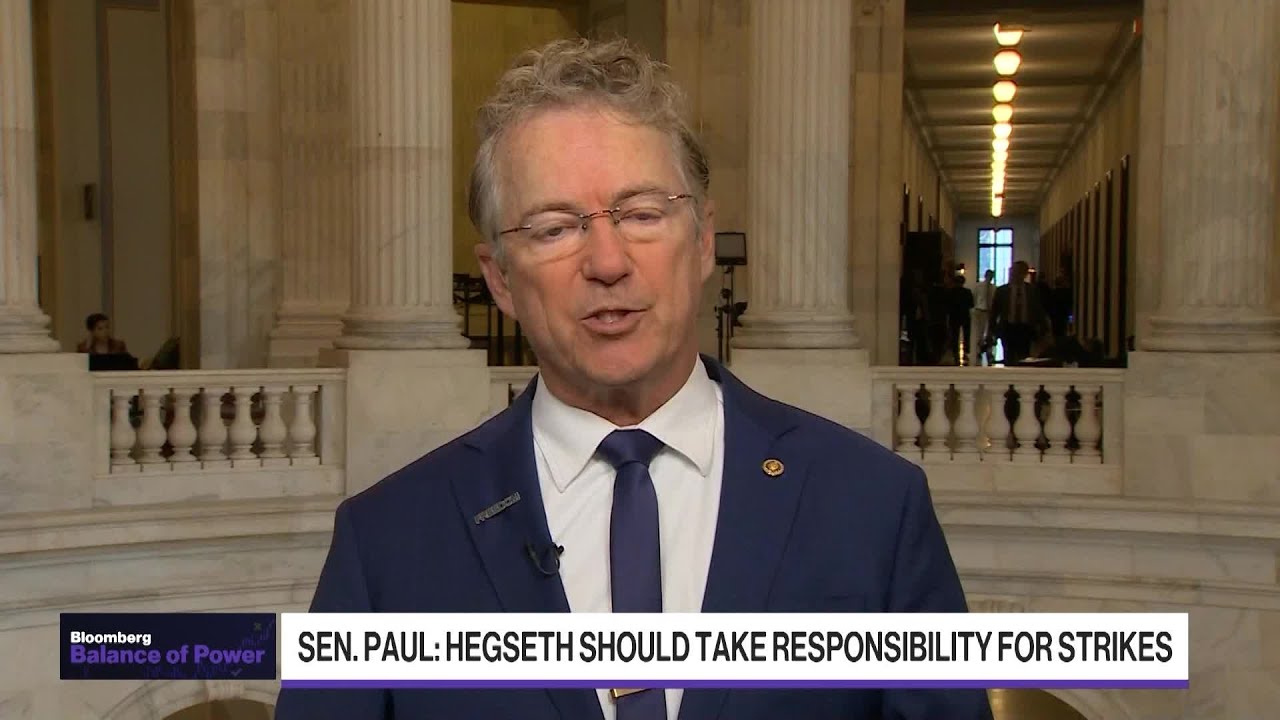
Senator Rand Paul, a Republican from Kentucky, says the US attacks on alleged drug boats coming from Venezuela are a "prelude to war." He says Defense Secretary Pete Hegseth has to take responsibility for the second strike that was ordered on a boat on Sept. 2.
US strikes on alleged drug-cartel boats in the Caribbean Sea and eastern Pacific Ocean under President Donald Trump represent a sharp departure from traditional US counter-narcotics efforts. Unlike earlier maritime interdictions led mainly by the Coast Guard and other law enforcement agencies, these missions have taken the form of military airstrikes.
The attacks have raised questions from legal experts and lawmakers about whether the military campaign is lawful. Critics of the policy say that under US and international law, killing noncombatants, including suspected criminals, who pose no immediate threat is illegal — murder in peacetime, a war crime in an armed conflict. They argue that the strikes amount to extralegal killings carried out under a baseless claim of self-defense.
In late November, bipartisan leaders of key congressional committees vowed to investigate a Sept. 2 operation in which US forces conducted a second strike against a boat after the first left two injured survivors. Administration officials denied a Washington Post report that Defense Secretary Pete Hegseth, in a spoken directive, had instructed that US forces kill everyone on board the boat as US forces monitored it. White House spokeswoman Karoline Leavitt confirmed there were two strikes and said they were lawful.
Trump has brushed aside criticism of the administration’s campaign and said he doesn’t plan to seek congressional authorization to carry out more attacks.
What do we know about the US strikes on alleged drug boats?
Since Sept. 1, the US military has conducted 21 strikes against purported drug-trafficking vessels, killing 82 people, according to the Pentagon. The White House claims these boats were engaged in illegal narco-trafficking and were linked to criminal organizations. The US has not disclosed evidence of their criminal affiliations or details about those killed. The US has simultaneously deployed a fleet of warships, aircraft and troops to the southern Caribbean.
In October, Venezuela’s ambassador to the United Nations accused the US of killing innocent people in the Caribbean, citing local reports that two of the men in one of the boat bombings were Trinidadian fishermen.
How has the US usually targeted alleged maritime drug smugglers?
The US has long worked to battle maritime drug smuggling through law enforcement operations focused on intercepting vessels, seizing illegal cargo, and detaining those on board for potential prosecution.
Traditionally, the Coast Guard has taken the lead on counter-drug trafficking operations at sea, often collaborating with the Navy and US Customs and Border Protection. Though these forces have very broad jurisdiction, operating anywhere on the seas other than in the territorial waters of another country that hasn’t given consent, their enforcement powers are limited to interdiction and arrest. The Trump administration’s decision to use airstrikes against suspected traffickers marks an unprecedented break from that approach.
--------
Watch Bloomberg Radio LIVE on YouTube
Weekdays 7am-6pm ET
Follow us on X
Subscribe to our Podcasts:
Bloomberg Daybreak
Bloomberg Surveillance
Bloomberg Intelligence
Balance of Power
Bloomberg Businessweek
Listen on Apple CarPlay and Android Auto with the Bloomberg Business app:
Apple CarPlay
Android Auto
Visit our YouTube channels:
Bloomberg Podcasts
Bloomberg Television
Bloomberg Originals
Sentinel Indexing in Progress
Metadata and chapters are available. Claim extraction for this episode is pending.
All video content is delivered via YouTube embedded players in accordance with the YouTube Terms of Service. Sentinel provides research tools that promote discovery and accountability across political media.