Bloomberg Podcasts
@bloombergpodcasts·503K subscribers·32.4K videos
Bets on Maduro, Jesus Show Promise and Risks of Prediction Boom
Posted
January 6, 2026
Views
681
Likes
4
Engagement
0.59%
January 6, 2026
681
4
0.59%
Every word spoken in this episode is indexed. Type any phrase to jump straight to the moment it was said.
Type any word or phrase that may have been spoken. Click a result to seek the player to that exact moment.
Try a name, a topic, or a quoted line
See what was published immediately before and after this episode.
 6:40Now Playing
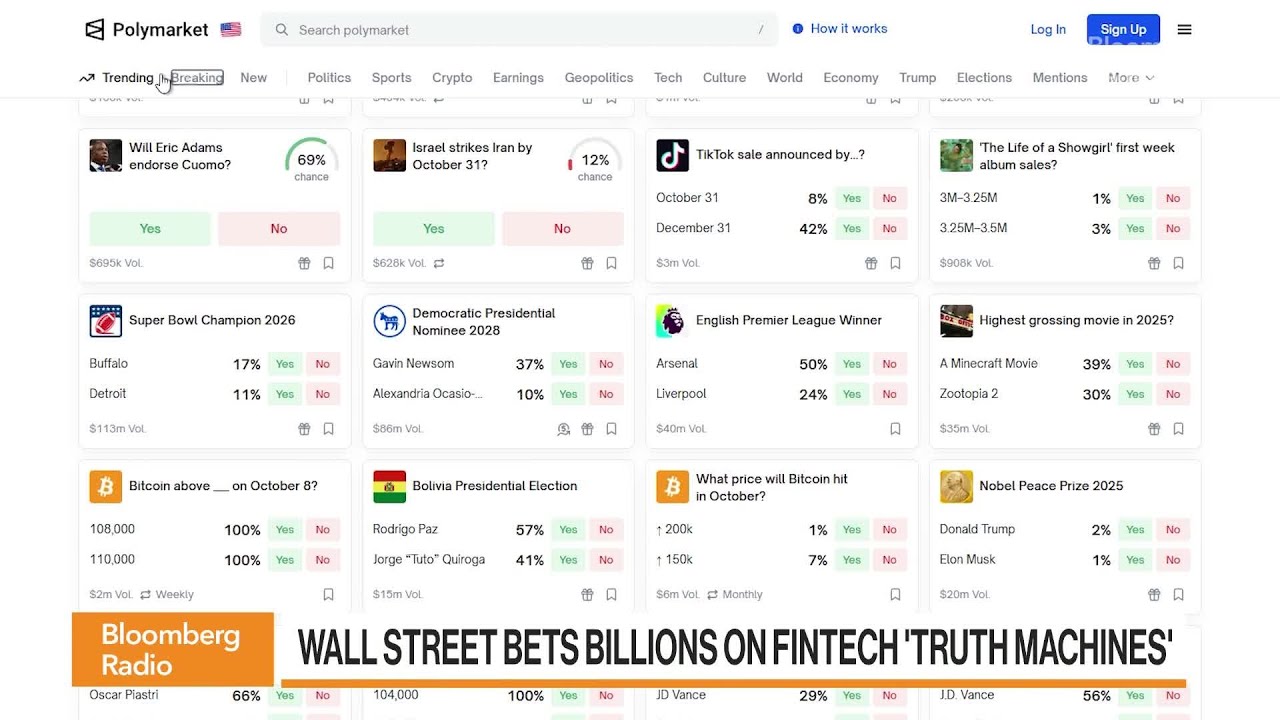
Even in the age of AI and cryptocurrencies, industries promoted breathlessly by hype merchants, the superlatives tossed around by the creators of the prediction-markets boom stand out. As the year drew to a close, one founder declared that the markets had become “the most accurate thing we have as mankind right now.” Another promised that they would, in the not-so-distant future, “financialize everything.”
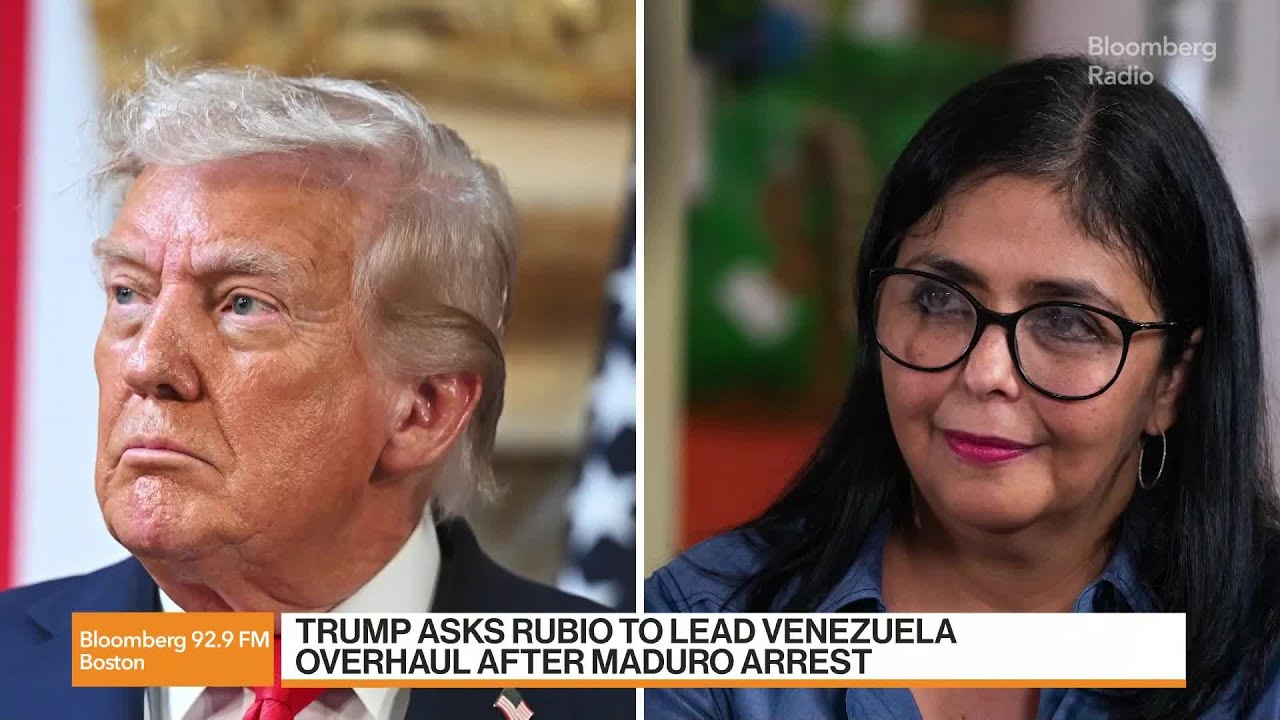
And so the pitch goes, across Wall Street and Silicon Valley, day after day: Prediction markets represent nothing less than a rebuilding of capitalism from the inside out. What they possess, their promoters say, is an unprecedented ability to churn out intelligence on everything from corporate power struggles to geopolitical standoffs, like the one that triggered the toppling of Venezuelan President Nicolás Maduro — and a windfall for one gambler who placed a series of well-timed bets.
The raw gambling mania underpinning it all, the founders say, is not some dangerous vice that needs to be kept in check. Rather, it’s the secret sauce that Polymarket and Kalshi — the industry’s pioneers — are harnessing at massive scale, around the clock, to deliver an information hack for the modern economy
Bloomberg's Denitsa Tsekova joins to discuss.
Traditional financial firms have bought in — CME Group Inc., Intercontinental Exchange Inc., and Cboe Global Markets, among them — committing billions of dollars to the industry. In turn, the valuations of both Kalshi and Polymarket doubled numerous times over the course of 2025, leaving each of them worth over $10 billion. The financiers explain their excitement by pointing to a vision of markets with a civic purpose, giving ordinary people a way to hedge against the political, economic and corporate shocks that govern modern life.
Yet that high-minded vision masks a more awkward reality.
For every contract tied to a war or an election or a storm, there are scores hinging on whether the Atlanta Hawks beat the New Orleans Pelicans on Wednesday night, what South Park characters will say in the next episode, or whether Jesus Christ will return in 2026. (Those who bet against the Lord’s return in 2025 cashed in last week.)
The markets are often thin enough that a single trader can move prices designed to reflect collective insight, especially when armed with inside information. That tension sharpened abruptly over the weekend: A trader on Polymarket made nearly $400,000 betting on the capture of Nicolás Maduro, with the biggest trades placed just before President Donald Trump publicly announced the military operation. The episode ricocheted through markets and policy circles, turning what had been a niche concern about insider trading into a potential political problem.
Evenfar-flung markets reacted: the odds of Trump acquiring Greenland by year’s end jumped from 6% to 11% on Polymarket, while bets on Ayatollah Ali Khamenei being removed from power in Iran by this summer rose from 19% to 35% — a reminder of how prediction markets can move in real time, even when Wall Street is dark, offering traders both spectacle and signal.
At the same time, few systems exist to root out bad actors, a problem that becomes more unsettling when sometimes anonymous traders are betting on, say, wildfires or other human-caused disasters they might be able to influence.
“It’s in their interest to convince us that this is going to be an enormous social good,” said Ken French, an influential financial economist at Dartmouth’s business school, whose work helped shape modern thinking about efficient markets. But as French sees it, the exchanges encourage zero-sum financial decisions with little benefit for the broader world. “The markets that you’re talking about, much of it is creating risk that doesn’t have to be borne.”
--------
Watch Bloomberg Radio LIVE on YouTube
Weekdays 7am-6pm ET
Follow us on X
Subscribe to our Podcasts:
Bloomberg Daybreak
Bloomberg Surveillance
Bloomberg Intelligence
Balance of Power
Bloomberg Businessweek
Listen on Apple CarPlay and Android Auto with the Bloomberg Business app:
Apple CarPlay
Android Auto
Visit our YouTube channels:
Bloomberg Podcasts
Bloomberg Television
Bloomberg Originals
Sentinel Indexing in Progress
Metadata and chapters are available. Claim extraction for this episode is pending.
All video content is delivered via YouTube embedded players in accordance with the YouTube Terms of Service. Sentinel provides research tools that promote discovery and accountability across political media.