Bloomberg Podcasts
@bloombergpodcasts·503K subscribers·32.4K videos
Venezuela Regroups With New Leader, Old Repression Tactics
Posted
January 6, 2026
Views
49,589
Likes
450
Comments
145
Engagement
January 6, 2026
49,589
450
145
1.20%
Every word spoken in this episode is indexed. Type any phrase to jump straight to the moment it was said.
Type any word or phrase that may have been spoken. Click a result to seek the player to that exact moment.
Try a name, a topic, or a quoted line
See what was published immediately before and after this episode.
 3:58Now Playing
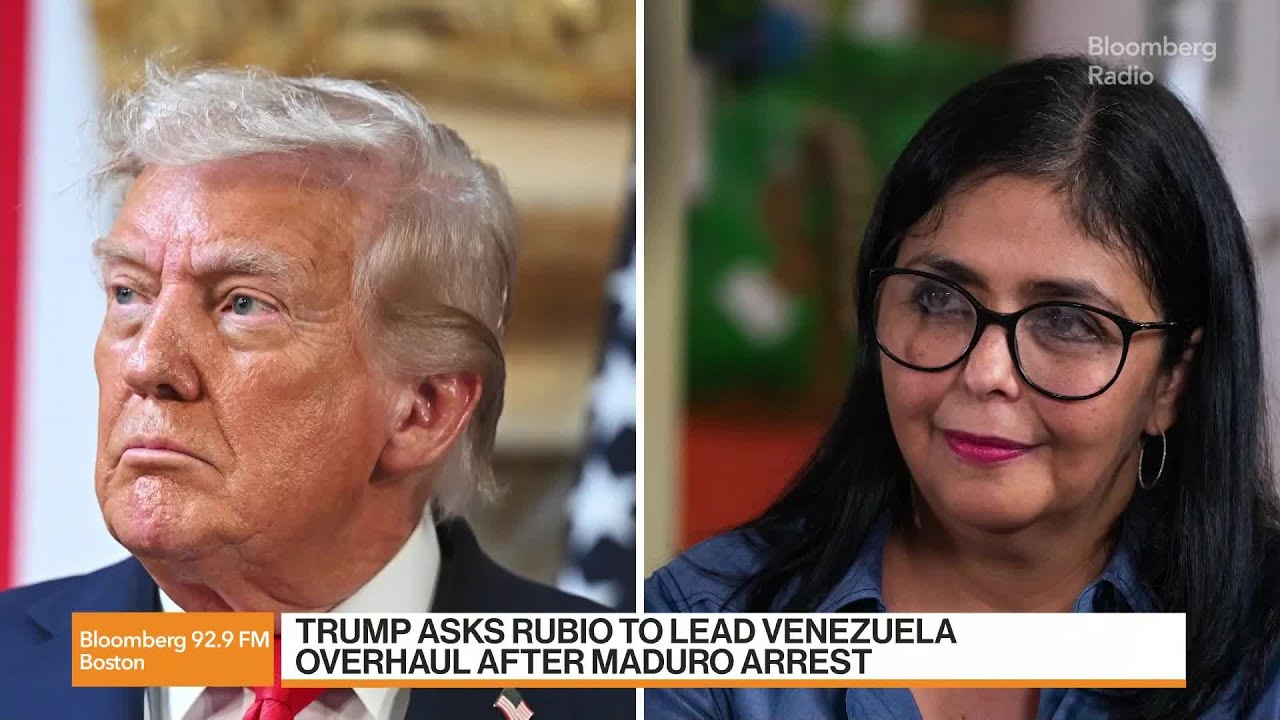
Venezuela’s government is reasserting itself after the capture of Nicolás Maduro, swearing in Delcy Rodríguez as acting president and flashing warning signs that a new wave of repression has begun.
As the government continued to churn inside the presidential palace Miraflores, Venezuela’s military counterintelligence officials have been patrolling the streets of Caracas, according to at least two witnesses. At least seven journalists and members of the press were detained on Monday morning and early afternoon, most of them at the National Assembly and its surroundings, according to the national press workers syndicate. Jimena Zuniga, Bloomberg News Latin America Geoeconomics Analyst joins to discuss.
As the US threatened Nicolás Maduro’s grip on power in recent months, a cadre of executives, lawyers and investors tied to the oil industry made their case to anyone who would listen — the Trump administration, congressional aides: His familiar No. 2 Delcy Rodríguez should fill his shoes in Venezuela.
An oil minister herself, Rodríguez has long been the go-to contact for senior executives, whom she impressed by navigating Venezuela’s industry through international sanctions, economic pressures and internal mismanagement. Her loyalty to the Maduro regime notwithstanding, she’d be best positioned to shepherd through the US plan to restore Venezuela to its glory days as an oil gusher, argued executives and lobbyists.
President Donald Trump’s inner circle came to the same conclusion, though people familiar with the matter say they did so independently. Both groups believed that the vice president, long seen as a bridge between the government and private sector, could stabilize Venezuela’s oil-based economy and facilitate American business faster than leading dissident María Corina Machado could, said the people.
Administration officials were mindful of the chaos that ensued in Iraq after the fall of Saddam Hussein. Business interests aside, maintaining a semblance of business continuity will be critical to a successful transition — one that the Trump administration has yet to define. And Rodríguez fits both those bills: she oversees Venezuela’s oil apparatus and has decades of relationships among the remaining socialist stronghold in government.
The advocates for Rodríguez didn’t directly include the biggest US oil majors, who were surprised by the removal of Maduro and are still racing to figure out how to work with Washington on next steps, according to people familiar with the matter. But there’s a wider universe of US and international companies that have operated in Venezuela for years, and many have contacts in the White House and on Capitol Hill, the people said.
A spokesperson for Chevron Corp., the only major US oil company licensed to operate in Venezuela, said it “had no advance notice of the recent operation and did not engage in any discussions with administration officials regarding governance for a post-Maduro Venezuela.” It also said operations in the country were continuing uninterrupted and in full compliance with laws and regulations.
In a triumphal press conference Saturday, Trump endorsed Rodríguez to lead Venezuela for now. Machado, he said, lacked “respect” to lead the country, a stunning blow to the recent Nobel Peace Prize winner and the regime opponents at home and abroad who have pinned their hopes on her.
The White House declined to comment beyond remarks made Sunday by Secretary of State and National Security Adviser Marco Rubio, who is playing a key role in managing Venezuela. He said that the US would leverage its oil blockade and regional military presence to further its policy goals. He also said the US would watch Rodríguez’s actions more than her rhetoric. In a Bloomberg Television appearance Monday, Greylock Capital Management Chief Executive Hans Humes, who is part of the creditor committee of Venezuela’s sovereign debt, reiterated what some global oil executives have said in private regarding Rodríguez: “If you want somebody who can operate in reasonably OK conditions, get the person who operated in the worst conditions,” he said.
--------
Watch Bloomberg Radio LIVE on YouTube
Weekdays 7am-6pm ET
Follow us on X
Subscribe to our Podcasts:
Bloomberg Daybreak
Bloomberg Surveillance
Bloomberg Intelligence
Balance of Power
Bloomberg Businessweek
Listen on Apple CarPlay and Android Auto with the Bloomberg Business app:
Apple CarPlay
Android Auto
Visit our YouTube channels:
Bloomberg Podcasts
Bloomberg Television
Bloomberg Originals
Sentinel Indexing in Progress
Metadata and chapters are available. Claim extraction for this episode is pending.
All video content is delivered via YouTube embedded players in accordance with the YouTube Terms of Service. Sentinel provides research tools that promote discovery and accountability across political media.