
Nvidia’s Rosy Revenue Forecast Shows the AI Boom Remains Strong
February 25, 2026
15,265
106
23
0.85%
Search the Record
IndexedEvery word spoken in this episode is indexed. Type any phrase to jump straight to the moment it was said.
Type any word or phrase that may have been spoken. Click a result to seek the player to that exact moment.
Try a name, a topic, or a quoted line
Bloomberg Podcasts Episodes Around February 25, 2026
See what was published immediately before and after this episode.




 4:50Now Playing
Nvidia’s Rosy Revenue Forecast Shows the AI Boom Remains Strong


YouTube Description
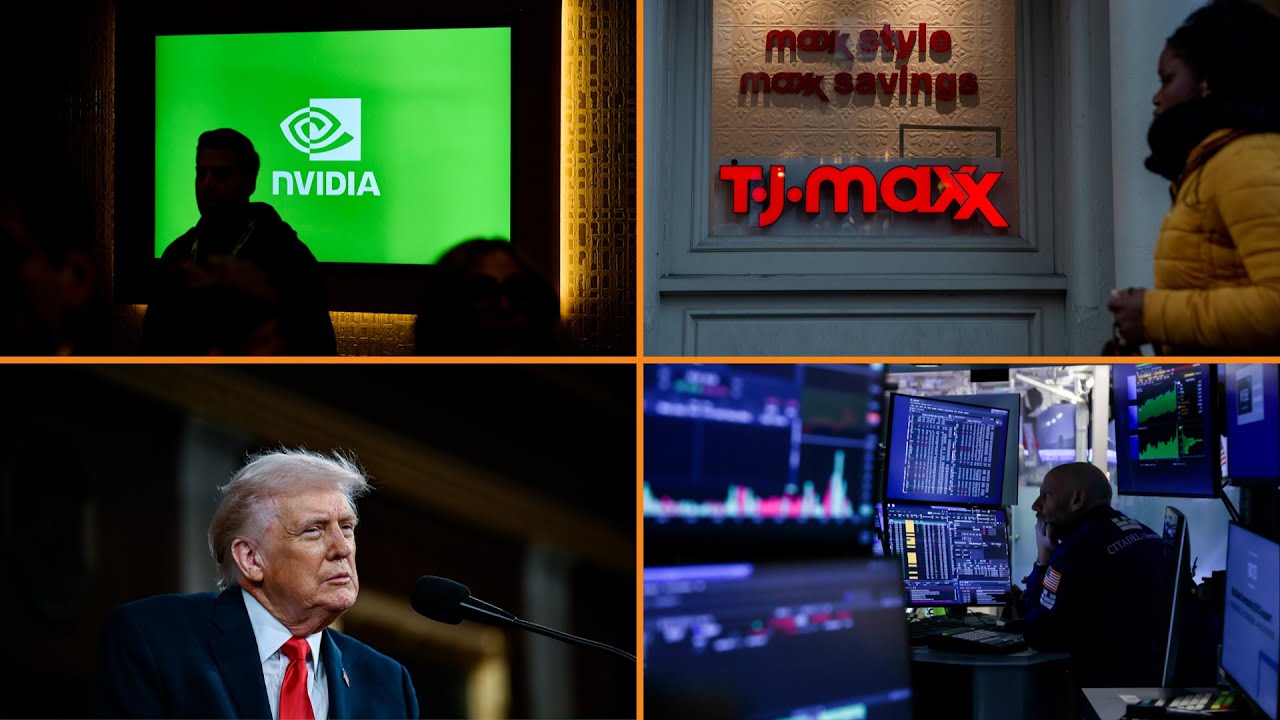
as posted by the channelBloomberg Tech Host Ed Ludlow and Jay Goldberg, Senior Analyst at Seaport Research Partners react to this quarter's Nvidia earnings.
Nvidia Corp., the world’s most valuable company, gave another bullish quarterly revenue forecast, signaling that the massive build-out of AI computing remains on track.
Fiscal first-quarter sales will be about $78 billion, the chipmaker said in a statement Wednesday. That compares with an average Wall Street estimate of $72.8 billion, according to data compiled by Bloomberg. Nvidia Corp., the dominant maker of artificial intelligence chips, suffered its worst stock decline in three months after the company’s latest forecast failed to dispel fears of an AI bubble.
The shares fell as much as 5.6% to $184.58 in New York, marking the biggest intraday drop since Nov. 25. The decline followed a first-quarter sales outlook that — on its face — looked impressive. Nvidia easily beat the average analyst estimate and delivered a 73% surge in fourth-quarter revenue.
The reaction was a stark reminder of the skepticism now surrounding Nvidia. After explosive sales growth turned the chipmaker into the world’s most valuable company, investors are seeking stronger assurances that booming AI spending can be maintained.
Shareholders have lingering questions over “whether the current AI spending wave can sustain growth beyond the next few years, and whether Nvidia will remain as dominant as AI shifts from training models to running everyday tasks,” analysts at Hargreaves Lansdown said in a note after the results. Chief Executive Officer Jensen Huang pushed back on the concerns during a conference call Wednesday, arguing that customers are already making money from their newly acquired computing power. That’s why clients will keep investing at elevated levels, he said.
“You need compute capacity, and that translates directly to growth, and that translates directly to revenues,” Huang said. “I’m confident their cash flows are growing.” Investor Michael Burry, made famous by The Big Short, added to the worries on Thursday. He noted that Nvidia has purchase obligations of $95.2 billion, compared with $16.1 billion a year earlier. That could be risky if demand wavers.
Chief Financial Officer Colette Kress tried to defuse other concerns raised by analysts, including the specter of supply constraints. The company has secured enough components to be able to meet growing demand, she said.
It remains a challenge to produce enough of Nvidia’s most advanced chips, she told analysts. But the company’s current Blackwell lineup — and an upcoming successor, called Rubin — will still beat earlier sales projections, Kress said. Nvidia had previously said that the chips would generate $500 billion by the end of 2026.
“We believe we have inventory and supply commitments in place to address future demand, including shipments extending into calendar 2027,” she said.
Nvidia still faces uncertainty in China, the largest market for chips. The US government has granted licenses to ship a small amount of H200 processors to customers there, but Nvidia doesn’t know if the Chinese government will give its approval, Kress said. For now, the company will continue to exclude data center revenue in China from its forecasts.
The small-scale license provided by the Trump administration requires the chips to go through a US inspection before they can be shipped to customers, Nvidia said. And the processors are subject to a 25% tariff when they come into the US.
--------
Watch Bloomberg Radio LIVE on YouTube
Weekdays 7am-6pm ET
Follow us on X
Subscribe to our Podcasts:
Bloomberg Daybreak
Bloomberg Surveillance
Bloomberg Intelligence
Balance of Power
Bloomberg Businessweek
Listen on Apple CarPlay and Android Auto with the Bloomberg Business app:
Apple CarPlay
Android Auto
Visit our YouTube channels:
Bloomberg Podcasts
Bloomberg Television
Bloomberg Originals
Guests & Subjects Covered
Sentinel Indexing in Progress
Metadata and chapters are available. Claim extraction for this episode is pending.
All video content is delivered via YouTube embedded players in accordance with the YouTube Terms of Service. Sentinel provides research tools that promote discovery and accountability across political media.