
Bloomberg Podcasts
@bloombergpodcasts·503K subscribers·32.4K videos
Kevin Hassett Addresses Jobs Data Citing Weather Impact in February
Posted
March 6, 2026
Views
3,048
Likes
13
Comments
31
Engagement
March 6, 2026
3,048
13
31
1.44%
Every word spoken in this episode is indexed. Type any phrase to jump straight to the moment it was said.
Type any word or phrase that may have been spoken. Click a result to seek the player to that exact moment.
Try a name, a topic, or a quoted line
See what was published immediately before and after this episode.
 8:06Now Playing
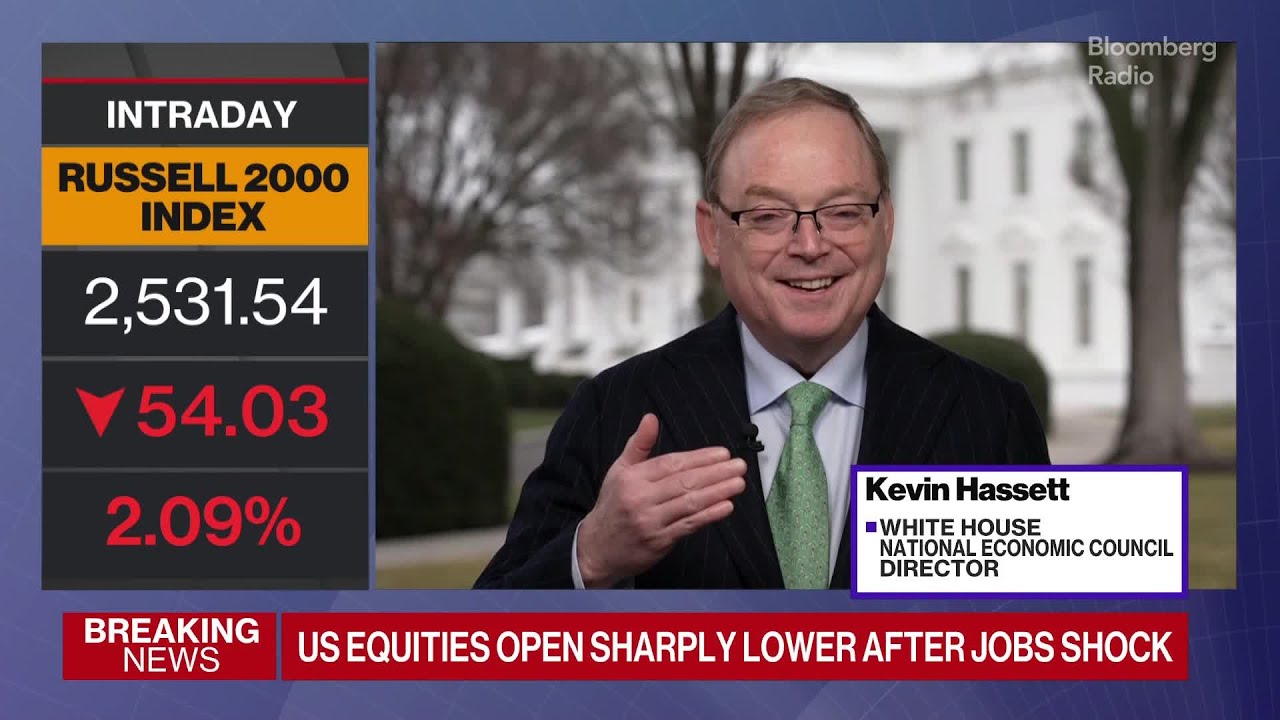
White House National Economic Council Director Kevin Hassett blamed the weather for affecting the February jobs numbers and called the data an "outlier." He spoke with Bloomberg Surveillance TV, where he also addressed concerns about energy output and the ongoing oil price surge as conflict continues with Iran. US employers unexpectedly cut jobs in February and the unemployment rate rose, pointing to lingering fragility in a labor market that was thought to be stabilizing.
Nonfarm payrolls fell 92,000 last month, one of the largest declines since the pandemic, after a strong start to the year. While some of the downside was expected in advance, like a temporary dent from striking healthcare workers and a potential hit from bad weather, a wide array of industries cut jobs in the month.
The figures call into question whether the labor market is actually steadying — as Wall Street economists and Federal Reserve officials had hoped — after the worst year for hiring outside of a recession in decades. “The idea the labor market has turned a corner implodes with this report,” Samuel Tombs, chief US economist at Pantheon Macroeconomics, said in a note.
Friday’s report from the Bureau of Labor Statistics suggests companies may be starting to follow through on a series of previously announced layoffs. And a recent trend in productivity gains illustrates how spending on artificial intelligence has allowed some firms to get by with leaner staffing.
The data also highlight just how much the recent momentum of the US labor market has hinged on one sector: health care.
“This is about a labor market that is so soft that it cannot withstand a strike of 31,000 physicians in health care because no one else is hiring,” said Omair Sharif, president of Inflation Insights LLC. More than 30,000 Kaiser Permanente employees were on strike for most of the month.
The figures could refocus the Fed’s attention on the jobs market as it assesses how long to hold interest rates steady. Policymakers have been more attuned to inflation lately — even before the US-Israeli war on Iran sparked concerns among investors about price pressures.
Read More: Trump’s Iran War Adds Potential Shock for US Economy, Voters
In an interview on CNBC following the report, San Francisco Fed President Mary Daly said, “the hopes that the labor market was steadying, maybe that was too much, and we really have to keep our eye on the labor market.”
The payrolls figure missed all estimates in a Bloomberg survey of economists, and forecasters were also surprised by the unemployment rate climbing to 4.4%. After the report, the S&P 500 was lower and two-year Treasury yields, which are sensitive to Fed policy, fluctuated. The pullback in payrolls included declines in leisure and hospitality as well as construction, which may have stemmed from inclement weather in the month. In addition to health care, manufacturing, transportation and warehousing and information also cut jobs.
Revisions also revealed that payrolls fell in December. The report suggests January’s strength was a “one-off,” said Veronica Clark, an economist at Citigroup Inc.
In a separate report Friday, US retail sales declined in January, restrained by weakness at auto dealers as winter weather-related disruptions tempered some activity.
Population Estimates
The jobs report is composed of two surveys — one of businesses, which produces the payrolls figures, and another of households. The latter included new population estimates from the Census Bureau, which normally are released with the January report but were delayed by last year’s record-long government shutdown.
After the Trump administration’s crackdown on immigration last year, the population was marked down, also drastically lowering the size of the labor force and household survey level of employment.
The participation rate — the share of the population that is working or looking for work — fell to the lowest level since 2021. The rate for workers of ages 25-54, also known as prime-age workers, also declined.
--------
Watch Bloomberg Radio LIVE on YouTube
Weekdays 7am-6pm ET
Follow us on X
Subscribe to our Podcasts:
Bloomberg Daybreak
Bloomberg Surveillance
Bloomberg Intelligence
Balance of Power
Bloomberg Businessweek
Listen on Apple CarPlay and Android Auto with the Bloomberg Business app:
Apple CarPlay
Android Auto
Visit our YouTube channels:
Bloomberg Podcasts
Bloomberg Television
Bloomberg Originals
Sentinel Indexing in Progress
Metadata and chapters are available. Claim extraction for this episode is pending.
All video content is delivered via YouTube embedded players in accordance with the YouTube Terms of Service. Sentinel provides research tools that promote discovery and accountability across political media.