Bloomberg Podcasts
@bloombergpodcasts·503K subscribers·32.4K videos
Mixed Messaging on US Objectives in Mideast Conflict
Posted
March 7, 2026
Views
1,479
Likes
10
Comments
10
Engagement
1.35%
March 7, 2026
1,479
10
10
1.35%
Every word spoken in this episode is indexed. Type any phrase to jump straight to the moment it was said.
Type any word or phrase that may have been spoken. Click a result to seek the player to that exact moment.
Try a name, a topic, or a quoted line
See what was published immediately before and after this episode.
 7:16Now Playing
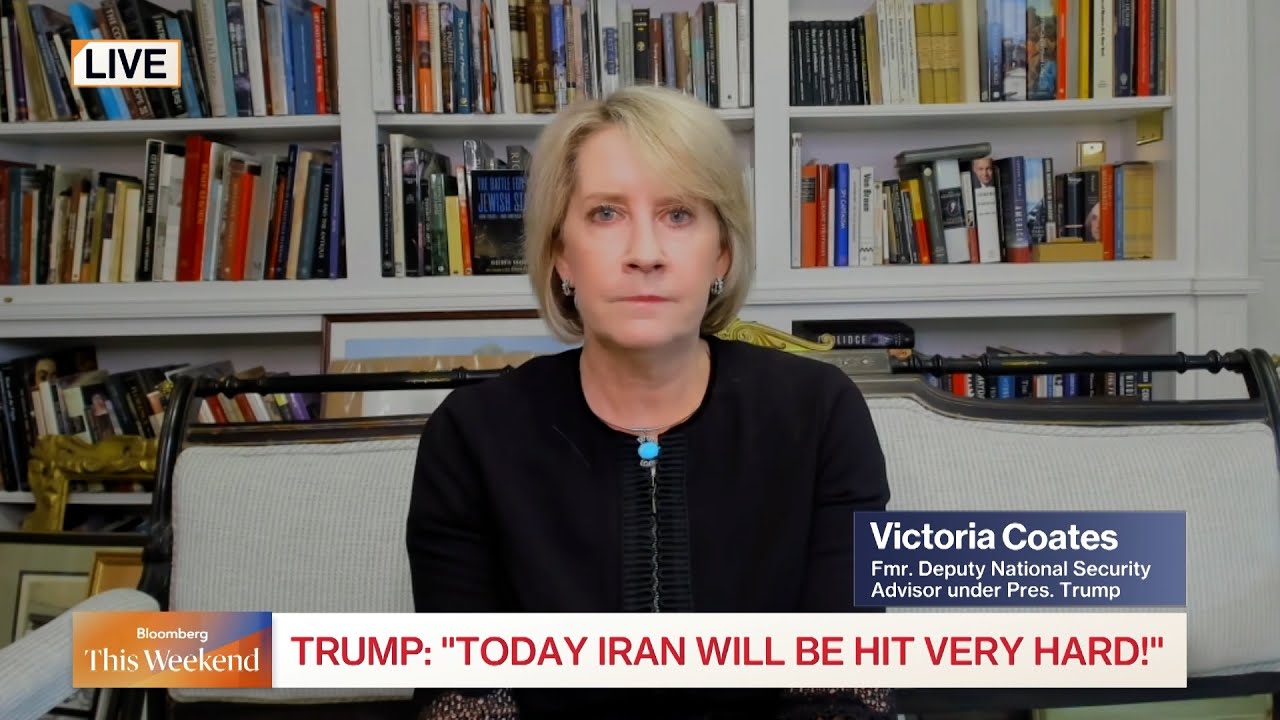
Former Trump deputy national security adviser Victoria Coates and former Biden State Department official Jen Gavito join Bloomberg’s David Gura and Christina Ruffini to discuss US strategy in the second week of the war with Iran on “Bloomberg This Weekend.” The North Atlantic Treaty Organization intercepted a ballistic missile from Iran that entered Turkish airspace, Ankara said, raising the risk that the military alliance could be drawn more directly into the war in the Middle East.
The interception over the southeast of the country was the second such incident in less than a week. Turkey warned it had the right to respond after the initial incursion on March 4, though Iran denied targeting the nation.
“A ballistic munition fired from Iran that entered Turkish airspace has been neutralized by NATO air and missile defense assets deployed in the Eastern Mediterranean,” the Turkish defense ministry said in a statement. Debris from the munition landed in Gaziantep province in southern Turkey, about 150 kilometers (93 miles) from the Incirlik Air Base — where hundreds of US military personnel are stationed and US nuclear weapons are widely believed to be stored.
An advanced NATO radar system in Kurecik, used to support anti-ballistic missile systems, is about 200km away.
The first interception also occurred in an area not far from Incirlik Air Base.
“We reiterate that all necessary steps will be taken decisively and without hesitation against any threat directed at our country’s territory and airspace,” Turkey said. “We remind all parties that adhering to Turkey’s warnings in this regard is in everyone’s interest.”
Earlier on Monday, the US State Department issued a travel warning to southeast Turkey, including Gaziantep, on risk of terrorism and armed conflict. It also suspended its consular services in Adana, where the Incirlik air base is located.
Ankara, which does not allow its bases or airspace to be used for strikes on Iran, has called for diplomatic efforts to diffuse the tensions.
Turkey and Iran have a complex relationship. While the two countries maintain trade ties — including shipments of Iranian natural gas to Turkey — they view each other as regional rivals. They have backed opposing sides in conflicts such as the Syrian civil war and pursued differing strategic goals across the Middle East, leading to periodic diplomatic friction despite official commitments to non-interference and cordial neighborly relations.
Iranian officials warned more than a decade ago that Tehran could target NATO’s missile-defense installations in Turkey should it come under attack from the US or Israel.
At the time, Tehran said that the early-warning radar system in Kurecik was designed to help protect Israel against Iranian missile threats. The site, roughly 700 kilometers (435 miles) west of the Turkey-Iran border, is a critical component of the military alliance’s ballistic-missile defense.
--------
Watch Bloomberg Radio LIVE on YouTube
Weekdays 7am-6pm ET
Follow us on X
Subscribe to our Podcasts:
Bloomberg Daybreak
Bloomberg Surveillance
Bloomberg Intelligence
Balance of Power
Bloomberg Businessweek
Listen on Apple CarPlay and Android Auto with the Bloomberg Business app:
Apple CarPlay
Android Auto
Visit our YouTube channels:
Bloomberg Podcasts
Bloomberg Television
Bloomberg Originals
Sentinel Indexing in Progress
Metadata and chapters are available. Claim extraction for this episode is pending.
All video content is delivered via YouTube embedded players in accordance with the YouTube Terms of Service. Sentinel provides research tools that promote discovery and accountability across political media.