
Bloomberg Podcasts
@bloombergpodcasts·503K subscribers·32.4K videos
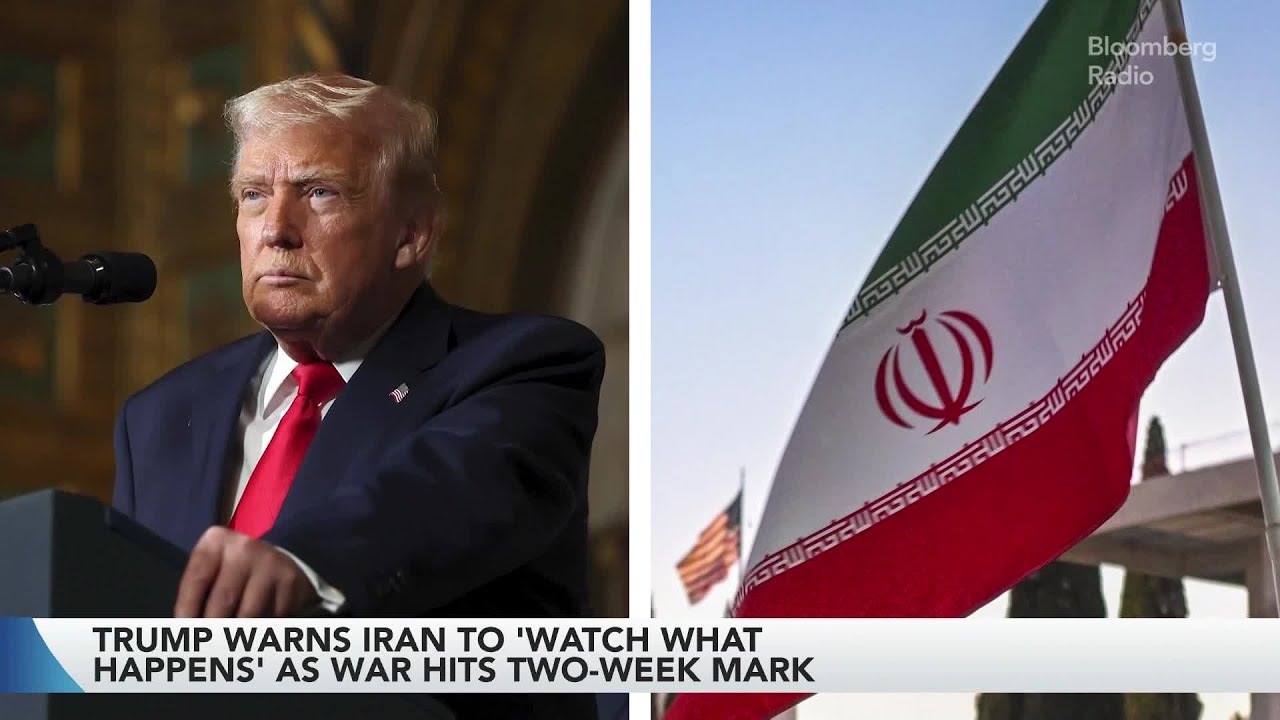
Trump Warns of New Strikes on Iran as War Hits Two-Week Mark
Posted
March 13, 2026
Views
16,458
Likes
107
Comments
73
Engagement
March 13, 2026
16,458
107
73
1.09%
Every word spoken in this episode is indexed. Type any phrase to jump straight to the moment it was said.
Type any word or phrase that may have been spoken. Click a result to seek the player to that exact moment.
Try a name, a topic, or a quoted line
See what was published immediately before and after this episode.
 8:10Now Playing
Leslie Vinjamuri, President & CEO at Chicago Council on Global Affairs, discusses the efficacy of a diplomatic path forward with Iran as strikes across the region continue.
US President Donald Trump threatened Iran with further attacks after the Islamic Republic’s new leader signaled defiance, suggesting there will be no letup in a war that’s upending energy flows and global markets.
“We have unparalleled firepower, unlimited ammunition, and plenty of time,” Trump said on Truth Social. “Watch what happens to these deranged scumbags” on Friday, he said, referring to Iran’s leaders.
Defense Secretary Pete Hegseth said Friday marks the largest attacks against the Islamic Republic, putting the total number of targets hit by the US-Israeli alliance since the beginning of the war at around 15,000.
Yet pressure is building in the US for Trump to end the fighting given the chaos enveloping the Middle East and the surge in oil prices. They have climbed to around $100 a barrel because of Iran’s effective closure of the Strait of Hormuz, a key waterway.
Trump’s warning came after Iran’s new Supreme Leader Mojtaba Khamenei said the Islamic Republic would seek to ensure the strait remains effectively closed. In his first public comments since succeeding his father, he also said Tehran would look to open other fronts in the war, now in its 14th day, if the US and Israel persist with their attacks.
Almost 2,600 people have died in the war, most of them in Iran, the latest tolls from officials and non-government agencies show. The Hormuz waterway — through which around one-fifth of the world’s oil and natural-gas exports flows — has been bought to a near standstill. The mass cancellation of flights has left thousands of passengers stranded in the Middle East.
The US said it had stepped up strikes on Iran to unprecedented levels as the war that’s engulfed the Middle East hit the two-week mark and continued to upend energy flows and global markets.
The campaign is “on plan to defeat, destroy, disable all of their meaningful military capabilities at a pace the world has never seen before,” Defense Secretary Pete Hegseth told a briefing at the Pentagon. Friday marked the largest attacks yet against the Islamic Republic, with the US-Israeli alliance hitting around 15,000 targets since the war began, he added.
While recent comments from American President Donald Trump and Iran’s new leader have suggested there will be no letup in the conflict any time soon, pressure is building in the US for a deescalation given the mounting death toll and surge in oil prices. Brent crude has climbed to around $100 a barrel because of Iran’s effective closure of the Strait of Hormuz, a key waterway. Iran’s Supreme Leader Mojtaba Khamenei on Thursday said the Islamic Republic would seek to ensure the strait remains effectively closed. In his first public comments since succeeding his father, he also warned Tehran would look to open other fronts in the war if the US and Israel persist with their attacks.
Almost 2,600 people have died in the war, most of them in Iran, latest tolls from officials and non-government agencies show. The Hormuz waterway — through which around one-fifth of the world’s oil and natural-gas exports flows — has been brought to a near standstill.
Read More: Iranians Navigate War and Regime Threats Under a Blackened Sky
A US refueling aircraft crashed in western Iraq and four of the six crew members aboard were killed, the American military said, adding that the loss of the plane wasn’t due to enemy or friendly fire. That brought to 11 the number of US service members who have died so far.
“We are really in a moment of flux where we don’t know yet precisely in which direction this is going to go,” Kim Ghattas, an author on the Middle East, told Bloomberg TV on Friday. “This Iranian regime and its axis have definitely been weakened over the last two years, but they’re still able to fight back and impose and inflict tremendous economic damage to the region, to the world economy.”
--------
Watch Bloomberg Radio LIVE on YouTube
Weekdays 7am-6pm ET
Follow us on X
Subscribe to our Podcasts:
Bloomberg Daybreak
Bloomberg Surveillance
Bloomberg Intelligence
Balance of Power
Bloomberg Businessweek
Listen on Apple CarPlay and Android Auto with the Bloomberg Business app:
Apple CarPlay
Android Auto
Visit our YouTube channels:
Bloomberg Podcasts
Bloomberg Television
Bloomberg Originals
Sentinel Indexing in Progress
Metadata and chapters are available. Claim extraction for this episode is pending.
All video content is delivered via YouTube embedded players in accordance with the YouTube Terms of Service. Sentinel provides research tools that promote discovery and accountability across political media.