Bloomberg Podcasts
@bloombergpodcasts·503K subscribers·32.4K videos
Global Air-Defense Demand Soars Amid War in Iran
Posted
March 16, 2026
Views
863
Likes
5
Engagement
0.58%
March 16, 2026
863
5
0.58%
Every word spoken in this episode is indexed. Type any phrase to jump straight to the moment it was said.
Type any word or phrase that may have been spoken. Click a result to seek the player to that exact moment.
Try a name, a topic, or a quoted line
See what was published immediately before and after this episode.
 3:24
3:24 4:39Now Playing
Wayne Sanders, Bloomberg Intelligence Senior Defense Weapons Analyst, discusses the demand surge for global air-defense stocks amid the war in Iran.
Unclassified procurement of commercial counter-drone systems tripled in fiscal 2025 from the previous year’s levels as governmentwide demand for the technology grows and availability of commercial off-the-shelf technology reduces costs.
With expanded authorization from the fiscal 2026 National Defense Authorization Act (Public Law 119-60), the Defense Department is leading efforts to acquire counter-uncrewed aircraft systems for deployment at large venues and in defense of critical US infrastructure, domestically and abroad.
Commercial buying practices can lead to faster procurement of products and services for fieldable devices. Procured systems include hardware and software to detect and disrupt drones.
Total obligations in the unclassified market shrank by one-third in fiscal 2025 due to a drop in non-commercial procurement, while the number of vendors increased 15%, according to Bloomberg Government analysis.
The downturn in the reported market follows a DOD announcement it had established a classified approach for countering drones in the first quarter of fiscal 2025.
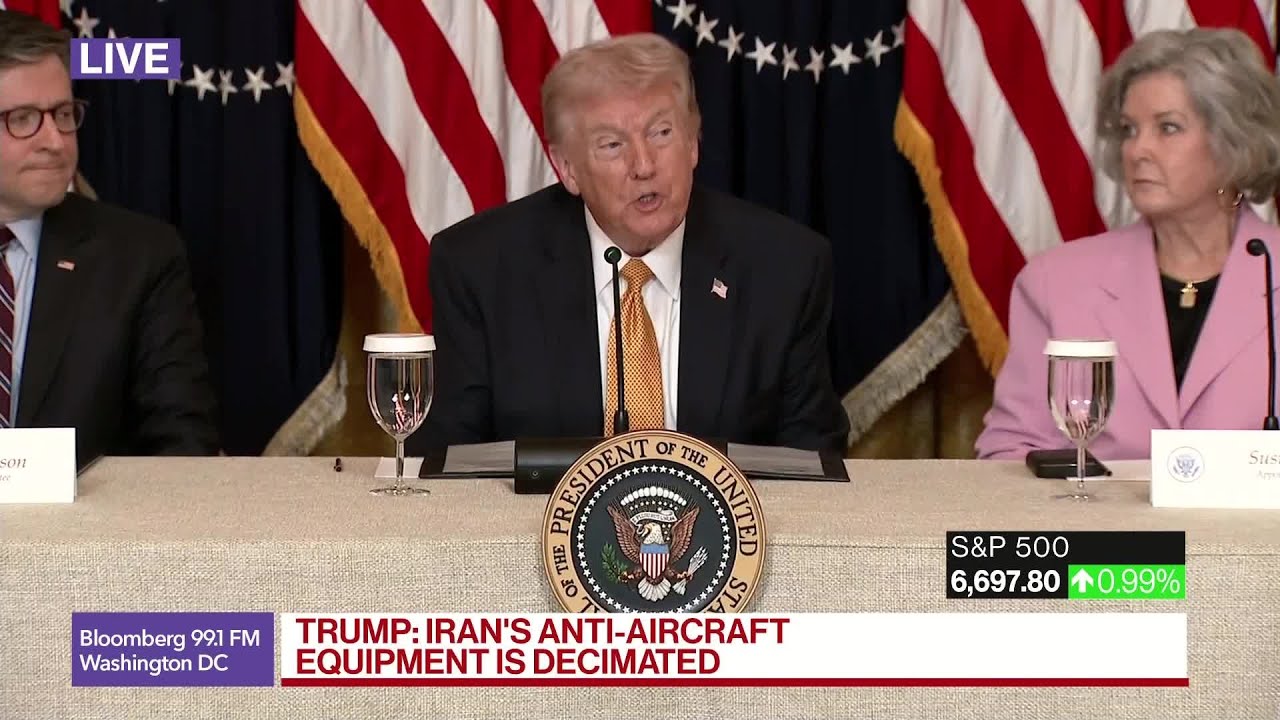
The Pentagon’s joint task force JIATF 401, formerly Replicator 2, launched a counter-UAS marketplace in February, leveraging the product catalog for commercially available IT hardware under the Army’s multibillion-dollar indefinite delivery, indefinite quantity contract Common Hardware Systems 6th Generation. JIATF 401 had launched in August to serve as the primary entity for validating and integrating counter-UAS capabilities across the agency. The US and Iran signaled no letup in fighting as President Donald Trump dangled the possibility of negotiations to end a conflict that’s brought shipping in the strategic Strait of Hormuz to a near standstill and upended energy markets.
Iranian Foreign Minister Abbas Araghchi said the Islamic Republic hasn’t asked for talks or a ceasefire after Trump told NBC on Saturday that he’s willing to make a deal but wants better terms.
“Iran wants to make a deal, and I don’t want to make it because the terms aren’t good enough yet,” Trump said, adding that a “very solid” agreement would have to include a commitment by Tehran to abandon nuclear ambitions. He gave no details on any talks and it’s not clear who, if anyone, is conveying messages between the US and Iran.
Trump also urged other countries to send warships to keep open the Strait of Hormuz, through which about a fifth of the world’s oil exports flow, but offered no specifics or commitments from the US side. He said he hoped China, France, Japan, South Korea and the UK would take part. “We don’t see any reason why we should talk with Americans, because we were talking with them when they decided to attack us, and that was for the second time,” Araghchi said in an interview aired Sunday on CBS’s Face the Nation. Iran will continue to defend itself until Trump accepts that he’s waging an “illegal war” with no chance of victory.
European Union foreign ministers will discuss the idea of expanding the bloc’s Aspides naval mission from the Red Sea to the Strait of Hormuz when they meet Monday, but officials cautioned no decisions are imminent.
The military operation to secure shipping in the Red Sea “has not been effective so far,” German Foreign Minister Johann Wadephul told ARD television on Sunday, adding Berlin was very skeptical about any expansion of the naval mission.
The Trump administration plans to announce as soon as this week that it has formed a coalition with a number of countries to escort ships through the strait, the Wall Street Journal reported on Sunday. Still under discussion, however, was whether such an operation would begin before or after the missile strikes end, the report said.
The Pentagon estimates the war, now in its third week, would take between four and six weeks, said Kevin Hassett, head of the White House’s National Economic Council.
--------
Watch Bloomberg Radio LIVE on YouTube
Weekdays 7am-6pm ET
Follow us on X
Subscribe to our Podcasts:
Bloomberg Daybreak
Bloomberg Surveillance
Bloomberg Intelligence
Balance of Power
Bloomberg Businessweek
Listen on Apple CarPlay and Android Auto with the Bloomberg Business app:
Apple CarPlay
Android Auto
Visit our YouTube channels:
Bloomberg Podcasts
Bloomberg Television
Bloomberg Originals
Sentinel Indexing in Progress
Metadata and chapters are available. Claim extraction for this episode is pending.
All video content is delivered via YouTube embedded players in accordance with the YouTube Terms of Service. Sentinel provides research tools that promote discovery and accountability across political media.