
Bloomberg Podcasts
@bloombergpodcasts·503K subscribers·32.4K videos
Diesel Costs Become New Worry as Gallon Surpasses $5
Posted
March 20, 2026
Views
14,971
Likes
170
Comments
107
Engagement
1.85%
March 20, 2026
14,971
170
107
1.85%
Every word spoken in this episode is indexed. Type any phrase to jump straight to the moment it was said.
Type any word or phrase that may have been spoken. Click a result to seek the player to that exact moment.
Try a name, a topic, or a quoted line
 6:06Now Playing
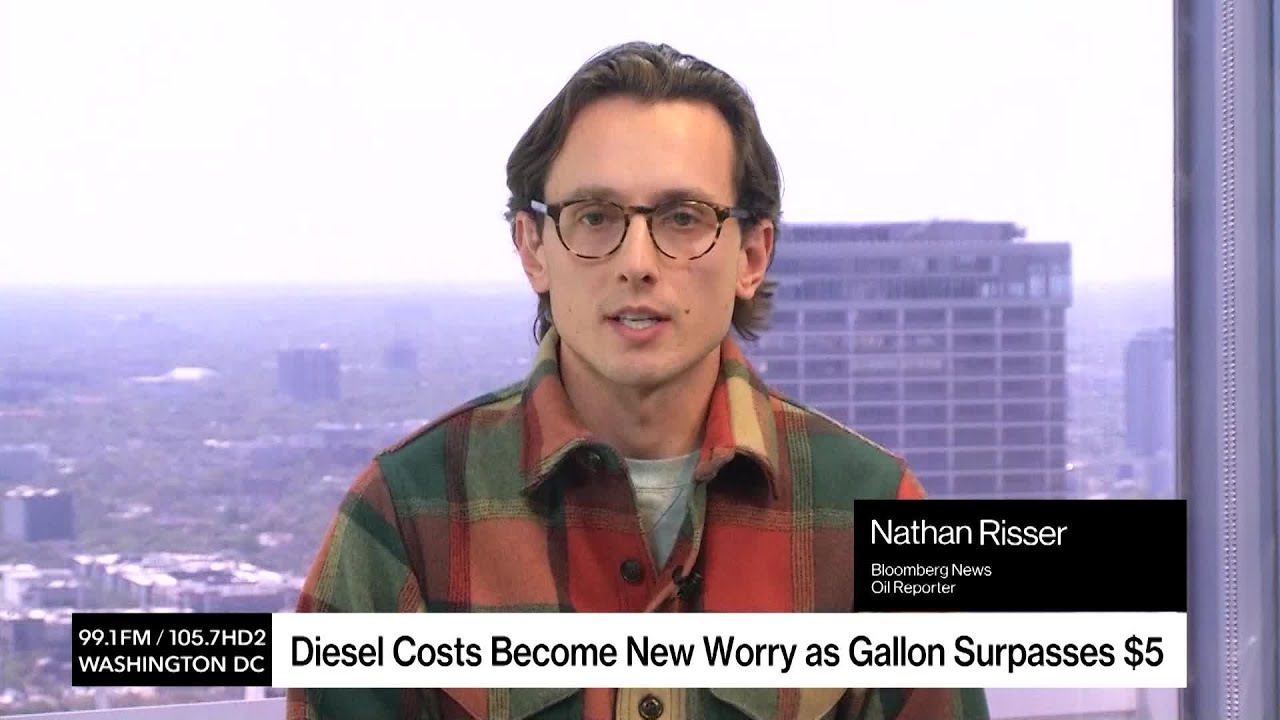
The average price for a gallon of diesel in the US blew past $5 this week for only the second time in history. (Russia’s 2022 invasion of Ukraine marked the fuel’s first foray into previously unfathomable territory.) Although most consumers are far more concerned with the price of gasoline, it’s the even sharper increase in diesel that has businesses on alert. That’s because it powers nearly every industry, from the tractors plowing the fields to the machinery erecting buildings to the semitrucks, trains and buses that transport goods and people coast-to-coast. Diesel is the trucking industry’s second-largest expense, after driver pay, accounting for about a fifth of operating costs, according to Bob Costello, chief economist at American Trucking Associations. Bloomberg News Oil Reporter Nathan Risser joins Bloomberg Businessweek Daily to discuss. He speaks with Carol Massar and Tim Stenovec. Three weeks into the Iran war, there’s an ever-growing gap between the price of oil futures and supplies that determine costs for consumers in the real world.
The global Brent benchmark has jumped about 50% to around $110 a barrel as the near-complete closure of the Strait of Hormuz and attacks on Middle East energy facilities choke supplies. But the cost of almost every physical barrel is surging even more, as tight supplies boost prices of products that consumers actually use, like gasoline, diesel and jet fuel.
Refiners in Asia, the top consuming region, are buying cargoes from thousands of miles away at eye-watering premiums to Brent as they try and secure whatever supplies are available. Trucking companies are starting to feel the impact of higher fuel costs and some parts of the world are crimping purchases of fuels that power ships. With jet fuel prices above $200 a barrel, major European airlines say passengers will have to bear the extra costs.
The disconnect between futures — which are underpinned by hundreds of billions of dollars of daily transactions — and physical oil is partly due to aggressive US attempts to keep a lid on prices, including through releasing emergency supplies. The reality is that the global economy is suffering from a bigger inflationary hit than futures suggest, something that’s piling pressure on central bankers and the Trump administration before the November midterm elections.
“You look at the paper markets, they’ve entirely disconnected from the physical markets,” said Jeff Currie, chief strategy officer of energy pathways at Carlyle Group Inc. “We’re dealing with an enormous supply shock.” The price shock could get much worse. Wall Street giants Goldman Sachs Group Inc. and Citigroup Inc. this week said that if the conflict continues, futures could hit record highs in the coming weeks, surpassing $147.50 set in 2008. It’s unusual for physical and futures prices to remain far apart for long periods of time.
Those calls are being driven by what the International Energy Agency described as the biggest-ever oil supply disruption. Goldman has estimated that about 17 million barrels a day of oil flows through the Persian Gulf are being affected by the conflict.
Brent neared $120 twice in the last two weeks, a level not seen since 2022, putting pressure on Washington to calm the market.
On Thursday, Treasury Secretary Scott Bessent told Fox Business that just days after announcing one massive stockpile release, the US could consider another one, despite question marks over the viability of doing so logistically.
He then followed with comments that stunned already-exhausted oil traders: The US might lift some sanctions on Iranian oil, despite being at war with Tehran. Traders around the world, who have had to approach Iran trades with the utmost caution for years, expressed exasperation with the news.
Other efforts to tame prices include the unsanctioning of Russian oil at sea, and there has been intense trader speculation that the US may be intervening in futures markets, something Bessent has denied. Soaring volatility has also limited the size of positions that traders can take, as it makes it more expensive to do so.
--------
Watch Bloomberg Radio LIVE on YouTube
Weekdays 7am-6pm ET
Follow us on X
Subscribe to our Podcasts:
Bloomberg Daybreak
Bloomberg Surveillance
Bloomberg Intelligence
Balance of Power
Bloomberg Businessweek
Listen on Apple CarPlay and Android Auto with the Bloomberg Business app:
Apple CarPlay
Android Auto
Visit our YouTube channels:
Bloomberg Podcasts
Bloomberg Television
Bloomberg Originals
Sentinel Indexing in Progress
Metadata and chapters are available. Claim extraction for this episode is pending.
All video content is delivered via YouTube embedded players in accordance with the YouTube Terms of Service. Sentinel provides research tools that promote discovery and accountability across political media.