Bloomberg Podcasts
@bloombergpodcasts·503K subscribers·32.4K videos
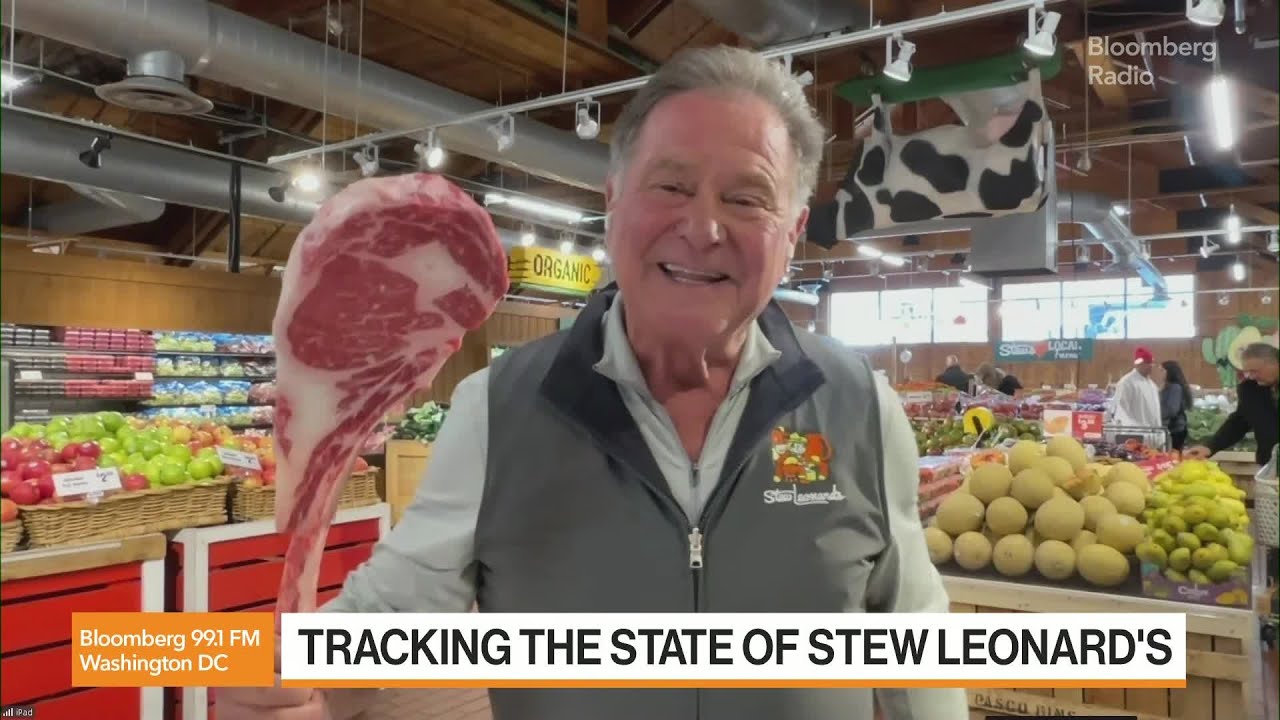
No One Wins When You Raise Prices, Says Stew Leonard's President, CEO
Posted
March 20, 2026
Views
3,444
Likes
22
Comments
9
Engagement
March 20, 2026
3,444
22
9
0.90%
Every word spoken in this episode is indexed. Type any phrase to jump straight to the moment it was said.
Type any word or phrase that may have been spoken. Click a result to seek the player to that exact moment.
Try a name, a topic, or a quoted line
See what was published immediately before and after this episode.
 5:13Now Playing
Steward Leonard Jr, President and CEO of Stew Leonard's, discusses how tariffs are impacting grocery bills of the every-day consumer.
The number of companies suing for tariff refunds has spiked in recent weeks, a sign that many importers aren’t confident yet in the Trump administration’s plans to create a claims process after the US Supreme Court struck down the president’s trade policies.
Nearly 1,000 new cases were filed in a US trade court since March 1, according to a Bloomberg News review of publicly available records. That’s roughly a third of the more than 3,000 tariff lawsuits brought over the past year.
Customs officials have told a judge that they’re building a new system to handle repayment demands after he ordered the administration to launch the refund process. But trade lawyers say there are still unknown factors that make it prudent for clients to sue in court, including whether the government will exclude certain tariff payments from its process or challenge the scope of the judge’s authority to manage it.
“It all boils down to uncertainty,” said Michael Roll, a partner at Roll & Harris who has filed tariff refund lawsuits, including more than a dozen in the last week alone. If the administration’s claims system doesn’t work as intended or there’s disagreement about a specific company’s tax situation, “the advantage is you’re there, you’ve filed in court, now you have a seat at the table,” he said.
Spokespeople for Customs and Border Protection and for the Justice Department, which has handled the government’s litigation, did not immediately respond to requests for comment. Americans are searching for ways to offset rising gas prices as the effect of the war in Iran hits their wallets.
At a Costco Wholesale Corp. gas station near San Antonio, wait times have stretched as much as 30 minutes and lines wrap around the block. Elsewhere, drivers are refreshing apps like GasBuddy and going out of their way for cheaper fuel and discounts as prices reach nearly $4 a gallon on average. Others say they are trimming spending on grocery, takeout and travel.
How much Americans' spending behavior changes, and what that means for the US economy's main engine of growth, will depend on how high prices at the pump go, and for how long.
The war in Iran has sent US oil prices soaring by about 45%, and gasoline futures up by more than 50%, with regional energy giants being forced to cut production and the closing of the Strait of Hormuz — through which about a fifth of the world’s oil usually transits. The price of Brent crude, the international benchmark for oil, jumped past $110 a barrel, pushing up gasoline prices. Some states are already seeing costs well above the national average. Higher gas costs are already having an impact on consumer spending, leading to less spending in other categories, said Gregory Daco, chief economist at EY-Parthenon. Consumers are more sensitive to gas price increases in an environment where they're rising rapidly, he added, and $4 a gallon is a key threshold.
“When you go from $3.99 to $4.01, even though it’s just a marginal increase, there is a psychological effect,” said Daco. People become more cost-conscious and “it becomes a pinch for almost everyone.”
Taryn Bramhall waited for almost half an hour at her local Costco in Texas to fill her tank. She calculated a $10 price spike in her bill compared to last month. As a result, the 19-year-old decided to pause her side job as a DoorDash Inc. driver. The high cost of gas no longer made the hustle worth it, she said.
“On a good Saturday night I was making a little over $100,” said Bramhall. “Now my profit would be around the same, but it would be me spending $15 every day on gas.”
Bramhall is one of many consumers going out of their way to find cheaper gas at warehouse clubs and grocery stores known for their discounts. Some consumers are also seizing on deals at stores like Stop & Shop and Circle K Corp., which offer fuel rewards programs.
--------
Watch Bloomberg Radio LIVE on YouTube
Weekdays 7am-6pm ET
Follow us on X
Subscribe to our Podcasts:
Bloomberg Daybreak
Bloomberg Surveillance
Bloomberg Intelligence
Balance of Power
Bloomberg Businessweek
Listen on Apple CarPlay and Android Auto with the Bloomberg Business app:
Apple CarPlay
Android Auto
Visit our YouTube channels:
Bloomberg Podcasts
Bloomberg Television
Bloomberg Originals
Sentinel Indexing in Progress
Metadata and chapters are available. Claim extraction for this episode is pending.
All video content is delivered via YouTube embedded players in accordance with the YouTube Terms of Service. Sentinel provides research tools that promote discovery and accountability across political media.