Bloomberg Podcasts
@bloombergpodcasts·503K subscribers·32.4K videos
Hormuz Oil Shock Spreads West as Strait Remains Closed
Posted
March 30, 2026
Views
83,234
Likes
963
Comments
257
Engagement
March 30, 2026
83,234
963
257
1.47%
Every word spoken in this episode is indexed. Type any phrase to jump straight to the moment it was said.
Type any word or phrase that may have been spoken. Click a result to seek the player to that exact moment.
Try a name, a topic, or a quoted line
 6:41Now Playing
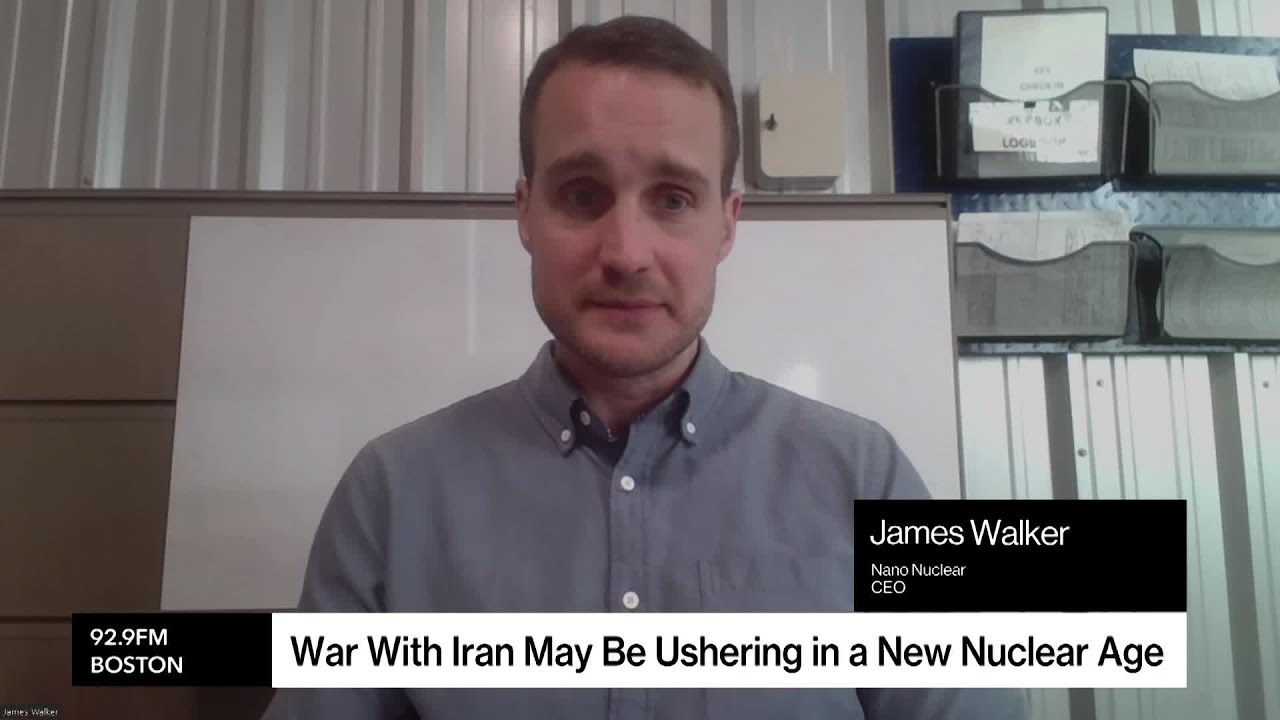
Eric Nuttall, senior portfolio manager at Nine Point, said that oil disruption from war with Iran is projected to be worse than during the COVID pandemic as the Strait of Hormuz remains closed.
Nuttall said that the oil companies are quickly working their way through the buffer supply of oil and expects that it will lead to physical shortages of oil barrels.
US oil prices ended Monday’s session above $100 a barrel for the first time since the US and Israel launched a war against Iran, with President Donald Trump threatening further escalation of attacks, including on critical energy infrastructure.
West Texas Intermediate futures rose more than 3% to settle at $102.88 a barrel, the highest since July 2022. The $100 price is a key psychological level watched by traders and other market participants. Meanwhile, international benchmark Brent crude is on track for a record percentage gain in March, and average US retail gasoline prices are hovering just below $4 a gallon.
Crude prices were also bouyed as more US troops arrived in the region and the Iran-backed Houthi militants in Yemen entered the war. Traders are warning that an even bigger increase in energy prices is on the way if the conflict doesn’t end soon.
Breaking the $100 settlement level for WTI “might be a tell that oil traders are now looking only to upside, with or without any peace talks,” said Carl Larry, an oil and gas analyst at Enverus Inc. “The realization is that there’s more risk to upside than downside, and the play is to expect the worst before we can expect a turn lower in the near term.”
In a Truth Social post, Trump said that if a deal with Iran isn’t reached shortly and “if the Hormuz Strait is not immediately ‘Open for Business,’ we will conclude our lovely ‘stay’ in Iran by blowing up and completely obliterating all of their Electric Generating Plants, Oil Wells and Kharg Island.” Oil sits at $110 a barrel as the Iran war enters its second month. We estimate it could surge toward $140 if the conflict expands into the Red Sea.
The Houthis have now entered the fray, launching missiles at Israel. If they begin targeting Saudi crude flows bypassing the Strait of Hormuz, an energy disruption that’s already the largest in history could get worse.
After sitting on the sidelines for the first month of the war, the Houthis launched ballistic missiles at Israel on March 28. The Yemen-based group, one of Tehran’s partners, threatened to open another front in the war. The Houthis have a track record: Red Sea shipping has yet to recover from the group’s campaign during the Gaza war.
The Houthis’ entry into the conflict comes as the Iran war disrupts global energy flows. The closure of the Strait of Hormuz has already pushed oil above $110. Saudi Arabia’s East-West pipeline has become the main diversion route. About 5 million barrels of daily oil exports are at stake.
We expect the Houthis to escalate further. If the US escalates significantly — including through a ground operation in Iran — the Houthis could target Red Sea shipping and energy infrastructure in Yanbu, Saudi Arabia. By our calculations, that could push oil toward $140 per barrel, lift inflation, weaken global growth, and transfer income from consumers to oil producers.
--------
Watch Bloomberg Radio LIVE on YouTube
Weekdays 7am-6pm ET
Follow us on X
Subscribe to our Podcasts:
Bloomberg Daybreak
Bloomberg Surveillance
Bloomberg Intelligence
Balance of Power
Bloomberg Businessweek
Listen on Apple CarPlay and Android Auto with the Bloomberg Business app:
Apple CarPlay
Android Auto
Visit our YouTube channels:
Bloomberg Podcasts
Bloomberg Television
Bloomberg Originals
Sentinel Indexing in Progress
Metadata and chapters are available. Claim extraction for this episode is pending.
All video content is delivered via YouTube embedded players in accordance with the YouTube Terms of Service. Sentinel provides research tools that promote discovery and accountability across political media.