Bloomberg Podcasts
@bloombergpodcasts·503K subscribers·32.4K videos
Artemis II Set to Launch Crew to Moon Wed. Evening
Posted
April 1, 2026
Views
671
Likes
6
Comments
3
Engagement
1.34%
April 1, 2026
671
6
3
1.34%
Every word spoken in this episode is indexed. Type any phrase to jump straight to the moment it was said.
Type any word or phrase that may have been spoken. Click a result to seek the player to that exact moment.
Try a name, a topic, or a quoted line
 10:55Now Playing
NASA astronauts are poised to lift off Wednesday on a 10-day journey that will slingshot them around the moon, marking humanity’s return to the lunar vicinity for the first time in more than half a century.
The crew’s Lockheed Martin Corp.-built Orion capsule, perched atop the Boeing Co.-made Space Launch System rocket, is set to launch at 6:24 p.m. local time from Kennedy Space Center in Florida.
The mission is a crucial, in-space dress rehearsal for the long-delayed SLS rocket and Orion capsule, and marks the biggest milestone yet in NASA’s multi-year Artemis campaign to land humans on the moon as soon as 2028.
If the mission launches on schedule, the four-person crew will travel farther in space than anyone in history. A NASA crew of four astronauts have now traveled farther in space than anyone in history as the group’s spacecraft hurtles toward the moon for a historic flyby.
Shortly before 2 p.m. New York time on Monday, the Artemis II Lockheed Martin Corp.-built Orion capsule surpassed the distance the Apollo 13 crew traveled in 1970 of 248,655 miles (400,170 kilometers) from Earth, NASA said.
“We will continue our journey even further into space before Mother Earth succeeds in pulling us back to everything that we hold dear,” Canadian astronaut Jeremy Hansen said as the crew broke the record.
“But we most importantly choose this moment to challenge this generation and the next to make sure this record is not long lived,” he added.
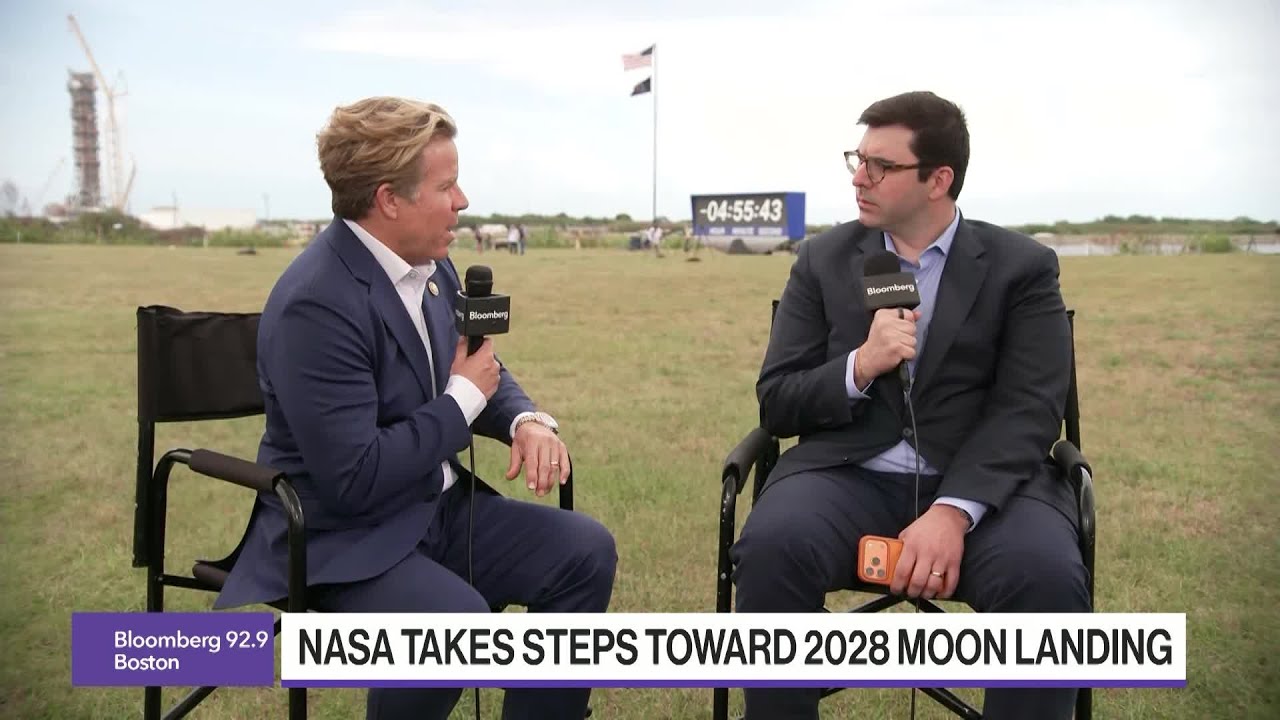
Bloomberg's Ed Ludlow reports from the Kennedy Space Center. Hansen then suggested naming two craters on the moon’s surface. The first suggestion was Integrity, after the nickname for the crew’s capsule, and the second was Carroll, after mission commander Reid Wiseman’s late wife. Wiseman and the crew teared up during the suggestion and all embraced.
The crew will be undertaking a several hours-long lunar flyby that will bring them the nearest any human has gotten to the lunar surface in more than 50 years, reaching their closest approach slightly after 7 p.m. New York time on Monday.
The astronauts will snap images of the moon’s far side – a vantage that is never seen from Earth.
The close approach is the pinnacle moment of NASA’s Artemis II mission, which launched to space on Wednesday, April 1, sending NASA astronauts Wiseman, Victor Glover, Christina Koch and Hansen en route to the moon.
The mission serves as an elaborate dress rehearsal meant to test vehicles that will be used to help land humans on the lunar surface in potentially two years.
At their nearest distance to the moon, the crew will come within roughly 4,070 miles of the lunar surface, according to a new estimate by NASA. From the crew’s point of view, the moon NASA is hopeful that the astronauts will be able to use their eyes – “the best cameras in the universe” as NASA flight director Judd Frieling put it during a news conference – to see parts of the far side of the moon that no human has seen before.
“It turns out there’s about 60% of the far side, I think, that has never been seen by human eyes because of the lighting conditions,” Wiseman said before launch. “Apollo always wanted that light on the front side of the moon for their landing and launch capabilities.” NASA scientists have been working to finalize the science objectives and list of lunar targets they want the crew to pay attention to during the flyby. By comparing how certain targets look from different angles and under different lighting conditions as the capsule moves, they hope the crew can help scientists learn more about how the moon’s surface evolved over time.
“The human eye, especially when it’s connected to a well-trained brain, which I assure you these four people have, are capable of, just in literally the blink of an eye, making nuanced color observations that Apollo observations told us can tell us something scientifically,” Kelsey Young, NASA’s Artemis science flight operations lead, said during a news conference on Saturday.
--------
Watch Bloomberg Radio LIVE on YouTube
Weekdays 7am-6pm ET
Follow us on X
Subscribe to our Podcasts:
Bloomberg Daybreak
Bloomberg Surveillance
Bloomberg Intelligence
Balance of Power
Bloomberg Businessweek
Listen on Apple CarPlay and Android Auto with the Bloomberg Business app:
Apple CarPlay
Android Auto
Visit our YouTube channels:
Bloomberg Podcasts
Bloomberg Television
Bloomberg Originals
Sentinel Indexing in Progress
Metadata and chapters are available. Claim extraction for this episode is pending.
All video content is delivered via YouTube embedded players in accordance with the YouTube Terms of Service. Sentinel provides research tools that promote discovery and accountability across political media.