Bloomberg Podcasts
@bloombergpodcasts·503K subscribers·32.4K videos
Trump Says Iran Could ‘Die Tonight’ as Hormuz Deadline Looms
Posted
April 7, 2026
Views
7,307
Likes
63
Comments
52
Engagement
April 7, 2026
7,307
63
52
1.57%
Every word spoken in this episode is indexed. Type any phrase to jump straight to the moment it was said.
Type any word or phrase that may have been spoken. Click a result to seek the player to that exact moment.
Try a name, a topic, or a quoted line
 8:40Now Playing
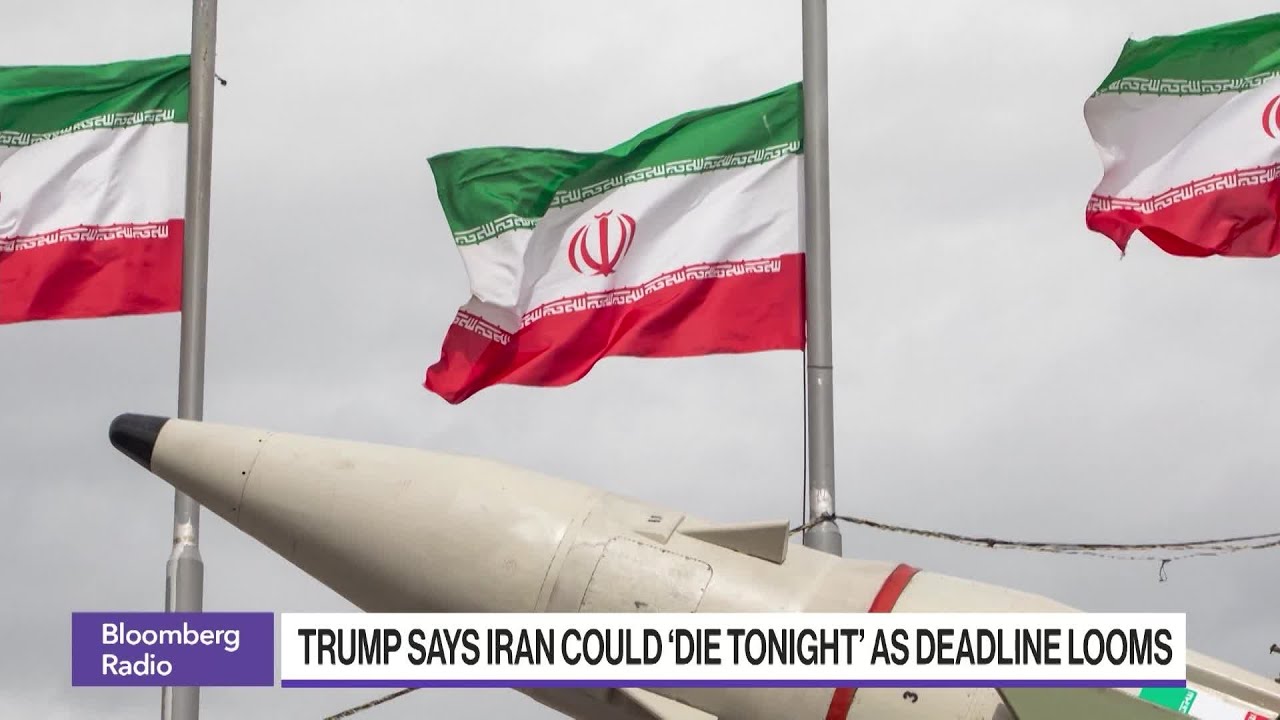
President Donald Trump threatened Iran with civilizational destruction as the US attacked military targets on the country’s key oil export hub, ramping up pressure on Tehran to reopen the Strait of Hormuz by his Tuesday deadline or face massive strikes on critical infrastructure.
Iran halted participation in ceasefire talks in response to Trump’s social media post, according to a person familiar with the matter who asked not to be identified discussing private deliberations. Those discussions have been conducted through third-party channels. Mediators were scrambling to resuscitate negotiations ahead of the deadline, the person said. Jen Gavito, Senior Advisor with the Cohen Group/Former-Acting Principal Deputy Assistant Secretary of State for Near Eastern Affairs under President Biden joins Balance of Power to discuss. The US and Iran said they are prepared to hold talks to end the war in the Middle East during a proposed two-week pause in hostilities, even as Israeli strikes on Lebanon threatened to derail the fragile truce.
Further adding uncertainty, sporadic fighting continued throughout the region and the Strait of Hormuz remained largely blocked. President Donald Trump has said that reopening the strait was a condition for halting the fighting.
Trump’s announced ceasefire Tuesday night was a retreat from threats to unleash massive devastation on Iran, easing fears of a protracted global energy crisis. Mediator Pakistan has floated negotiations later this week in Islamabad, and Trump said they could start very soon, according to the New York Post.
Yet there were already signs that the agreement was buckling. Iran said it would withdraw from the deal if Israel kept up attacks in Lebanon, according to the semi-official Tasnim news agency. Passage of oil tankers through the strait were halted after Israel’s attacks, the semi-official Fars news agency reported.
The White House didn’t immediately respond to a request for comment on whether the president views the war front in Lebanon as included in the ceasefire.
Trump made a series of dubious claims about the terms of the agreement in a social media post on Wednesday morning. He said the Islamic Republic has gone through a “regime change,” even though there have been no signs this week that new leadership had taken hold.
He also indicated the US would use its own 15-point plan as the basis of negotiations with Tehran, after saying Tuesday the sides would begin discussions off of Iran’s 10-point proposal. Nonetheless, he said the US was prepared to discuss with Iran much-desired sanctions relief.
Read More: What We Know About the US-Iran Ceasefire
US President Donald Trump during a news conference in Washington, DC, on April 6.
The shift to diplomacy came as countries including Kuwait, Bahrain and the United Arab Emirates, as well as Israel, reported ongoing missile attacks into Wednesday, sewing confusion about when and how the ceasefire would be enforced. Saudi Arabia’s oil pipeline to the Red Sea was hit by a drone strike, according to a person familiar with the matter.
Further uncertainty surrounded whether the ceasefire includes Israel’s campaign in Lebanon, where the country is waging a parallel war against the Iran-aligned Hezbollah militia.
Pakistani Prime Minister Shehbaz Sharif, a key mediator, said the truce included Lebanon, but Israeli Prime Minister Benjamin Netanyahu disagreed. The Israeli military on Wednesday said it had carried out its largest operation against Hezbollah since the start of the Iran war, targeting more than 100 of the militia’s command centers and military sites within 10 minutes.
Still, oil and gas prices plummeted on news of the ceasefire, which paves the way for a potential resumption of energy supplies via the Strait of Hormuz — through which about fifth of oil and liquefied natural gas supplies typically flows.
--------
Watch Bloomberg Radio LIVE on YouTube
Weekdays 7am-6pm ET
Follow us on X
Subscribe to our Podcasts:
Bloomberg Daybreak
Bloomberg Surveillance
Bloomberg Intelligence
Balance of Power
Bloomberg Businessweek
Listen on Apple CarPlay and Android Auto with the Bloomberg Business app:
Apple CarPlay
Android Auto
Visit our YouTube channels:
Bloomberg Podcasts
Bloomberg Television
Bloomberg Originals
Sentinel Indexing in Progress
Metadata and chapters are available. Claim extraction for this episode is pending.
All video content is delivered via YouTube embedded players in accordance with the YouTube Terms of Service. Sentinel provides research tools that promote discovery and accountability across political media.