Bloomberg Podcasts
@bloombergpodcasts·503K subscribers·32.4K videos
Fmr. IRS Commissioner Warns Against Relying on AI for Filing Returns
Posted
April 15, 2026
Views
372
Likes
4
Comments
1
Engagement
April 15, 2026
372
4
1
1.34%
Every word spoken in this episode is indexed. Type any phrase to jump straight to the moment it was said.
Type any word or phrase that may have been spoken. Click a result to seek the player to that exact moment.
Try a name, a topic, or a quoted line
See what was published immediately before and after this episode.
 9:07Now Playing
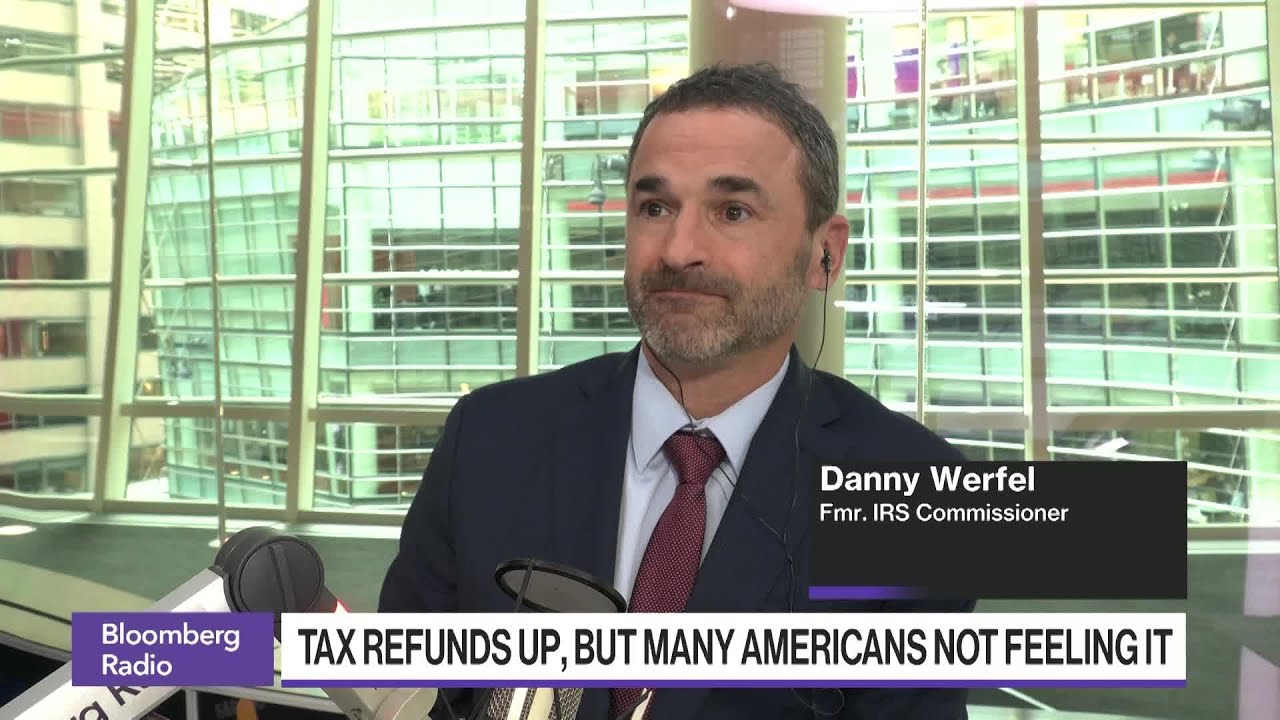
Danny Werfel, former IRS commissioner, said that it is not safe for Americans to use artificial intelligence chatbots do their tax returns and that while simple returns may be ok, AI is far from ready to take over for taxpayers filing complex returns. Werfel also spoke about DOGE cuts to IRS staffing, saying that if a return is flagged taxpayers have a longer road to getting the issue reconciled.
Americans rushing to meet Wednesday’s tax filing deadline are getting bigger refunds on average thanks to President Donald Trump’s tax law, though the savings are falling short of his promises and many say they haven’t noticed a difference.
Trump’s centerpiece legislative achievement so far has helped drive the average refund up by nearly $350, though that’s far less than the president’s promised $1,000 boost. Almost 70% of taxpayers received a refund through the start of this month, compared to 67% at the same time last year, according to IRS data.
Yet the savings aren’t registering with large numbers of Americans as they confront a surge in gasoline prices driven the US-Israel war in Iran, economic uncertainty and the threat of job losses driven by advances in artificial intelligence.
That is politically perilous for Republicans, who have leaned heavily on the boost in tax refunds for their economic pitch to voters as they try to retain control of Congress in this year’s midterm elections. Trump is expected to promote the tax law in a trip to Nevada this week.
The law itself, which paired tax breaks with steep cuts to the social safety net programs, has polled poorly with voters. Republicans have counted on tax refunds to turn that perception around.
Taxpayers are nearly as likely to say last year’s tax changes harmed them as they were to report a benefit, according to a late March poll of 1,200 people who had already filed their tax returns by the Bipartisan Policy Center, a centrist organization. Only 27% said the 2025 tax cuts helped them, while 24% said changes hurt them. Another 38% said they didn’t notice a change. The perception is hard to reconcile with the law’s provisions. The legislation raised the standard deduction, typically claimed by roughly 90% of taxpayers, by $1,150. Even for people taxed at the lowest rate, that translates into a $115 savings. More than 105 million taxpayers claimed the standard deduction as of Tuesday, according to the Treasury Department.
Even taxpayers eligible for the law’s marquee breaks — new deductions for tips and overtime wages — were nearly as likely to report the new tax law hurt them as they were to say they helped. Among poll respondents who said they had tip or overtime income last year, 35% reported being harmed by the changes and 36% reported benefiting. “It’s really like a 50-50 proposition of, like, this helped me versus this hurt me,” Andrew Lautz, director of tax policy for the Bipartisan Policy Center, said on a call with reporters discussing the results. “Those differences in perception versus reality obviously matter.”
Political polarization likely played a role in the disconnect, but even 20% of Republicans surveyed said they were hurt by the tax changes, Lautz said.
Read more: Taxes on $1 Million: Why a Banker Will Pay More Than a Plumber
Mark Steber, chief tax officer at Jackson Hewitt Inc, a tax preparation firm with more than 5,000 locations across the US, said he’s been struck by the number of people he’s encountered who didn’t realize they could collect new tax breaks this year.
“It’s a large percentage of people that were not fully aware that there was a big tax bill and the reason for that is simple: most people are concerned about day-to-day economics,” Steber said.
Even when people are aware of the new tax breaks, the administration’s messaging has contributed to confusion, Steber and others said.
Trump has loudly touted “no tax” on tips, overtime, Social Security and auto loan interest. The monikers made for catchy campaign slogans, but have led to misconceptions about what the tax breaks actually encompass.
--------
Watch Bloomberg Radio LIVE on YouTube
Weekdays 7am-6pm ET
Follow us on X
Subscribe to our Podcasts:
Bloomberg Daybreak
Bloomberg Surveillance
Bloomberg Intelligence
Balance of Power
Bloomberg Businessweek
Listen on Apple CarPlay and Android Auto with the Bloomberg Business app:
Apple CarPlay
Android Auto
Visit our YouTube channels:
Bloomberg Podcasts
Bloomberg Television
Bloomberg Originals
Sentinel Indexing in Progress
Metadata and chapters are available. Claim extraction for this episode is pending.
All video content is delivered via YouTube embedded players in accordance with the YouTube Terms of Service. Sentinel provides research tools that promote discovery and accountability across political media.