Bloomberg Podcasts
@bloombergpodcasts·503K subscribers·32.4K videos
Hermès Falls Most on Record as Middle East War Hurts Sales
Posted
April 15, 2026
Views
5,795
Likes
63
Comments
5
Engagement
April 15, 2026
5,795
63
5
1.17%
Every word spoken in this episode is indexed. Type any phrase to jump straight to the moment it was said.
Type any word or phrase that may have been spoken. Click a result to seek the player to that exact moment.
Try a name, a topic, or a quoted line
See what was published immediately before and after this episode.
 4:03Now Playing
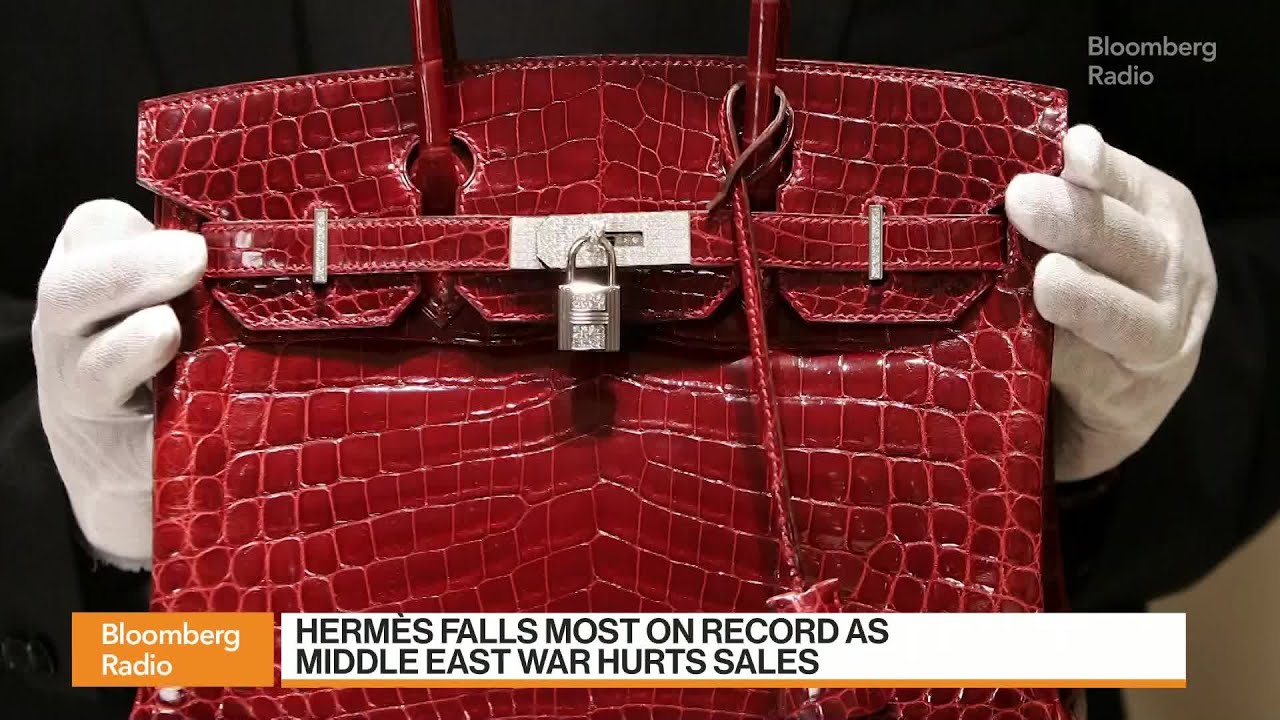
Hermès shares tumbled as much as 14% as the disruption from the conflict in the Middle East dented the Birkin bag maker’s sales growth, showing that even the luxury goods industry’s most-resilient player is feeling the effects.
Sales rose 5.6% at constant exchange rates in the first quarter, Hermès International SCA said in a statement Wednesday. Analysts had expected a gain of 7.44%.
The company “delivered a relatively weak start to the year, against already somewhat re-based expectations,” analysts led by Zuzanna Pusz at UBS Europe SE wrote in a note to clients.
Bloomberg Opinion Columnist Andrea Felsted joins Paul Sweeney and Scarlet Fu on "Bloomberg Intelligence" to discuss the drop, and what the luxury brand can do to boost sales going forward. Hermès’ stock plunged as much as 14% in Paris, its biggest intraday drop on record. Before Wednesday, the shares had fallen 16% this year.
Investor disappointment was particularly pronounced because Hermès’ managed-scarcity-driven model has in the past helped it sail through crises, posting steady growth in sales of its high-priced handbags even as lesser brands struggled. That allowed the company to trade at richer multiples to earnings than its rivals.
In the latest period, Hermès said the region that includes the Middle East saw a 5.9% dip in sales while revenue in France, a big draw for visitors, declined 2.8% as it was hit by lower tourism spending. Chief Financial Officer Eric du Halgouet said Hermès’ French, Swiss and UK stores drew fewer Middle Eastern shoppers. Italy, which was also hurt, proved more resilient.
Like Hermès, LVMH Moët Hennessy Louis Vuitton SE earlier this week said the war dented sales. Revenue at LVMH’s key division, which includes Louis Vuitton and Christian Dior Couture, would have been “flattish” instead of negative had it not been for the conflict, the company’s Chief Financial Officer Cécile Cabanis said. Kering SA also posted worse-than-expected sales at its biggest brand Gucci, partly blaming the war.
On a call with reporters, du Halgouet said although traffic in the Middle East is still down at the start of current quarter, sales have improved following the reopening of stores. The region represents around 4% of Hermès’ sales.
Asia Pacific, excluding Japan, was another region that missed expectations. It registered a sales gain of 2.2% at constant rates, less than half the 5.84% increase analysts had expected.
Du Halgouet said that although Greater China continued to grow against a tough economic backdrop, the expansion came after years of strong growth rates there, making comparisons less favorable. The situation in Singapore and Thailand was more challenging because of travel disruptions that hit the tourism-driven countries, he said. In contrast, Korea and India fared well.
Hermès last week inaugurated its 25th leather goods manufacturing plant, showing it’s sticking to investment plans in spite of the geopolitical turmoil.
--------
Watch Bloomberg Radio LIVE on YouTube
Weekdays 7am-6pm ET
Follow us on X
Subscribe to our Podcasts:
Bloomberg Daybreak
Bloomberg Surveillance
Bloomberg Intelligence
Balance of Power
Bloomberg Businessweek
Listen on Apple CarPlay and Android Auto with the Bloomberg Business app:
Apple CarPlay
Android Auto
Visit our YouTube channels:
Bloomberg Podcasts
Bloomberg Television
Bloomberg Originals
Sentinel Indexing in Progress
Metadata and chapters are available. Claim extraction for this episode is pending.
All video content is delivered via YouTube embedded players in accordance with the YouTube Terms of Service. Sentinel provides research tools that promote discovery and accountability across political media.