Cnbc
@cnbc·4.2M subscribers·16.1K videos
CNBC Explores: America’s Railroads | CNBC Marathon
Posted
April 9, 2023
Views
642,283
Likes
4,800
Comments
668
Engagement
0.85%
April 9, 2023
642,283
4,800
668
0.85%
Every word spoken in this episode is indexed. Type any phrase to jump straight to the moment it was said.
Type any word or phrase that may have been spoken. Click a result to seek the player to that exact moment.
Try a name, a topic, or a quoted line
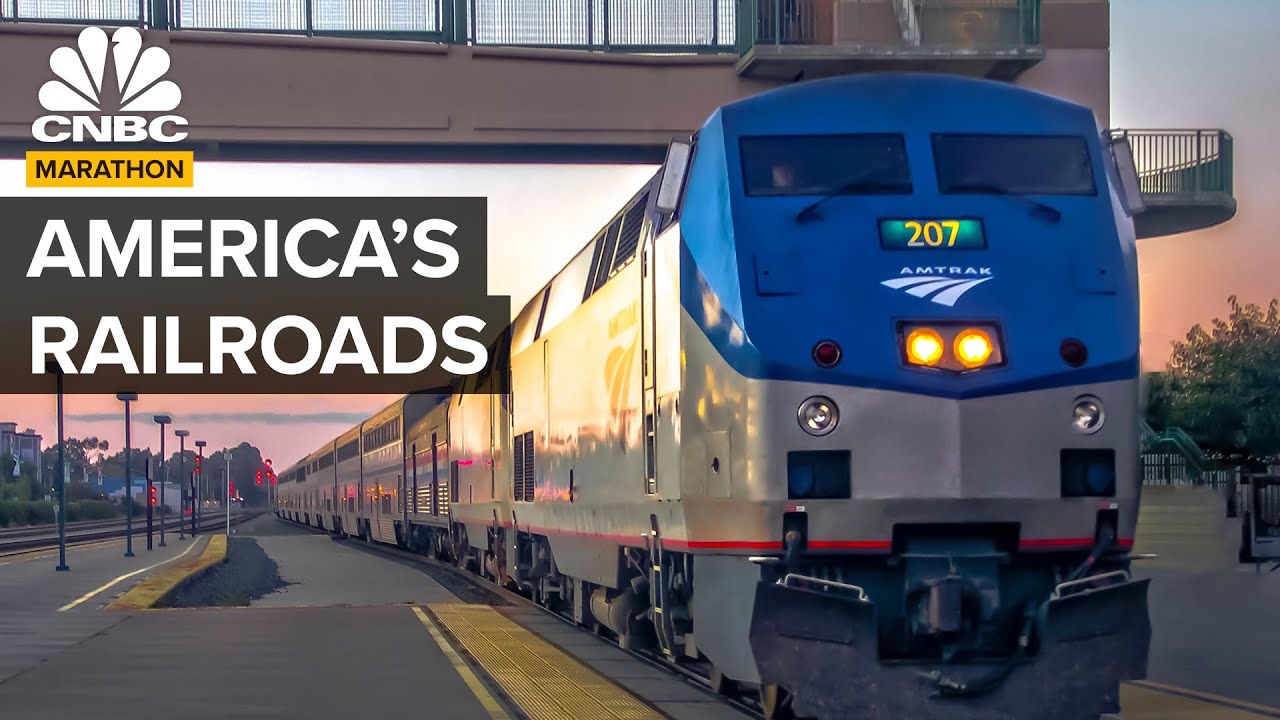
CNBC Marathon explores the freight and passenger railroads in America.
The United States lags behind the rest of the world when it comes to passenger trains but when it comes to the freight railroad the U.S. is dominating. The U.S. freight rail network operates over 140,000 miles of privately-owned track in every state except Hawaii, according to the Association of American Railroads. It moves one-third of all U.S. exports and roughly 40% of long distance freight volume. Correction (February 3, 2022): Craig Fuller incorrectly states Amtrak is for-profit but Amtrak is not a for-profit corporation.
Taking a train in the U.S. is often more expensive than flying and more expensive than intercity train systems in other developed countries, which often have even faster trains and better service. But Amtrak, the federally funded company that runs many of America’s passenger trains, has never made money. In fact, the company has a $42 billion repair backlog and in 2021 wasn’t even able to cover half of its expenses from ticket revenue. That business comes mostly from the populous Northeast Corridor, where tickets are quite pricey. Ridership is slowly recovering from an all-time low due to the pandemic, and now Amtrak wants to expand service in a major 15-year plan, with $66 billion in funding from the Bipartisan Infrastructure Law.
The U.S. has no high-speed trains, besides a few small sections of Amtrak’s Acela line in the Northeast Corridor. China has more than 19,000 miles of high-speed rail, the vast majority of which was built in the past decade. Japan’s bullet trains date back to the 1960s. France began service of the high-speed TGV train in 1981 and the rest of Europe quickly followed.
Watch the video to see why the U.S. continues to fail with high-speed trains, and the companies that are trying to fix that.
Chapters:
» Subscribe to CNBC
» Subscribe to CNBC TV
About CNBC: From 'Wall Street' to 'Main Street' to award winning original documentaries and Reality TV series, CNBC has you covered. Experience special sneak peeks of your favorite shows, exclusive video and more.
Connect with CNBC News Online
Get the latest news
Follow CNBC on LinkedIn
Follow CNBC News on Facebook
Follow CNBC News on Twitter
Follow CNBC News on Instagram
#CNBC
CNBC Explores: America’s Railroads | CNBC Marathon
Sentinel Indexing in Progress
Metadata and chapters are available. Claim extraction for this episode is pending.
All video content is delivered via YouTube embedded players in accordance with the YouTube Terms of Service. Sentinel provides research tools that promote discovery and accountability across political media.