
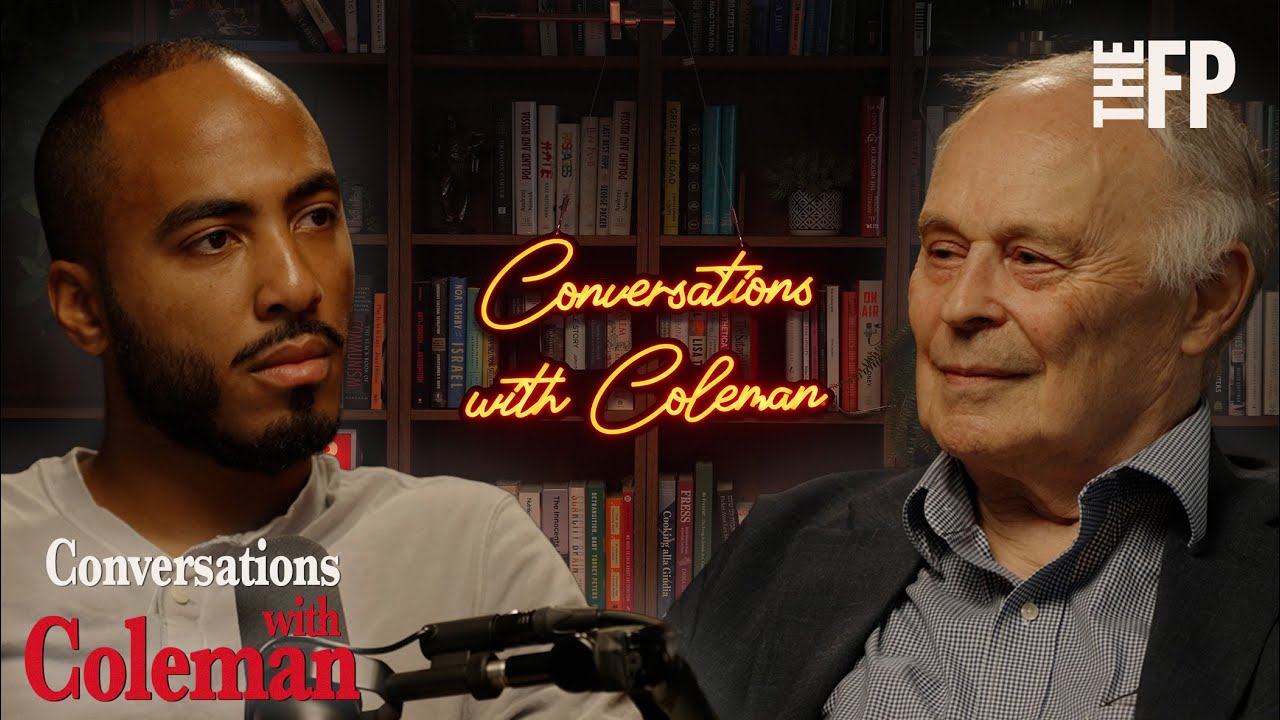
Steven Pinker: How "Common Knowledge" Rules Our Lives
September 29, 2025
25,880
721
140
3.33%
Search the Record
IndexedEvery word spoken in this episode is indexed. Type any phrase to jump straight to the moment it was said.
Type any word or phrase that may have been spoken. Click a result to seek the player to that exact moment.
Try a name, a topic, or a quoted line
Coleman Hughes Episodes Around September 29, 2025
See what was published immediately before and after this episode.








YouTube Description
as posted by the channelThink for yourself. Subscribe to The Free Press today
The phrase “common knowledge” is usually used to mean a fact most people are aware of, like that George W. Bush was president in the early 2000s. But as cognitive psychologist Steven Pinker explains in his new book, When Everyone Knows That Everyone Knows…:Common Knowledge and the Mysteries of Money, Power, and Everyday Life, the term has a more precise meaning in game theory, philosophy, linguistics, and economics. It describes a state in which not only do I know something and you know it, but we each know that the other knows it—and know that we know that we know it—ad infinitum.
It’s a pretty headache-inducing concept, so I invited Pinker to join me live at the Comedy Cellar in New York City to break down common knowledge and explain why it matters so much in our society.
Common knowledge turns out to be one of the most powerful and underappreciated forces in our lives, one that underpins all human coordination. Pinker gives examples of how knowing what others know, and what they know that others know, is crucial for decisions ranging from the everyday, like crossing the street, to the monumental, like deciding whether to go to war. In our conversation, we explored the many fascinating facets of common knowledge. Pinker illustrated how involuntary signals, like blushing or laughter, transform private feelings into common knowledge. Common knowledge is essential for intimacy, yet it also depends on tact and selective hypocrisy to maintain relationships. Dictators try to suppress common knowledge for its power to spark collective action. From viral memes to mass movements, it shapes how we signal, bluff, conform, and dissent in public life.
Links & Promotions
Guests & Subjects Covered
Sentinel Indexing in Progress
Metadata and chapters are available. Claim extraction for this episode is pending.
All video content is delivered via YouTube embedded players in accordance with the YouTube Terms of Service. Sentinel provides research tools that promote discovery and accountability across political media.