Cool Worlds
@coolworldslab·1.1M subscribers·269 videos
Immortality, Religion, & the Search for Life | Dr. David Kipping | EP 463
Posted
July 11, 2024
Views
227,683
Likes
6,408
Comments
787
Engagement
3.16%
July 11, 2024
227,683
6,408
787
3.16%
Every word spoken in this episode is indexed. Type any phrase to jump straight to the moment it was said.
Type any word or phrase that may have been spoken. Click a result to seek the player to that exact moment.
Try a name, a topic, or a quoted line
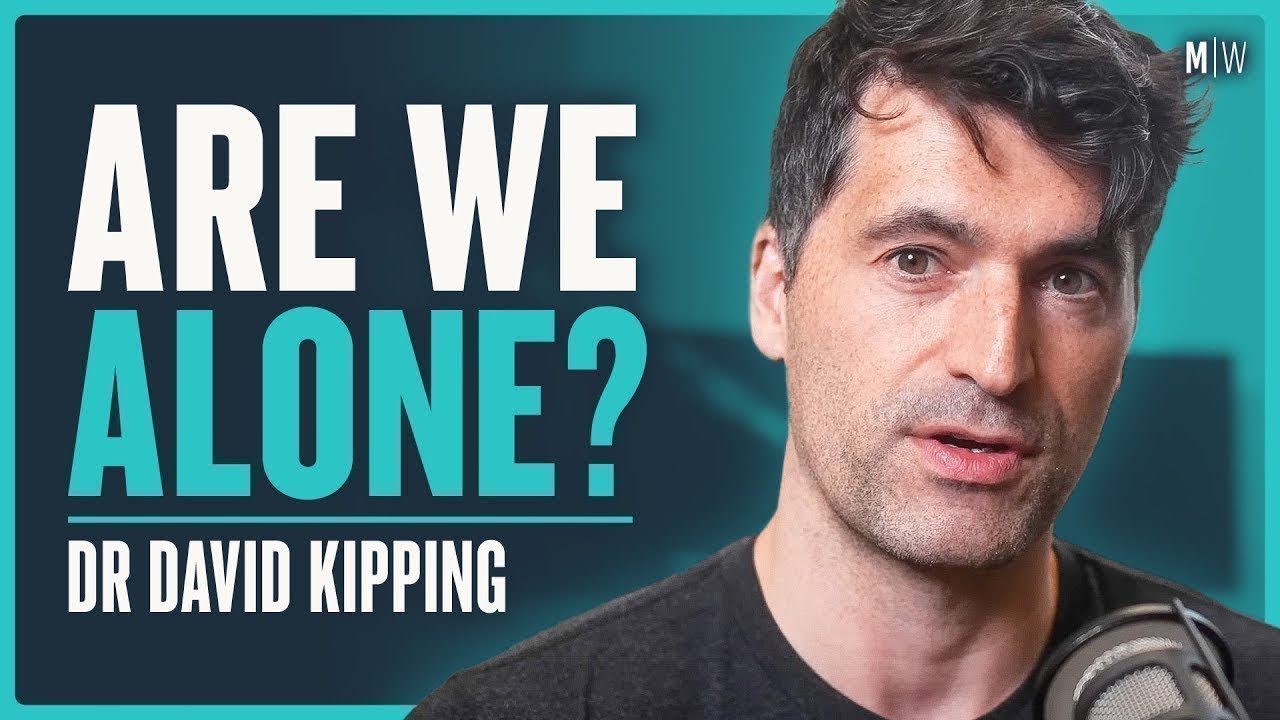
Dr. Jordan Peterson sits down with the director of the Cool Worlds Lab at Columbia University, Dr. David Kipping. They discuss the likelihood of finding life elsewhere in the universe, what it means to be a Type I civilization, why Mars is our best chance at interplanetary expansion, the comparative rarity of a solar system like ours, and science fiction concepts, such as the Dyson sphere, which may one day become a reality.
David Kipping is an associate professor of astronomy and director of the Cool Worlds Lab at Columbia University in New York City. He has published over a hundred peer reviewed research articles, spanning the fields of exoplanet and exomoon detection, astrostatistics, astrobiology, and technosignatures. He is also an active communicator of science through his popular YouTube channel Cool Worlds.
This episode was recorded on June 28, 2024
Dr. Peterson's extensive catalog is available now on DailyWire+
- Sponsors -
Birch Gold: Text "JORDAN" to 989898 for your no-cost, no-obligation, FREE information kit.
BeamGet 40% off for a limited time!
HallowGet 3 months free at
- Links -
For David Kipping:
Cool Worlds on YouTube
- Chapters -
(0:00) Coming up
(0:24) Intro
(2:05) Are we alone in the universe?
(6:32) The Fermi paradox, the flame of consciousness
(9:48) Why scientists don’t like the idea that we might be special, the weak anthropic principle
(12:45) The experience of the observer, what other forms life might take
(17:03) The mediocrity principle, the most common types of planets in the universe
(21:34) Why look for life on Mars? If it’s anywhere, it’s everywhere
(25:12) Civilizational types: where we rank
(29:29) The study of exoplanets: how we find them and what they tell us
(37:00) Delayed acceptance, what proved their existence it in 2000
(38:20) Why are “mini-Neptunes” the most common planet in the universe?
(42:03) Our solar system is not the universal template
(43:23) The religious axioms present in the search for life, Grok
(47:06) The overlap of the conceptual and physical heaven
(50:08) The fear of annihilation and the hope of being remembered
(53:21) Dyson spheres: what happens when we become a Type II civilization
(57:06) The possibility of using all of our resources, the limits of computational power
(1:00:45) Would an advanced civilization willingly enter a simulation?
(1:02:57) Immortality and the matrix: Dyson’s eternal intelligence
(1:04:27) Time’s arrow, Hawking radiation, and the heat death of the universe
(1:10:18) We might have disproved the Big Bang
(1:15:44) Dark matter and dark energy
(1:23:26) Quantum theory has disturbing implications
// COURSES //
Discovering Personality
Self Authoring Suite
Understand Myself (personality test)
// BOOKS //
Beyond Order12 More Rules for Life
12 Rules for LifeAn Antidote to Chaos
Maps of MeaningThe Architecture of Belief
#JordanPeterson #JordanBPeterson #DrJordanPeterson #DrJordanBPeterson #DailyWirePlus
Sentinel Indexing in Progress
Metadata and chapters are available. Claim extraction for this episode is pending.
All video content is delivered via YouTube embedded players in accordance with the YouTube Terms of Service. Sentinel provides research tools that promote discovery and accountability across political media.