Daniel Davis Deep Dive
@danieldavisdeepdive·442K subscribers·4.9K videos
WAR as a LIFESTYLE: How America Views the Conflicts We Participate In /Lt Col Daniel Davis
Posted
August 2, 2025
Views
8,751
Likes
456
Comments
114
August 2, 2025
8,751
456
114
6.51%
Every word spoken in this episode is indexed. Type any phrase to jump straight to the moment it was said.
Type any word or phrase that may have been spoken. Click a result to seek the player to that exact moment.
Try a name, a topic, or a quoted line
 19:03Now Playing
Daniel Davis Deep Dive Merch: Etsy store
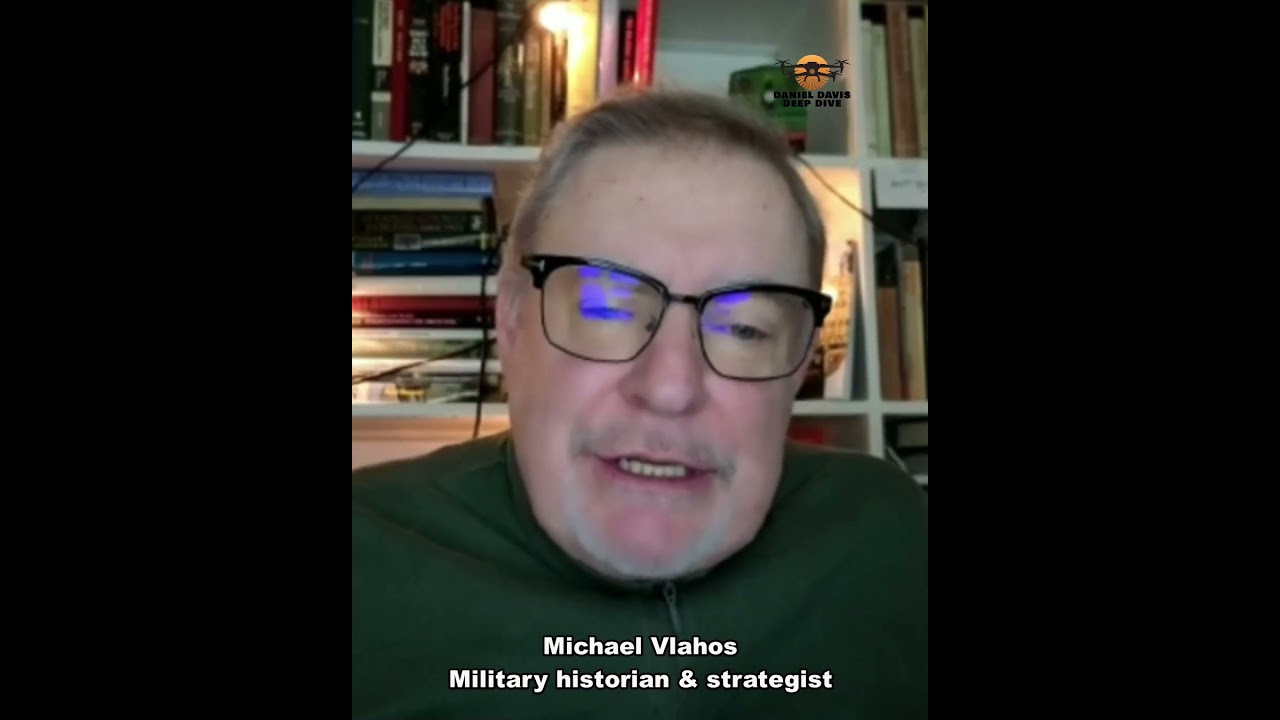
Historian Michael Vlahos explores the idea that the U.S. military has shifted away from winning wars to merely fighting them as a lifestyle, losing sight of its core purpose. Drawing on examples from Vietnam, Iraq, and Afghanistan, he notes that despite losing these wars, the U.S. military and political leadership often behave as though dominance and success were achieved, mainly because of their overwhelming presence and firepower—what he calls “owning the street.”
He contrasts this with past British military campaigns, where success was defined by clear strategic victories and treaty outcomes, not just presence or control. He points out that after Vietnam—a true strategic defeat—the U.S. military reformed itself, but after Afghanistan, there was no real reckoning or introspection, just a quiet exit.
Vlahos introduces the concept of the "peak war legend": the belief that a military has reached a near-divine status after a great victory (e.g., WWII), creating a sense of permanent superiority. This mindset leads to complacency and denial about failure. Victory becomes more about image and continued action than actual results.
He argues that war has become a permanent condition, resembling a cultural or psychological experience rather than a means to an end. Influenced by things like video games, Americans now perceive war as thrilling and ongoing rather than deadly and decisive. This has replaced serious strategic thinking with a vicarious, emotionally detached relationship to conflict.
Using historical analogies—like Prussia's arrogance after Frederick the Great or America’s “guns and butter” approach during Vietnam—he warns that overconfidence blinds nations to real threats. Ultimately, the U.S. military no longer views victory as essential but instead clings to the illusion of dominance, even as it fails to achieve its objectives.
Sentinel Indexing in Progress
Metadata and chapters are available. Claim extraction for this episode is pending.
All video content is delivered via YouTube embedded players in accordance with the YouTube Terms of Service. Sentinel provides research tools that promote discovery and accountability across political media.