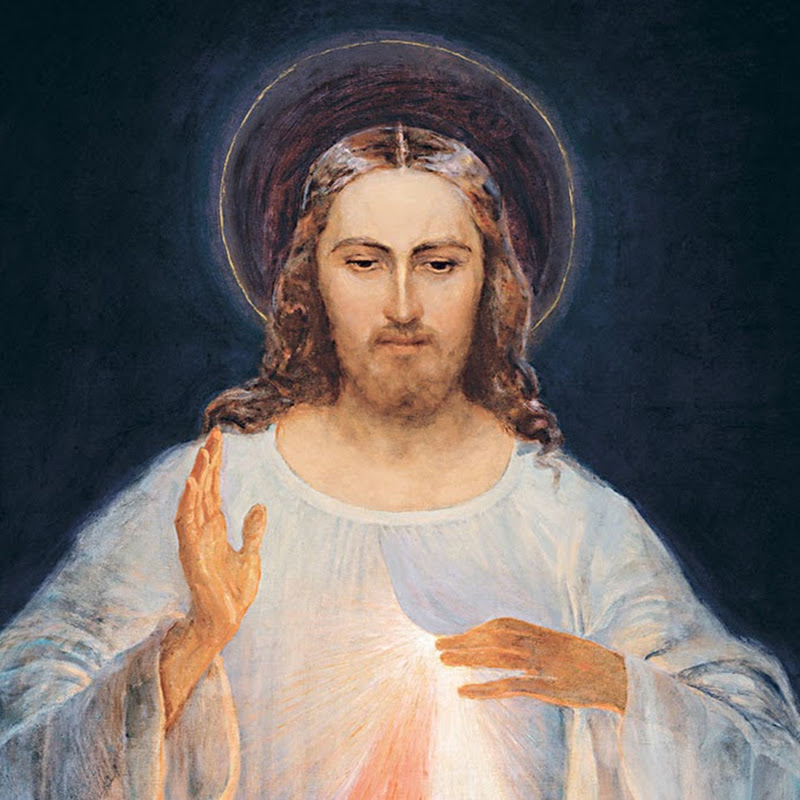
Divine Mercy
@divinemercy_official·593K subscribers·8.2K videos
What does the Church Teach About What Happens at Our Judgment?
Posted
February 23, 2026
Views
55,162
Likes
2,525
Comments
181
Engagement
4.91%
February 23, 2026
55,162
2,525
181
4.91%
Every word spoken in this episode is indexed. Type any phrase to jump straight to the moment it was said.
Type any word or phrase that may have been spoken. Click a result to seek the player to that exact moment.
Try a name, a topic, or a quoted line
 19:10Now Playing
The readings for this homily
Father Chris Alar, MIC reminds us that works do not earn salvation; only God’s grace saves (CCC, 1987). Yet the Church teaches that we must co‑operate with that grace. As Fr. Chris explains, each soul faces a particular judgment at death, meeting Christ in His human nature, and later a general judgment when Christ returns to judge all humanity (see Jn 5:22‑23). The Scriptures picture this final assembly in the “valley of Jehoshaphat,” drawn from Joel 3:2, where angels separate the good from the bad.
Father Chris contrasts David’s flight from Jerusalem with Jesus’ deliberate return to be judged, showing that avoidance leads to condemnation while Christ embraces the sacrifice for our redemption. He cites the familiar parable of the wheat and the weeds (Mt 13:24‑30) and the separation of sheep from goats (Mt 25:31‑46) to illustrate the ultimate sorting of souls.
A central point is the necessity of Confession. Unconfessed sins are exposed at judgment, whereas confessed sins are sealed (CCC 1451). Father Chris stresses that God’s justice is always tempered by mercy: “The greater the sinner, the greater the right he has to My mercy” (Diary of Saint Faustina Kowalska, 723). This mercy flows through the intercession of the Blessed Virgin Mary, whose prayers unite with ours and draw us toward the divine will (CCC 2675).
Father Chris also addresses contemporary objections that “Jesus did it all, so there is no hell.” He refutes this by affirming human free will: God’s love respects our freedom, and those who freely reject Him choose separation, which is the reality of hell (CCC 1037). As C.S. Lewis observed, “The gates of hell are locked from the inside,” underscoring that the choice belongs to the soul.
⭐️ Support our Ministries:
✝️ Explore Divine Mercy on Divine Mercy Plus!
⛪️ Plan Your Visit to the National Shrine of The Divine Mercy!
Follow Us on Social Media!
Sentinel Indexing in Progress
Metadata and chapters are available. Claim extraction for this episode is pending.
All video content is delivered via YouTube embedded players in accordance with the YouTube Terms of Service. Sentinel provides research tools that promote discovery and accountability across political media.