Dr John Campbell
@campbellteaching·3.3M subscribers·3.1K videos
Immunity 2, Introduction and Classification, Take 2
Posted
May 15, 2013
Views
42,375
Likes
695
Comments
39
Engagement
1.73%
May 15, 2013
42,375
695
39
1.73%
Every word spoken in this episode is indexed. Type any phrase to jump straight to the moment it was said.
Type any word or phrase that may have been spoken. Click a result to seek the player to that exact moment.
Try a name, a topic, or a quoted line
 14:38Now Playing
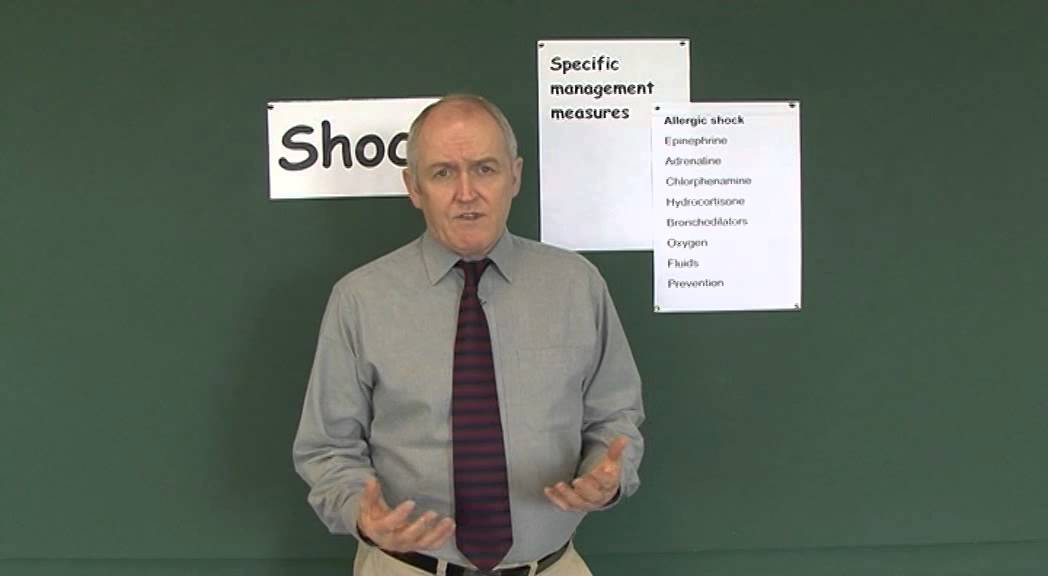
Two types of immunity
The body is protected against microorganisms in basically two ways. The first is by innate immunity which is also referred to as non-specific. These non-specific mechanisms act against a wide range of potential infectious agents in a non- discriminating way. Secondly, immunity may be acquired, also called specific or adaptive immunity. In this form of immunity the body learns how to combat a particular species of microorganismImmunity
Infectious disease
Koch`s Postulates
1. The specific causative agent must be found in every case of the disease.
2. The disease organism must be isolated in pure culture.
3. Inoculation of a sample of the culture into a healthy subject must produce the same disease.
4. The disease organism must be recovered from the inoculated subject.
Immunity
Innate (non-specific)
Normal A and P
Inflammation
Phagocytosis
Complement
Interferons
Natural killer lymphocytes
Acquired (specific)
Active
Infection
Vaccination
Passive
Transplacental
Colostrum and milk
Injections
Active on passive
Innate immunity
Phagocytosis
Phagosome
Lysosome, lysozyme
Phagolysosome
Phagocytes
Neutrophils
Monocytes
Macrophages
Complement
Antimicrobial substances
30 plasma proteins in inactive form
Immune and inflammatory functions
Activated by microbial polysaccharides or antigen antibody complexes
Complement cascade
Functions of complement
Enhances ‘complements’ inflammation
Attracts phagocytes
Opsonins, opsonisation, phagocytosis
Membrane attack complex, cytolysis
Interferons
Produced by some virus infected body cells and leucocytes
Act against a wide range of virus infections
Viral reproduction is inside cells
Virus infected cell secretes interferon
Interferon bind to interferon receptors in adjacent cells
Functions of interferons
Stimulated cells produce antiviral enzymes to reduce intracellular viral replication.
Cellular ability to produce new proteins is inhibited
Fire brake is therefore produced
Activation of neutrophils and macrophages
Some anti-tumour and anti-metastasis functions
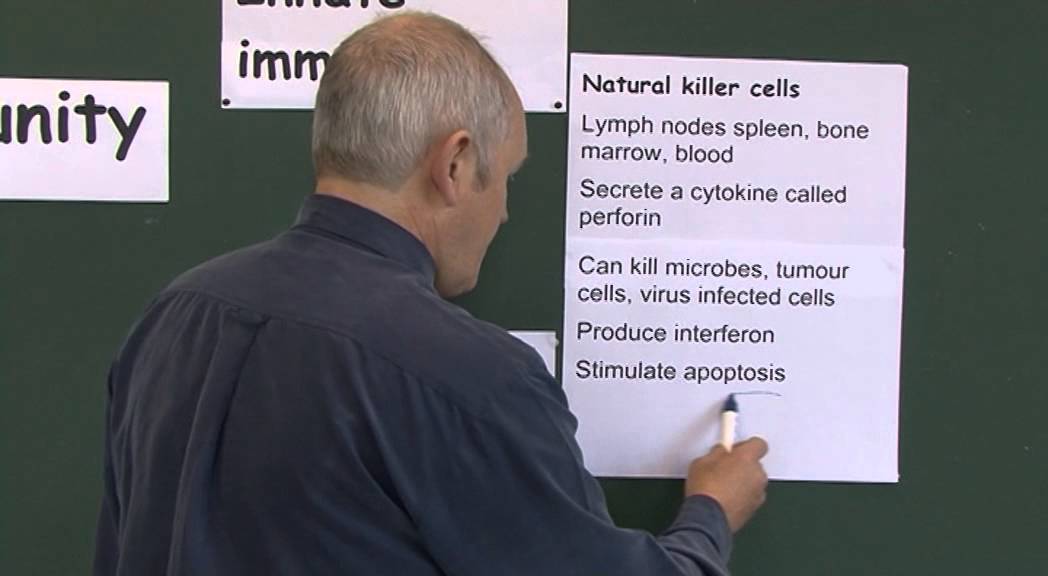
Natural killer cells
Lymph nodes spleen, bone marrow, blood
Secrete a cytokine called perforin
Can kill microbes, tumour cells, virus infected cells
Produce interferon
Stimulate apoptosis
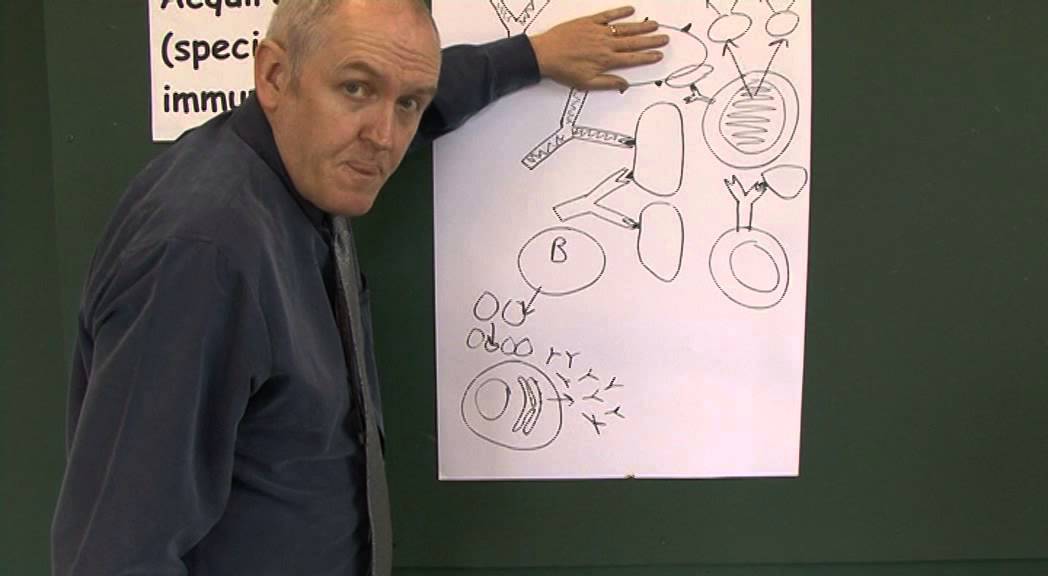
Acquired (specific)
Adaptive with memory
Antigens stimulate synthesis of antibodies
(Antibody generating molecules)
Immune cells
Linking innate and specific immunity
Antigens enter the body
Antigen is detected by antigen presenting cells, (macrophages, dendritic cells and B lymphocytes)
Macrophages release cytokines that stimulate the bone marrow and act on hypothalamus
Activated APC migrate into the afferent lymph vessels
Antigen migrates into the afferent lymph vessels
Antigen is detected by APC and B lymphocytes in the lymph nodes
Antigen attaches to B cell surface receptors
Antigen is also presented to B cells
Antigen/MHC complex is presented to T cells by APC
Activated B and T cells undergo clonal expansion
Both B and T cells differentiate into effecter and memory cells
Plasma cells secrete antibodies
Antibodies kill infecting antigens
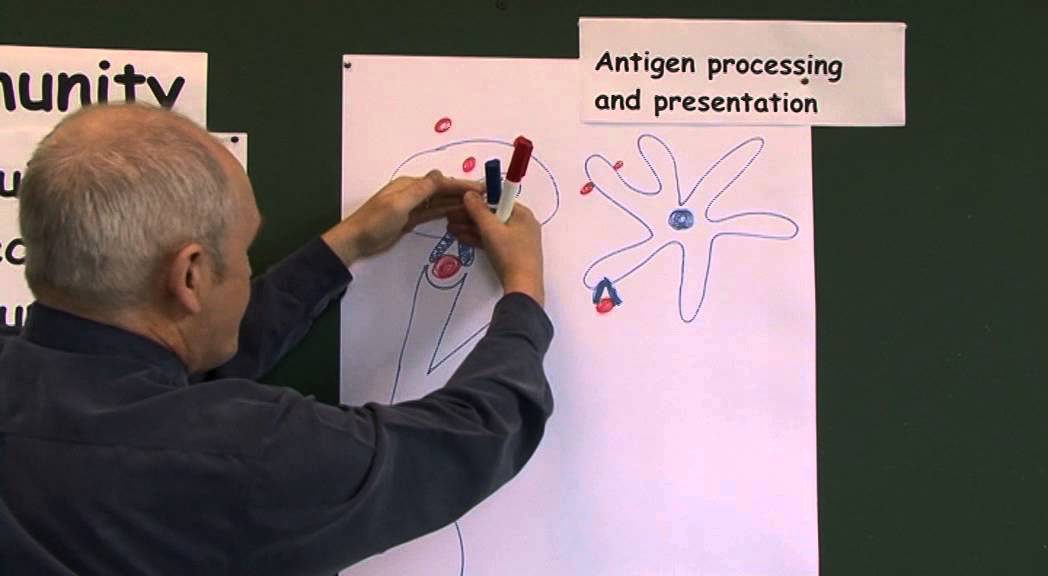
Antigen processing and presentation
T cells respond to protein antigen, but not in naive form
Needs component polypeptides bound to cell surface MHC, same as HLA (human leucocyte antigen)
Peptide / HLA complex is recognised by T cells
APCs can be any cell, but mostly dendritic cells, macrophages and B lymphocytes
Antigen presentation takes place in lymphatic tissue, lymph nodes and spleen
B cells can recognise unprocessed antigen but respond better to presented antigen
Cellular immunity
Active against;
Intracellular pathogens
Fungi
Cancer cells
Transplanted tissue
Cells attacking cells
Involves;
T cytotoxic
T helper
Activities;
T helper and suppressor cells have a coordination role
T helpers stimulate (help) B cell clonal expansion
Cytotoxic T cells kill infected body cells and cancer cells
Antibody mediated (humoral) immunity
Active against;
Extracellular pathogens, mostly bacteria
Antigens dissolved in body fluids, bacterial toxins, viruses
Involves;
B lymphocytes
Plasma cells, secrete antibodies
B memory cells
Activities;
Antigen – B cell interactions mostly occur in lymph nodes
Later cells have greater affinity for the antigen than the original B cell
Memory cells live in the lymph nodes
Immunoglobulins
Soluble proteins
Gamma globulins, immunoglobulins, (Ig).
20% of plasma protein
In serum after activation of B cells by antigen
High affinity in later responses
Placental migration
Agglutination of pathogens.
Precipitation of soluble antigen.
Neutralise toxins, covering toxic sites.
Act as opsonins.
Antibody dependent cytotoxicity.
Immune complexes activate complement.
Primary and secondary response
Immunological memory
Subsequent exposure reduces lag time
Secondary response does not need T cell stimulation
Sentinel Indexing in Progress
Metadata and chapters are available. Claim extraction for this episode is pending.
All video content is delivered via YouTube embedded players in accordance with the YouTube Terms of Service. Sentinel provides research tools that promote discovery and accountability across political media.