Dr John Campbell
@campbellteaching·3.3M subscribers·3.1K videos
COVID 19 and Obesity
Posted
July 4, 2020
Views
137,820
Likes
4,013
Comments
1,885
Engagement
4.28%
July 4, 2020
137,820
4,013
1,885
4.28%
Every word spoken in this episode is indexed. Type any phrase to jump straight to the moment it was said.
Type any word or phrase that may have been spoken. Click a result to seek the player to that exact moment.
Try a name, a topic, or a quoted line
 23:48Now Playing
Happy 4th July to all liberated viewers. COVID 19 and Obesity.
Firstly, of course vitamin A, D E and K are fat soluble.
People who are very overweight (obese)
Greater risk of severe symptoms
Ending up in hospital
Even if they are young
UK Obesity
28.7% of adults in the UK are classified as obese
A further 35% are overweight
63.7 obese or overweight
36.3% health weight
'overweight'.
Potentially putting the majority at increased risk
US obesity
CDC
Common, serious, costly disease
US prevalence = 42.4%, 2017 - 2018
Overweight = 32.5%
Normal weight = 25%
BMI, 30 or more = obese
BMI, 25.0 to 29.9 = overweight
BMI calculator,
Obesity-related conditions include heart disease, stroke, type 2 diabetes and certain types of cancer
Leading causes of preventable, premature death
Annual medical cost of obesity, $1,429
Ethnicity
Non-Hispanic blacks, 49.6%
Hispanics, 44.8%
Non-Hispanic whites, 42.2%
Non-Hispanic Asians, 17.4%
Age
Young adults, 40% aged 20 to 39 years
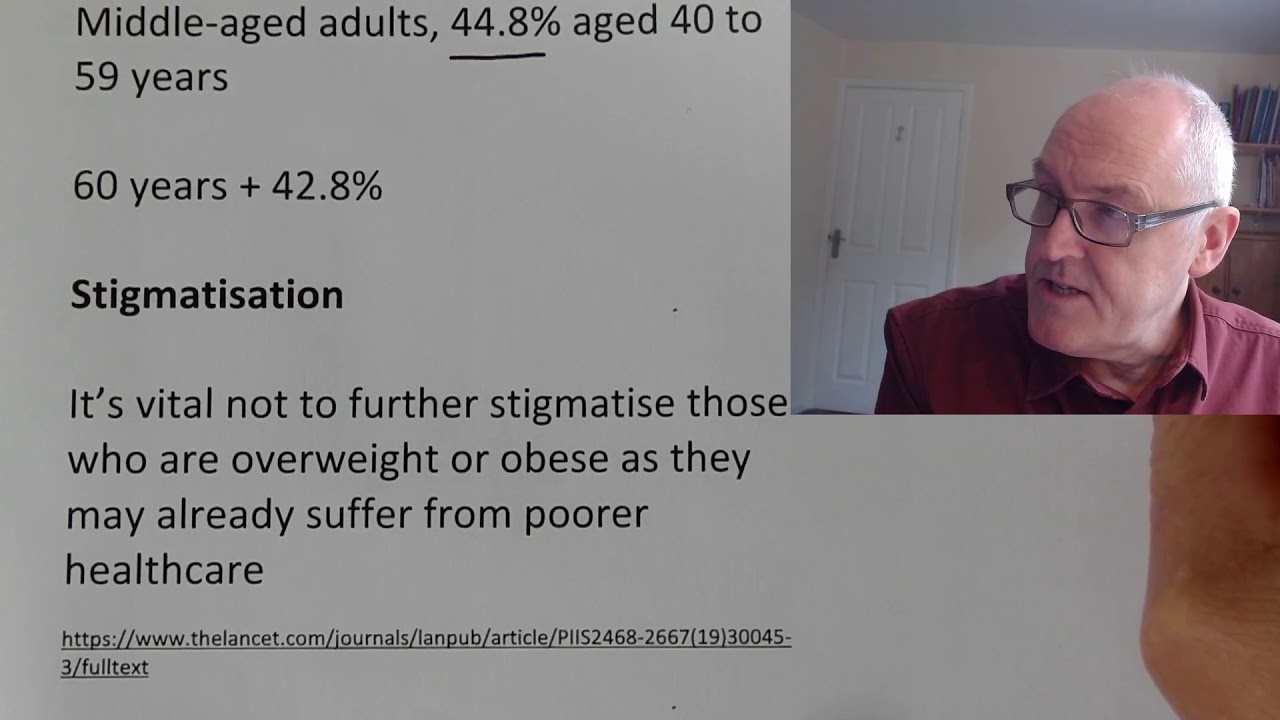
Middle-aged adults, 44.8% aged 40 to 59 years
60 years + 42.8%
Stigmatisation
It’s vital not to further stigmatise those who are overweight or obese as they may already suffer from poorer healthcare
)300453/fulltext
Study from China
People who developed critical COVID and died had a higher average BMI than people developing only mild disease
Study from the US
Younger age group patients hospitalized more likely to be obese
People from the UK admitted to CCU, 73% were overweight or obese
COVID symptom tracker
2.6m people, data taken on height, weight, medical conditions, daily health report
People who are obese about 20% more likely to be hospitalised with COVID symptoms
Compared with people with lower BMI
More likely to need respiratory support such as ventilation
Across all the age groups, including younger people.
Obesity affects health and immunity
Increases the chances of developing chronic health problems, diabetes, heart disease, hypertension, some cancers
Increases risk of infections
Impaired immune response
Easier for bacteria and viruses to invade the body and set up an infection
Makes severe COVID complications from infections more likely, e.g. acute respiratory distress syndrome (ARDS)
More likely to catch seasonal flu
Suffer for longer
More risk of severe outcomes
More likely to transmit infection to others
Why so much obesity?
Combined interaction between physical, social, and environmental factors
Tips for obesity in the current pandemic
Social distancing, hygiene guidelines, face covering
Move towards a normal weight
Good nutrients
Consider vitamin D
Regular outdoor physical activity
Consider mental health
Ask about a flu jab
Sentinel Indexing in Progress
Metadata and chapters are available. Claim extraction for this episode is pending.
All video content is delivered via YouTube embedded players in accordance with the YouTube Terms of Service. Sentinel provides research tools that promote discovery and accountability across political media.