
Dr John Campbell
@campbellteaching·3.3M subscribers·3.1K videos
Omicron from mice
Posted
January 6, 2022
Views
985,811
Likes
28,636
Comments
8,845
Engagement
3.80%
January 6, 2022
985,811
28,636
8,845
3.80%
Every word spoken in this episode is indexed. Type any phrase to jump straight to the moment it was said.
Type any word or phrase that may have been spoken. Click a result to seek the player to that exact moment.
Try a name, a topic, or a quoted line
 19:58Now Playing
Omicron, South Africa on November 24th, 2021
Omicron diverged from the B.1.1 lineage roughly in mid-2020
Mutations not found in:
Alpha, Beta, Gamma, and Delta
SARS-CoV-2 variants isolated from three chronically infected patients
The B.1.1 variants showed the highest sequence similarities to Omicron
Normal rate of mutations in spike protein RNA
∼0.45 mutations per month
During missing time for Omicron
27 mutations accumulated in spike protein RNA (in Branch O) during 18 months
∼1.5 mutations per month
∼3.3 times faster than the average rate of other variants
First hypothesis
Omicron could have “cryptically spread” and circulated in a population
Second hypothesis
Omicron could have evolved in a chronically infected COVID-19 patient
Third hypothesis
Omicron could have accumulated mutations in a nonhuman host and then jumped into humans
Mice
Evidence for a mouse origin of the SARS-CoV-2 Omicron variant
The rapid accumulation of mutations Omicron
Proximal origin occurred in humans or another mammalian host?
Omicron, 45 point mutations that Omicron acquired since divergence from the B.1.1 lineage
Significantly different from the spectrum for viruses that evolved in human patients
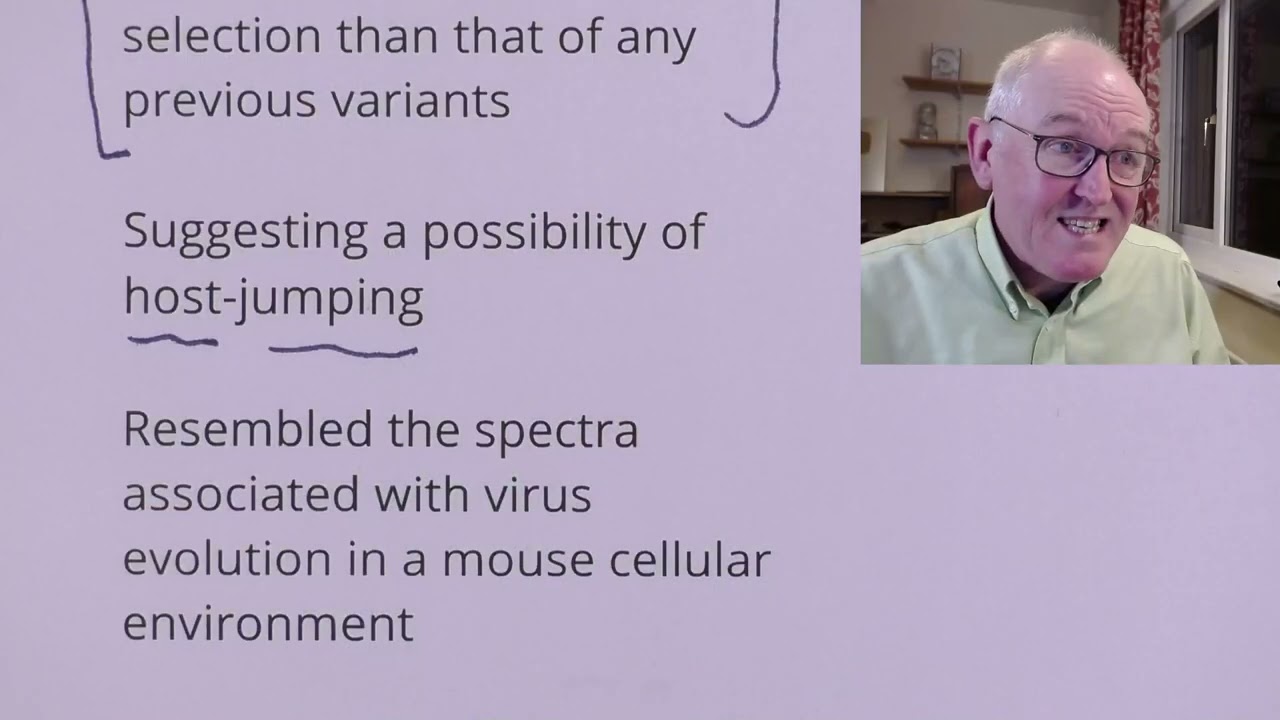
Omicron spike protein sequence, stronger positive selection than that of any previous variants
Suggesting a possibility of host-jumping
Resembled the spectra associated with virus evolution in a mouse cellular environment
Mutations in the Omicron spike protein significantly overlapped with SARS-CoV-2 mutations known to promote adaptation to mouse hosts
(through enhanced spike protein binding affinity for the mouse cell entry receptor)
So
Omicron jumped from humans to mice,
rapidly accumulated mutations conducive to infecting that host,
then jumped back into humans,
indicating an inter-species evolutionary trajectory for the Omicron outbreak
Fortunately
Evolved to increase binging to mouse ACE2 receptors
Consistent with human immune escape
Consistent with upper airway adsorption
© 2021 The Authors. Institute of Genetics and Developmental Biology, Chinese Academy of Sciences, and Genetics Society of China. Published by Elsevier Limited and Science Press.
Sentinel Indexing in Progress
Metadata and chapters are available. Claim extraction for this episode is pending.
All video content is delivered via YouTube embedded players in accordance with the YouTube Terms of Service. Sentinel provides research tools that promote discovery and accountability across political media.