Heimlers History
@heimlershistory·1.3M subscribers·773 videos
The COLD WAR [APUSH Review Unit 8 Topic 2] Period 8: 1945-1980
Posted
February 23, 2021
Views
936,930
Likes
8,058
Comments
148
Engagement
February 23, 2021
936,930
8,058
148
0.88%
Every word spoken in this episode is indexed. Type any phrase to jump straight to the moment it was said.
Type any word or phrase that may have been spoken. Click a result to seek the player to that exact moment.
Try a name, a topic, or a quoted line
 8:51Now Playing
AP HEIMLER REVIEW GUIDE (formerly known as the Ultimate Review Packet):
+APUSH Heimler Review Guide
+AP Essay CRAM Course (DBQ, LEQ, SAQ Help)
+Bundle Heimler Review Guide and Essay CRAM Course
GET FOLLOWALONG NOTEGUIDES for this video
HEIMLER’S HISTORY MERCH!
Instagram: @heimlers_history
Heimler's History DISCORD Server
For more videos on APUSH Unit 8, check out the playlist:
In this video Heimler takes you through Unit 8 Topic 2 of the AP U.S. History curriculum which is set in period 8 (1945-1980).
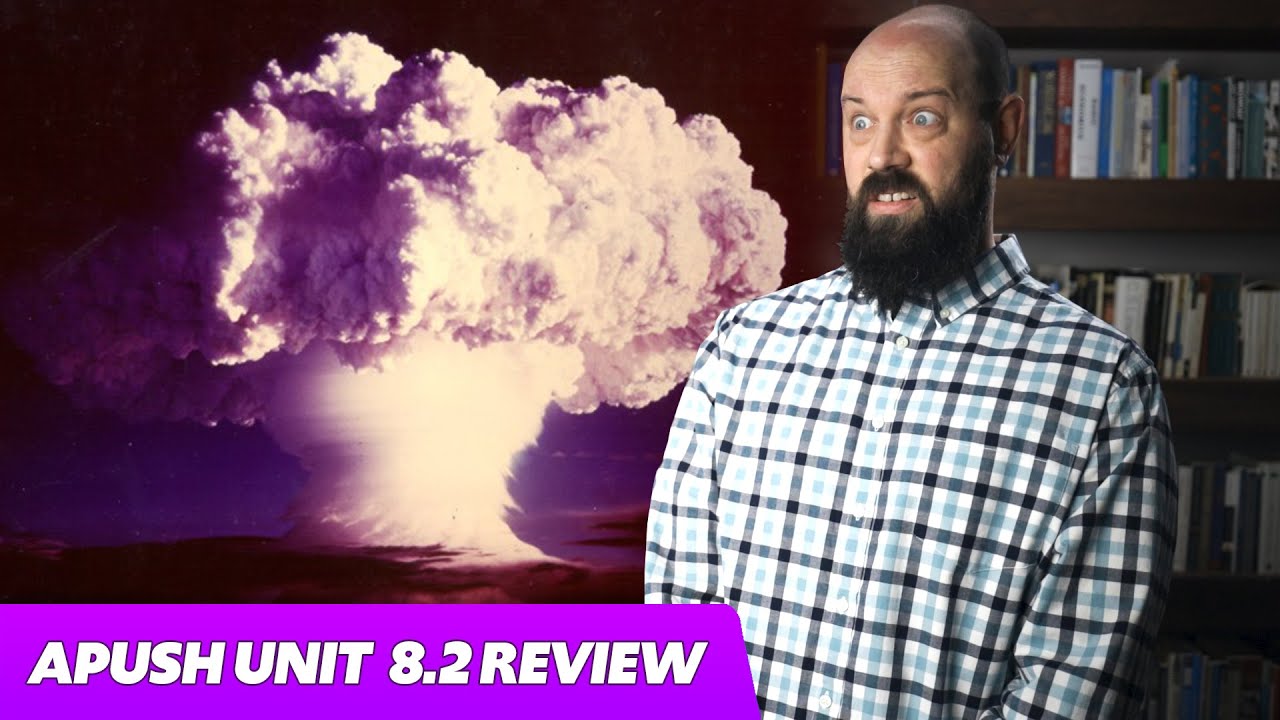
Right after the end of World War II, the Cold War began as an ideological battle between the United States and the Soviet Union. The U.S. wanted to remake the world into the image of democratic capitalism, while the Soviet Union wanted to remake the world into the image of authoritarian communism. And despite a massive arms race between the two nations in which weapons like the hydrogen bomb were developed, there was no actual fighting between the to belligerents, and that's why it's called the COLD War.
However, there were many proxy wars between these two powers, most notably the Korean War, and the Vietnam War. In these wars, the U.S. and Soviet Union backed different groups who corresponded to their values and in many cases, the proxy wars ended as stalemates. Even so, President Truman's doctrine of lending aid to nations threatened by communism (part of the larger idea of containment) necessitated participation in these proxy wars.
Sentinel Indexing in Progress
Metadata and chapters are available. Claim extraction for this episode is pending.
All video content is delivered via YouTube embedded players in accordance with the YouTube Terms of Service. Sentinel provides research tools that promote discovery and accountability across political media.