
Why Did the Soviets GIVE Territory to Lithuania in 1939?
July 19, 2025
23,727
1,137
363
6.32%
Search the Record
IndexedEvery word spoken in this episode is indexed. Type any phrase to jump straight to the moment it was said.
Type any word or phrase that may have been spoken. Click a result to seek the player to that exact moment.
Try a name, a topic, or a quoted line
History Hustle Episodes Around July 19, 2025
See what was published immediately before and after this episode.



 19:41Now Playing
Why Did the Soviets GIVE Territory to Lithuania in 1939?



Segments
YouTube Description
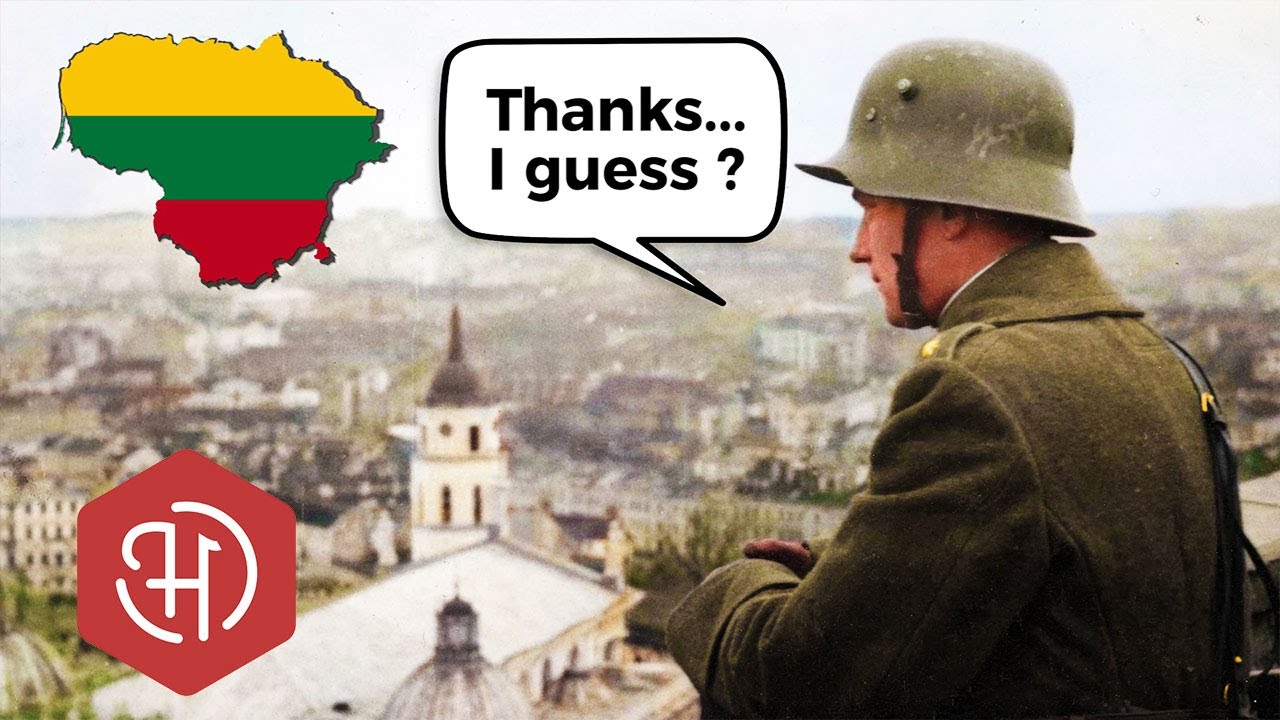
as posted by the channelIn 1939 the Vilnius District was taken by the Red Army from Poland and then given to Lithuania. Why did the Soviets handed the city over to the Republic of Lithuania? In 1940, Lithuania fell under Soviet control as part of the Molotov-Ribbentrop Pact's secret agreements. The Soviet Union issued an ultimatum in June, demanding the stationing of Soviet troops and the formation of a pro-Soviet government. Under pressure, Lithuania accepted, and soon after, Soviet forces occupied the country. On July 22, the Lithuanian People's Seimas declared all land and large enterprises nationalized, aligning with Soviet policies. A delegation, led by Justas Paleckis, traveled to Moscow in August, allegedly requesting Lithuania’s incorporation into the USSR, which was promptly formalized. Soviet officials from the USSR flooded Lithuanian institutions, imposing the Soviet regime and beginning agricultural collectivization. Wealthy farmers were targeted as "enemies of the people," and heavy taxation followed.
Soviet rule caused economic turmoil, with shortages of goods and a sharp decline in personal wealth. By 1941, thousands of Lithuanians had been deported to Siberia as part of Soviet repressions. However, the occupation was brief. On June 22, 1941, Germany invaded the Soviet Union during Operation Barbarossa, pushing the Red Army out of Lithuania. The swift German advance ended Soviet rule, but Lithuania then fell under German occupation, marking the start of another dark chapter in its history.
History Hustle presents: Why Did the Soviets Give Territory to Lithuania in 1939?
SUPPORT ME ON PATREON ►
SUPPORT ME ON PAYPAL ►
BUY ME A COFFEE ►
SUBSCRIBE ►
INSTAGRAM ►
SOURCES
– 1939, The Year that Changed Everything in Lithuania's History (Šarūnas Liekis).
– The History of Lithuania (Alfonsas Eidintas, Alfredas Bumblauskas, Antanas Kulakauskas, Mindaugas Tamošaitis).
– The History of Lithuania (Kiaupa Zigmantas).
– War, Revolution, and Nation-Making in Lithuania, 1914–1923 (Tomas Balkelis).
– On the State of Central Lithuania (Alfred Erich Senn) in the Jahrbücher für Geschichte Osteuropas, Neue Folge, Bd. 12, H. 3 (OKTOBER 1964), pp. 366-374.
– First to Fight, The Polish War, 1939 (Roger Moorhouse).
IMAGES
Images from commons.wikimedia.org.
VIDEO
Video material from:
Historical Footage of Stalin and Lenin
Russian Civil War (3/5)
Russian Civil War (4/5)
Vilnius old footage colored by A.I. 60fps
Žygis į Vilnių 1939 – 1
Western Ukraine Liberated by Red Army 1939 (1/8)
Western Ukraine Liberated by Red Army 1939 (2/8)
"Copyright Disclaimer Under Section 107 of the Copyright Act 1976, allowance is made for "fair use" for purposes such as criticism, comment, news reporting, teaching, scholarship, and research. Fair use is a use permitted by copyright statute that might otherwise be infringing. Non-profit, educational or personal use tips the balance in favor of fair use."
MUSIC
Kevin MacLeod (incompetech.com)
Licensed under Creative Commons: By Attribution 3.0 License
SOUNDS
Freesound.org.
historyhustle[at]gmail.com
Guests & Subjects Covered
Sentinel Indexing in Progress
Metadata and chapters are available. Claim extraction for this episode is pending.
All video content is delivered via YouTube embedded players in accordance with the YouTube Terms of Service. Sentinel provides research tools that promote discovery and accountability across political media.