Kings and Generals
@kingsandgenerals·4.2M subscribers·2.2K videos
Samurai Tactics: Crane's Wing #shorts #fypシ゚ #fyp #japan #documentary #military #tactical #warfare
Posted
November 8, 2024
Views
26,204
Likes
1,654
Comments
9
Engagement
November 8, 2024
26,204
1,654
9
6.35%
Every word spoken in this episode is indexed. Type any phrase to jump straight to the moment it was said.
Type any word or phrase that may have been spoken. Click a result to seek the player to that exact moment.
Try a name, a topic, or a quoted line
 0:50Now Playing
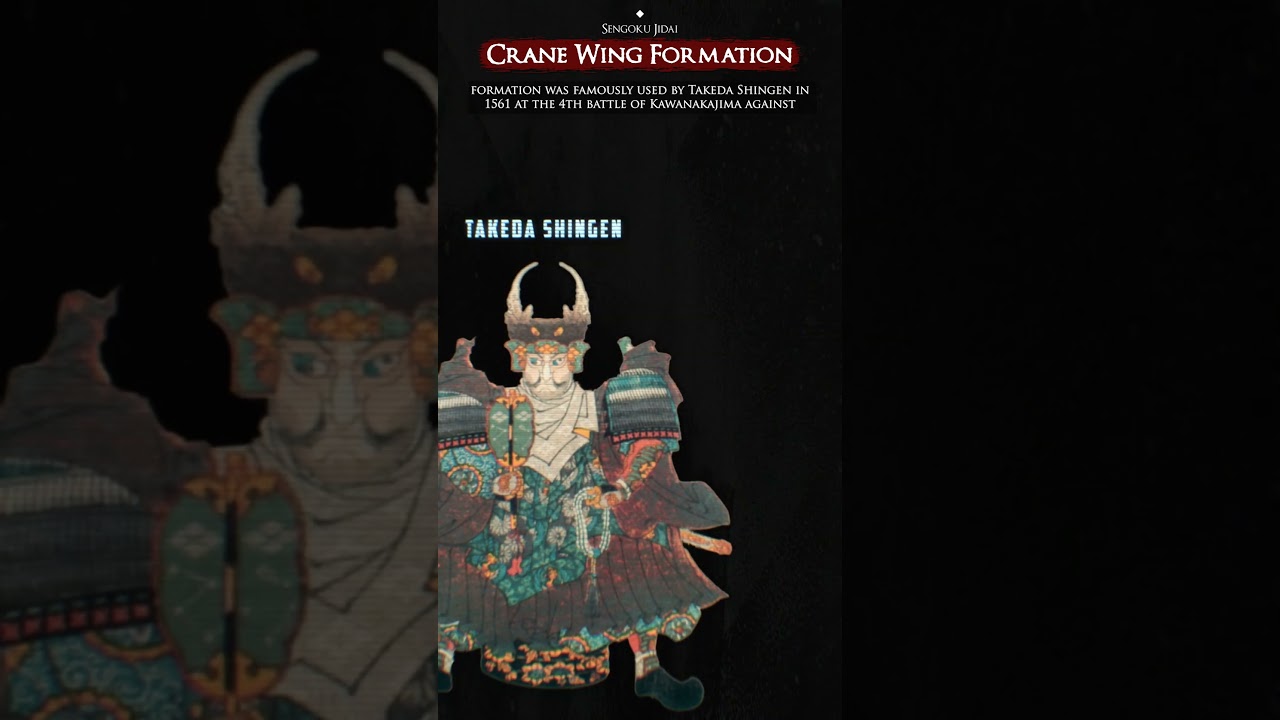
Kakuyoku, or Crane’s Wings, stands out as one of the most sophisticated defensive formations used by samurai armies during Japan's chaotic Sengoku period. It was a strategic marvel designed to handle full-force assaults effectively. The vanguard would be composed of archers and arquebusiers, expertly absorbing the enemy’s initial charge. This barrage of missile fire would weaken and tire the attackers. Then, in a brilliant tactical maneuver, the “wings” of the army would spread wide, gradually enveloping the enemy forces in a pincer-like movement. Takeda Shingen, a military genius of the era, famously employed this formation at the 4th Battle of Kawanakajima in 1561. His adversary, Uesugi Kenshin, attacked in a kuruma gakari or wheel formation, known for its rotating waves of fresh troops. Despite the incredible tactical expertise on both sides and the battle becoming one of the bloodiest of the Sengoku period, it concluded without a definitive victor. The high casualty count and lack of strategic gains highlighted the brutal and relentless nature of samurai warfare. This conflict remains legendary for its complex military strategies and the ongoing struggle for control of the Kawanakajima plains.
#Samurai #TakedaShingen #UesugiKenshin #SengokuPeriod #BattleTactics #JapanHistory #Kawanakajima #MilitaryHistory #SamuraiWars #CraneWingFormation #AncientWar #JapaneseCulture #HistoricalBattles #Kakuyoku #SamuraiCulture
Sentinel Indexing in Progress
Metadata and chapters are available. Claim extraction for this episode is pending.
All video content is delivered via YouTube embedded players in accordance with the YouTube Terms of Service. Sentinel provides research tools that promote discovery and accountability across political media.