Liberty Politics
@liberty-politics·94K subscribers·8.1K videos
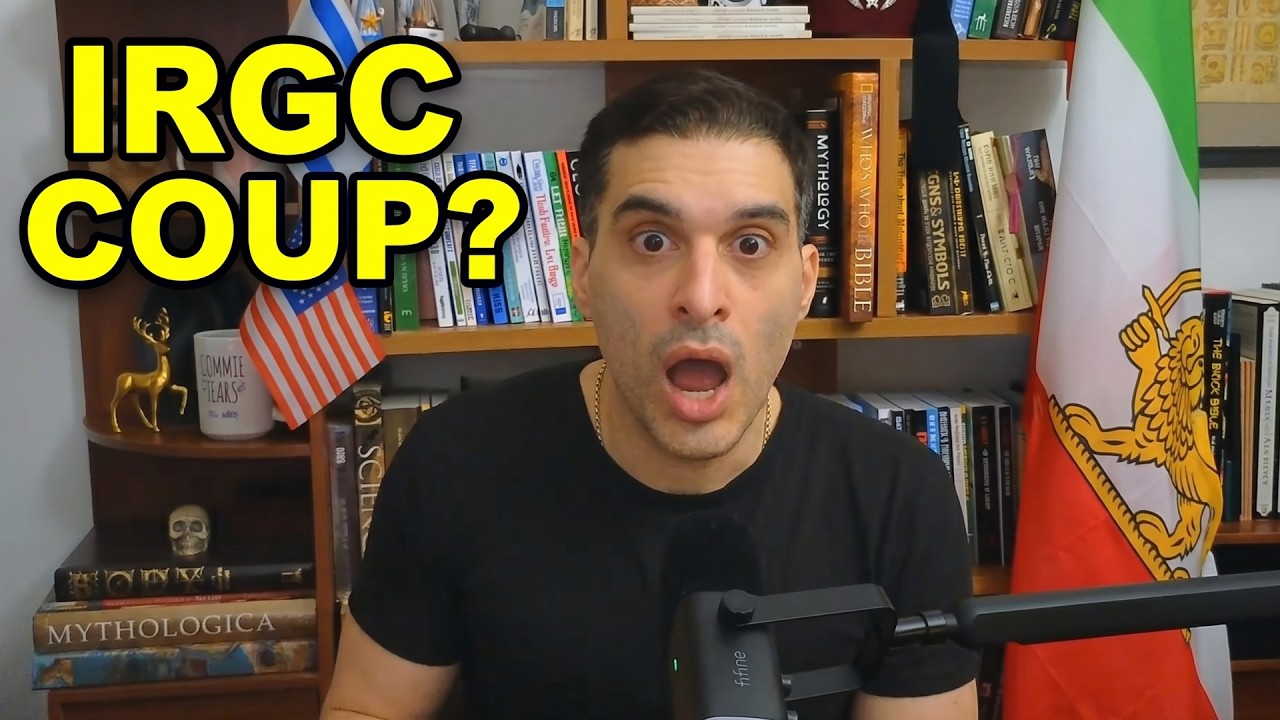
From Mullahs to Generals: The IRGC’s Silent Coup in Iran
Posted
May 5, 2026
Views
4,495
Likes
499
Comments
65
Engagement
12.55%
May 5, 2026
4,495
499
65
12.55%
Every word spoken in this episode is indexed. Type any phrase to jump straight to the moment it was said.
Type any word or phrase that may have been spoken. Click a result to seek the player to that exact moment.
Try a name, a topic, or a quoted line
 18:59Now Playing
🎖️ Come talk to me in our discussion group
The clerical facade is dead. As power shifts from the mosque to the military barracks, the IRGC is no longer hiding behind the turbans. This is not a simple transition of leadership; it is a hostile military takeover of a failing state.
🕌 The Leadership Void & Structural Shift
The Unseen Leader: Following the death of Ali Khamenei, his son Mojtaba Khamenei is technically the Supreme Leader, but he remains unseen and does not actively arbitrate disputes like his father did. 👤
A Militarized Order: Power has shifted from a centralized, visible leader to a more opaque, security-led, and militarized structure dominated by the Islamic Revolutionary Guard Corps (IRGC). 🪖
Political Deadlock: The IRGC has effectively assumed control over key state functions, blocking presidential appointments and creating a "complete political deadlock" for President Masoud Pezeshkian. 🛑
⭕ The Four Circles of Power
Rather than a simple split between "hardliners" and "moderates," the system is divided into overlapping circles competing over tactics to preserve the Islamic Republic:
The Intelligence-Security Network: Built around Mojtaba Khamenei and old IRGC veterans (like Hossein Taeb). This is a deep-rooted network of trust built over decades. 🕶️
The Negotiation-Facing Track: Includes President Pezeshkian, Parliament Speaker Ghalibaf, and Foreign Minister Araghchi. They are open to tactical diplomacy with the US but still operate entirely within the regime's security logic. 🤝
The Coercive/Military Core: Led by IRGC commander Ahmad Vahidi. This group dictates direct security and military decision-making and currently wields significant veto power over the government. ⚔️
The Ideological Pressure Camp: Centered around figures like Saeed Jalili. They view any compromise as betrayal, fiercely oppose negotiations, and use media to enforce strict ideological discipline. 📢
🌐 The Diplomatic Rift & Public Clashes
The Islamabad Talks: Deep divisions emerged over indirect talks with the US. Vahidi and the military core sought to restrict the authority of negotiators like Ghalibaf and Araghchi, explicitly forbidding talks on Iran's missile program or nuclear issues. ❌
Ouster Demands: The rift has widened to the point where Pezeshkian and Ghalibaf are reportedly seeking the removal of Foreign Minister Araghchi, accusing him of acting as an aide to the IRGC's Vahidi rather than representing the presidency. 📉
Media Warfare: A public battle erupted between state media outlets. The IRGC-linked Tasnim mocked maximalist demands as a "magic beanstalk" fantasy, while the Jalili-aligned Raja News accused them of undermining the Supreme Leader's red lines. 📰🔥
🎭 The False Dichotomy & The Ultimate Goal
A Tactical Illusion: The visible clashes are not about democratic reform versus authoritarianism; they are debates over the method of the regime's survival (diplomacy vs. escalation). 🛡️
Weaponizing the Rift: The regime actively uses these divisions as leverage. To foreign diplomats, it presents a choice: "Negotiate with us, or the extremists take over." To the Iranian public, it forces a choice between "bad" and "worse." 🪤
The Enduring Reality: Despite the shifting names and public infighting, the core system—controlling war, the economy, and the violent repression of civil society—remains completely intact and unaccountable to the Iranian people. ⛓️
Sentinel Indexing in Progress
Metadata and chapters are available. Claim extraction for this episode is pending.
All video content is delivered via YouTube embedded players in accordance with the YouTube Terms of Service. Sentinel provides research tools that promote discovery and accountability across political media.