Liberty Politics
@liberty-politics·94K subscribers·8.1K videos
Why the U.S. is the Most Anti-Imperialist Force in History
Posted
May 7, 2026
Views
2,088
Likes
274
Comments
66
Engagement
16.28%
May 7, 2026
2,088
274
66
16.28%
Every word spoken in this episode is indexed. Type any phrase to jump straight to the moment it was said.
Type any word or phrase that may have been spoken. Click a result to seek the player to that exact moment.
Try a name, a topic, or a quoted line
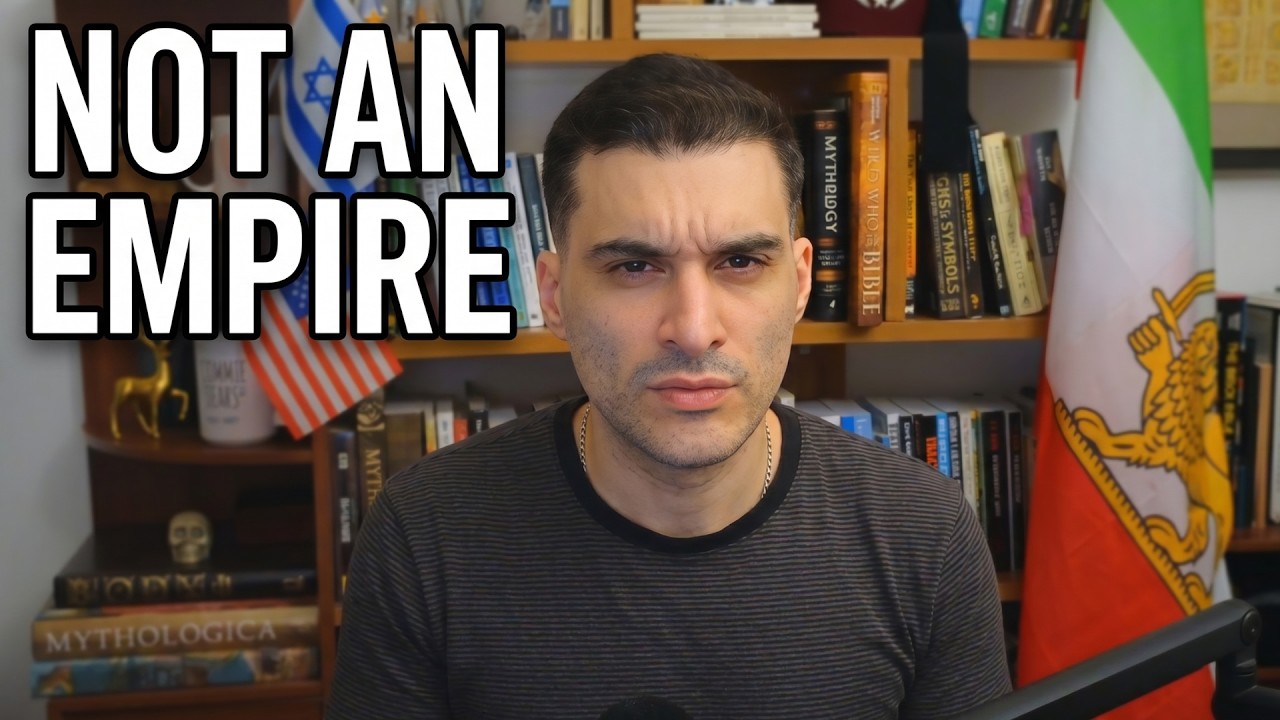 14:59Now Playing
🎖️ Come talk to me in our discussion group
If you think United States military bases are imperialism but you stay silent about the Iranian regime's expansionism, your priorities are backward. One is an offer of security and trade that nations choose to accept. The others are violent expansions that nobody asked for. Stop blaming the very force that keeps global trade stable and start naming the real enemies of human sovereignty.
🤝 The "Empire by Invitation" Framework
America uses its economy and military as an "offer" rather than forced subjugation, aligning perfectly with a famous political science concept called "Empire by Invitation." * The Concept: Coined by Norwegian historian Geir Lundestad, this theory argues that after WWII, Western European and Asian nations actively invited US military and economic presence (like NATO and the Marshall Plan) to protect themselves from real territorial empires (like the Soviet Union).
The Data: Today, the US has around 750 military bases in over 80 countries. Unlike traditional empires that conquer to build these bases, the vast majority exist through bilateral defense treaties (e.g., Japan, South Korea, Germany) where the host nation consents to, and sometimes financially subsidizes, the US presence.
📜 1. The American Revolution as an Anti-Imperial Act
Your first point anchors the US identity in its founding.
Historical Break: The 1776 Revolution was the first successful colonial revolt against a European empire (the British Empire). It dismantled the mercantilist model, which dictated that colonies exist solely to extract wealth for the mother country.
Ideological Shift: The founding documents established that sovereignty derives from the "consent of the governed," a direct ideological strike against imperial rule by a monarch.
Early Policy: Early US foreign policy, notably George Washington's Farewell Address (1796) and the Monroe Doctrine (1823), explicitly warned against getting entangled in the imperial conflicts of Europe.
🗺️ 2. Replacing the Empire Model with the Nation-State
Your second point touches on how the global world order was fundamentally rewritten by US influence.
Wilsonian Self-Determination: At the end of WWI, US President Woodrow Wilson introduced his "Fourteen Points," which championed the right of distinct ethnic and national groups to govern themselves. This helped dismantle the Austro-Hungarian and Ottoman Empires.
Post-WWII Decolonization: Following WWII, the US leveraged its massive power to pressure European allies (like Britain and France) to dismantle their empires. The US-backed creation of the United Nations in 1945 codified the "sovereign equality of all its Members," cementing the nation-state as the default unit of the global system.
Economic Order: Instead of imperial extraction, the US established the Bretton Woods system (IMF, World Bank), creating a global free-trade network based on open markets rather than closed imperial blocs.
🛡️ 3. Fighting Modern Imperialist Forces
Your third point looks at the current geopolitical landscape, where the US acts as a counterweight to modern expansionist powers.
🇷🇺 Vladimir Putin's Russia: Many analysts view the invasion of Ukraine as a textbook case of 19th-century territorial imperialism—attempting to erase a sovereign nation-state's borders through military conquest to rebuild the Russian Empire/Soviet sphere. The US has been the primary architect of the financial and military coalition resisting this.
🇨🇳 The Chinese Communist Party (CCP): The US directly opposes CCP expansionism. China's "Nine-Dash Line" claims nearly the entire South China Sea, threatening the sovereignty of the Philippines, Vietnam, and others. Furthermore, some critics label China's Belt and Road Initiative as "debt-trap diplomacy" or economic imperialism. The US uses "Freedom of Navigation" naval patrols to push back.
🇮🇷 Pan-Islamism / Islamic Republic: Iran operates what it calls the "Axis of Resistance," a network of proxy militias (Hezbollah in Lebanon, Houthis in Yemen, various groups in Iraq and Syria) used to project regional hegemony and undermine sovereign governments. The US actively deploys its military and sanctions to counter this network and protect international shipping lanes.
Sentinel Indexing in Progress
Metadata and chapters are available. Claim extraction for this episode is pending.
All video content is delivered via YouTube embedded players in accordance with the YouTube Terms of Service. Sentinel provides research tools that promote discovery and accountability across political media.