Matt Beat
@iammrbeat·1.4M subscribers·960 videos
The American Presidential Election of 1852
Posted
December 3, 2015
Views
285,210
Likes
3,967
Comments
264
Engagement
1.48%
December 3, 2015
285,210
3,967
264
1.48%
Every word spoken in this episode is indexed. Type any phrase to jump straight to the moment it was said.
Type any word or phrase that may have been spoken. Click a result to seek the player to that exact moment.
Try a name, a topic, or a quoted line
 5:37Now Playing
The Ultimate American Presidential Election BookEvery Presidential Election in American History (17882024) is now available!
Mr. Beat's band
Help Mr. Beat spend more time making videos
The 17th episode in a very long series about the American presidential elections from 1788 to the present. The 1852 election is eerily similar to the 1844 election. What is with everyone dying in office so much, anyway?
Feeling extra dorky? Then visit here:
You might call this election the election of 1844, part 2, because it was very similar to it. Just like in 1844, a young dark horse candidate won. Also like in 1844, the incumbent president was a Whig who had become President after the death of his war-hero predecessor. And that Whig didn’t get his party’s nomination for the next election.
In 1852, the Whig was Millard Fillmore, who took over after Zachary Taylor died in 1850. The biggest national issue during Taylor and Fillmore’s presidencies was the expansion of slavery out in western territories. The Compromise of 1850 had helped ease tensions a bit, but it really just kicked the can down the road- the country was becoming further divided between Northerners and Southerners over slavery. You know who else was divided? The Whig Party. They had a hard time deciding who their nominee for the 1852 election would be. Many favored Fillmore, but many others favored Mexican American War hero Winfield Scott, Old Fuss and Feathers himself. Even others favored Secretary of State Daniel Webster. In the end, it was Old Fuss and Feathers, Winfield Scott, who would get the nomination. William Alexander Graham, the Secretary of the Navy and former governor and senator from North Carolina, was his running mate.
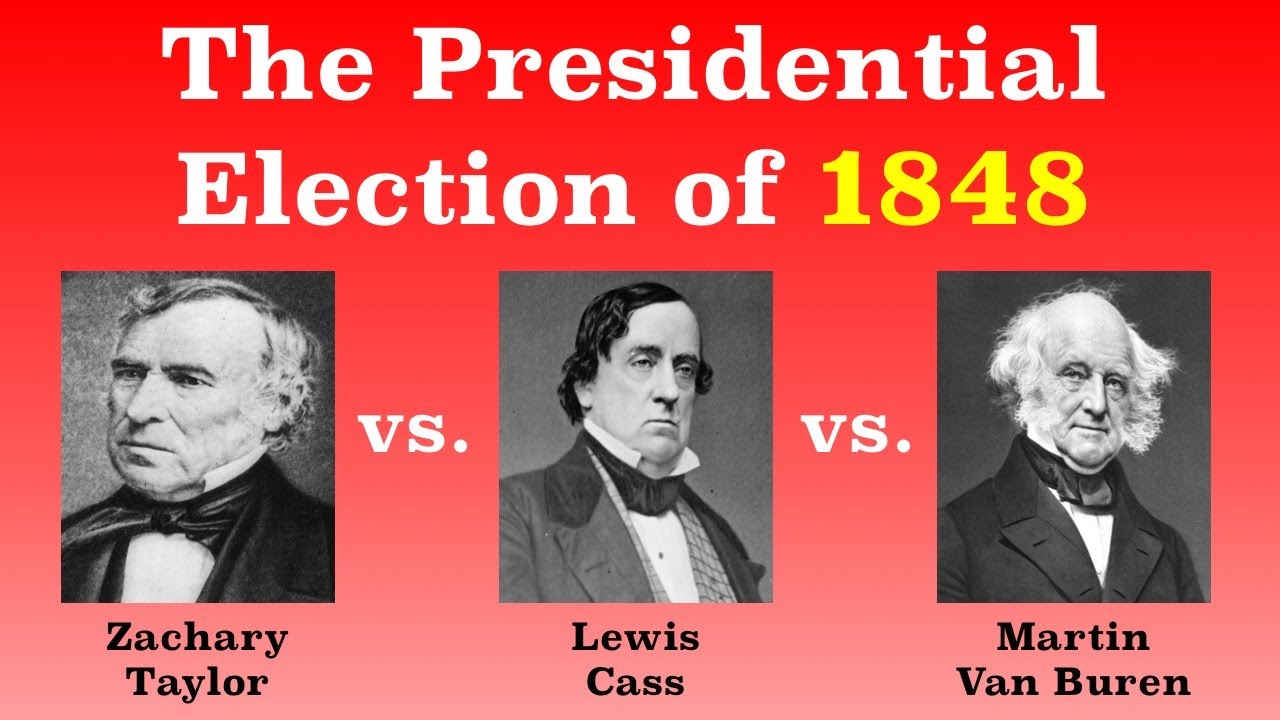
The Democratic Party had at least nine candidates who were all fighting to get nominated. At their convention, four major candidates stood out. Lewis Cass, who won the nomination in 1848, James Buchanan, the former Secretary of State and Senator from Pennsylvania, Stephen Douglas, a senator from Illinois, and William L. Marcy, the former Secretary of War. Then, seemingly out of nowhere, comes another dark horse candidate for the Democrats- Franklin Pierce, a 48 year-old former Senator and Representative from New Hampshire. They ended up nominating Pierce, with William R. King, a former Senator and Representative from Alabama, as his running mate.
Third parties? Oh there were plenty.
The biggest was the Free Soil Party, which had a strong showing in 1848. They nominated John P. Hale, another Senator from New Hampshire, with George Washington Julian as his running mate, a U.S. Representative from Indiana who was later a Radical Republican before it was cool.
The Union Party formed after many Whigs were upset with Winfield Scott’s nomination. They nominated Daniel Webster for President.
Then there was the Native American Party, no not that Native American, that Native American Party. They were also called the Know-Nothing Party by opponents thought they, well, knew nothing. Surprisingly, the party embraced the nickname because I guess they liked being called stupid. They also nominated Daniel Webster, even though he didn’t approve.
And there was the Southern Rights Party, an offshoot of the Democratic Party that nominated George Troup, a former Senator, Representative, and Governor of Georgia.
This was the first election in which citizens of the new state of California could vote. The two biggest political parties- the Whigs and the Democrats, had similar platforms, so the campaigns were mostly just about the personalities of Pierce and Scott. This jaded a lot of voters and explains why so many third parties popped up. The lack of clear-cut issues caused the voter turnout to decline.
Sentinel Indexing in Progress
Metadata and chapters are available. Claim extraction for this episode is pending.
All video content is delivered via YouTube embedded players in accordance with the YouTube Terms of Service. Sentinel provides research tools that promote discovery and accountability across political media.