New Discourses
@newdiscourses·175K subscribers·759 videos
Hegel, Wokeness, and the Dialectical Faith of Leftism
Posted
May 28, 2021
Views
420,070
Likes
12,143
Comments
3,222
Engagement
3.66%
May 28, 2021
420,070
12,143
3,222
3.66%
Every word spoken in this episode is indexed. Type any phrase to jump straight to the moment it was said.
Type any word or phrase that may have been spoken. Click a result to seek the player to that exact moment.
Try a name, a topic, or a quoted line
 3:49:46Now Playing
The New Discourses Podcast with James Lindsay, Episode 37
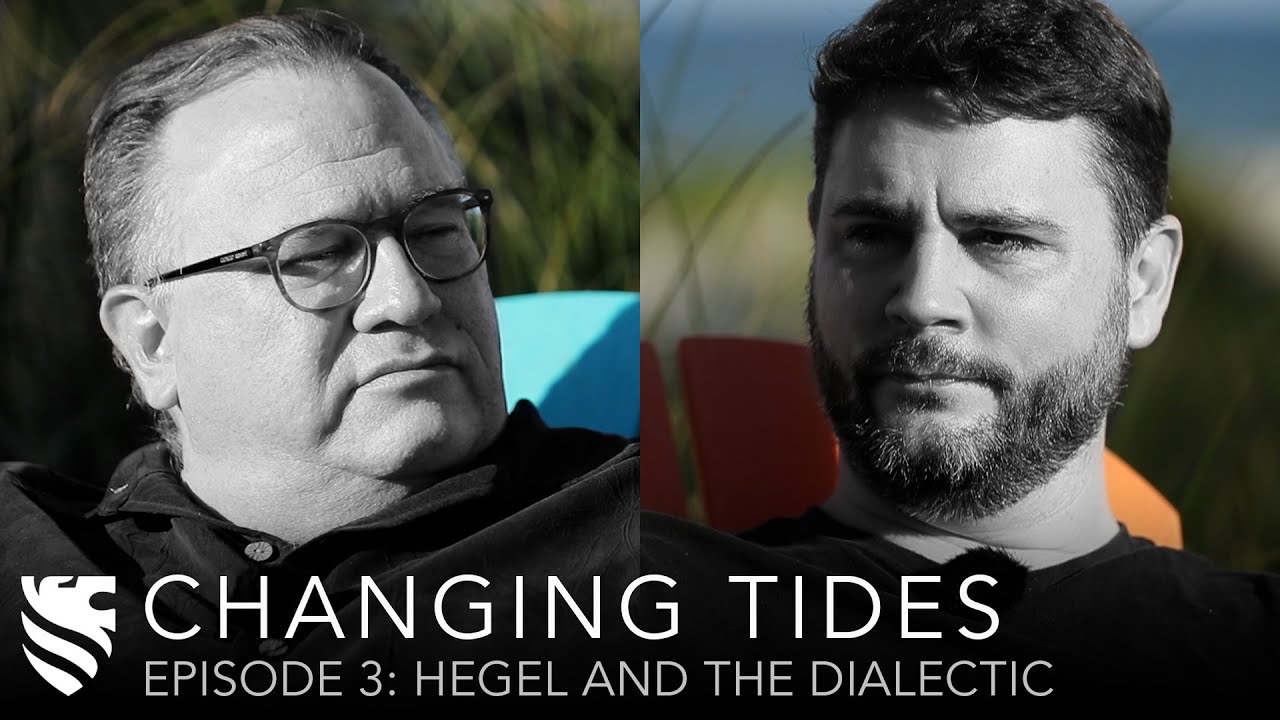
Is Critical Race Theory Marxist, as many insist, or is it not? What is the relationship between Marxism, neo-Marxism (Critical Theory), and Wokeness? All three criticize one another, and yet all three have a great deal obviously in common. Is there some common underlying thread between these clearly similar yet obviously different worldviews? The answer is yes, and by tracing back to one of the most influential speculative idealist philosophers of the early 19th century, namely George Wilhelm Friedrich Hegel, we can gain a great deal of insight into how these decidedly leftist movements—the Marxist Old Left, the neo-Marxist New Left, and the intersectional Woke Left—share at least one deeper philosophical architecture in common. From Hegel, the Left since his time has, wittingly and not, adopted several of the pillars of Hegelian philosophy, these including his statism, historicism, and, much more importantly, his dialectical approach and metaphysical worldview. In this episode of the New Discourses Podcast, James Lindsay takes a long, deep dive into the ways that Hegel's philosophy is at the root of the entire "Dialectical Left" since, naming the dialectic the "operating system" of all activist Leftism since the early 1800s.
In this episode, Lindsay takes considerable time explaining Hegel's view of dialectical thought and then reveals in many examples, reaching up to the present day, how consistently the dialectic appears as the functional underpinning of Leftism ever since, at the latest, the 1830s. He makes the case that Leftism since Hegel thinks dialectically, moves dialectically, and applies dialectical thought not just to its targets but to everything, including itself and even its own dialectic. He then switches gears and explains how the dialectic is central to Hegel's underlying Hermetic (or alchemical) worldview and explains his mystical metaphysics so that this long arc of Leftist activism can be understood as evolving denominations within a single religious faith. With this theoretical groundwork laid, he then tackles how Hegel's historicism and statism arise as key features of his philosophy, with both of these characterizing activist Leftism up to the present day. Join him for his longest and most in-depth discussion yet, taking on how Hegel is a key progenitor of communism, liberationism, and ultimately Wokeness, how this philosophy must be understood so that it can be countered, and why it should be thought of in the same way that Hegel thought of it: as a religion in its own right, with its own notion of deity, metaphysical commitments, soteriology, and eschatology.
Support New Discourses:
Website:
Follow:
Podcast:
© 2021 New Discourses. All rights reserved.
Sentinel Indexing in Progress
Metadata and chapters are available. Claim extraction for this episode is pending.
All video content is delivered via YouTube embedded players in accordance with the YouTube Terms of Service. Sentinel provides research tools that promote discovery and accountability across political media.