
Prof Sam Vaknin
@samvaknin·443K subscribers·2.3K videos
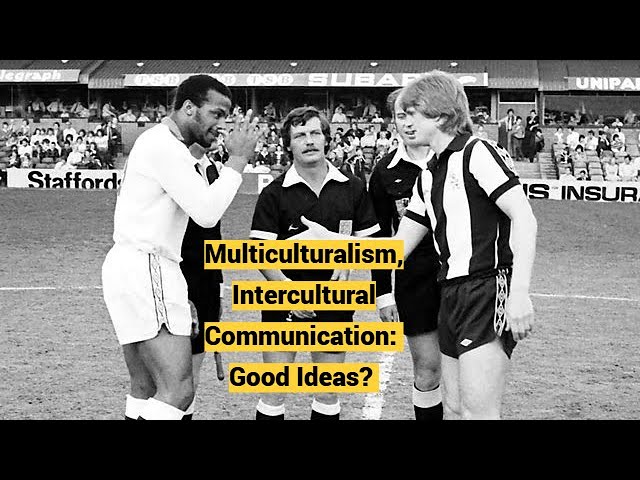
Multiculturalism, Intercultural Communication: Good Ideas? (SASS: School of Advanced Social Studies)
Posted
April 11, 2025
Views
4,147
Likes
197
Comments
2
Engagement
April 11, 2025
4,147
197
2
4.80%
Every word spoken in this episode is indexed. Type any phrase to jump straight to the moment it was said.
Type any word or phrase that may have been spoken. Click a result to seek the player to that exact moment.
Try a name, a topic, or a quoted line
 53:08Now Playing
School of Advanced Social Studies
Colonialism as reverse immigration
Why internecine and civil wars?
Freud’s Narcissism of Small Differences
Mori’s Uncanny Valley Reaction
Intercultural vs. cross-cultural communication: individual vs. collective, commonalities vs. differences
Adorno and Horkheimer in “Dialectic of Enlightenment” and Althusser in “Ideology and Ideological State Apparatuses”: subjectivity formed by media and state who interpellate the individual.
Hidden Assumptions: cultures are different, intercultural communication is needed and beneficial
Cultures are not monolithic (co-cultural theory of Mark Orbe), subcultures
Cultures are heterogeneous and protean
But globalization leads to cultural convergence, reduces diversity, and increases intercultural understanding
Typology of cultures: shame and reputation based (signaling), solutions-orientated (consensual), and dominance/elimination (hegemonic/genocidal)
Goals of intercultural communication: respect (communicative accommodation, code switching); efficacy (cultural agility, cultural simulation, cultural sensitivity, and cultural adaptation); cultural fusion (Eric Kramer) when an acculturated individual harbors multiple cultures.
Components of intercultural communication: social attributes, thought patterns, sociocultural context, identity factors (intercultural adaptation, intercultural competence, communicative competence)
Conflict can be axiological, doxastic, or deontic
Language (referents): meaning of meanings theory
Media of transmission
Interpretation/acculturation (not assimilation, Kim)
Collaboration (communicative acculturation)
Mechanisms: anxiolytic (ameliorates uncertainty)
Assimilation
Deviance (rebellion): defiance, contumaciousness
Alienation (Hajda)
Culture-based Conflict Situation Models (Ting-Toomey and Oetzel): primary orientation, boundary features, conflict communication factors, conflict competence
Intercultural Praxis Model (Sorrells): inquiry, framing, positioning, dialog, reflection, action.
Find and Buy MOST of my BOOKS and eBOOKS in my Amazon Author Page
Sentinel Indexing in Progress
Metadata and chapters are available. Claim extraction for this episode is pending.
All video content is delivered via YouTube embedded players in accordance with the YouTube Terms of Service. Sentinel provides research tools that promote discovery and accountability across political media.