Reading Through History
@readingthroughhistor·106K subscribers·437 videos
History Brief: The Proclamation of 1763 (Old Version)
Posted
April 7, 2014
Views
56,814
Likes
139
Comments
25
Engagement
April 7, 2014
56,814
139
25
0.29%
Every word spoken in this episode is indexed. Type any phrase to jump straight to the moment it was said.
Type any word or phrase that may have been spoken. Click a result to seek the player to that exact moment.
Try a name, a topic, or a quoted line
 4:49Now Playing
This is the old, original version of the Proclamation of 1763. For a newer version, with better audio
For teaching resources covering this material, visit us at
Visit our Facebook page at
Transcript:
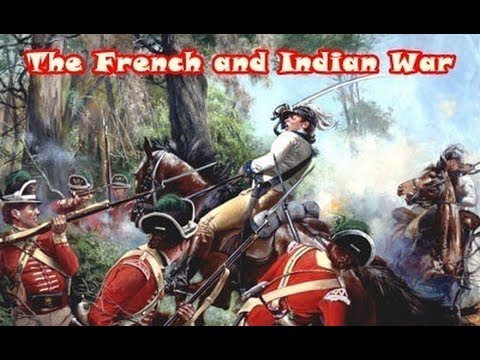
In the years following the conclusion of the French and Indian War, relations between Great Britain and its American colonies began to sour. In a matter of only twelve years, a series of disagreements would ultimately lead to rebellion and revolution. What were some of these disagreements?
One of the earliest problems was a royal decree, issued by King George III, known as the Proclamation of 1763. This order stated that colonists couldn't settle lands west of the Appalachian Mountains. It would remain American Indian territory for the time being, the result of a backlash from a Native American uprising known as Pontiac's Rebellion.
Once the Treaty of Paris was signed, colonists began eyeing western lands won from the French. Colonists were already encroaching upon the lands, and clashes between colonists and Natives were becoming both frequent and alarming.
Many Native American leaders, foreseeing the impending flood of settlers into their territory, began calling for American Indians to unite in defense of their lands. History has called the ensuing uprising Pontiac's Rebellion, named after one of the Ottawa chiefs who led the movement.
Over a span of 1,000 miles, Native American attacks on the frontier were violent and furious. They attacked forts (destroying or capturing seven of them), cabins, and hunters. British general Jeffrey Amherst and soldiers were sent to meet the threat at Forts Pitt and Detroit. He and 500 men were ambushed by an unknown number of Shawnee (and allied tribes) at Bushy Run. Over 300 Shawnee were killed or wounded while the others scattered.
The event got London's attention, and the result was the Proclamation of 1763. Britain sent more troops to North America and began constructing additional forts. This came at a cost of 320,000 pounds a year.
The British Parliament felt that since the resources were going to the defense of the colonies, the American colonists should pay for it; but Americans viewed the scenario differently. Nearly every male colonist owned a gun, and from the age of 16 to 60, most served in the militia. In all, the colonists outnumbered the Natives living on the frontier 20 to 1. Colonists didn't feel that the troops were needed.
Prior to the French and Indian War, Britain had kept no standing army in the American colonies. Now that the war had been won, and the French had abandoned North America, more troops were being shipped in. Colonists also had all of the new land acquired from France, and King George III would not allow them to settle it, going so far as sending troops to forcibly remove settlers from the forbidden lands. Colonial agitation grew. Then Parliament issued the Quartering Act of 1765.
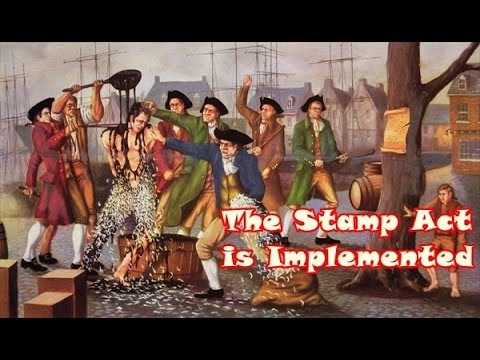
The Quartering Act of 1765 stated that colonists had to provide housing (in barracks, public houses, inns, ale houses, or livery stables), food, and supplies for the British troops. Colonists had no say in the matter. Thomas Gage, the officer placed in charge of troops in North America, determined to station most of his soldiers in New York so that they could quickly be deployed to hot spots whenever needed. Initially, New York refused to accommodate the troops, but agreed to take them in after Parliament suspended their royal governor and the New York Assembly.
Sentinel Indexing in Progress
Metadata and chapters are available. Claim extraction for this episode is pending.
All video content is delivered via YouTube embedded players in accordance with the YouTube Terms of Service. Sentinel provides research tools that promote discovery and accountability across political media.