Sam Seder
@TheMajorityReport·2M subscribers·30.1K videos
How The USA's Racist Tax Code Impoverishes Black Americans
Posted
August 14, 2021
Views
7,901
Likes
553
Comments
174
Engagement
9.20%
August 14, 2021
7,901
553
174
9.20%
Every word spoken in this episode is indexed. Type any phrase to jump straight to the moment it was said.
Type any word or phrase that may have been spoken. Click a result to seek the player to that exact moment.
Try a name, a topic, or a quoted line
 20:05Now Playing
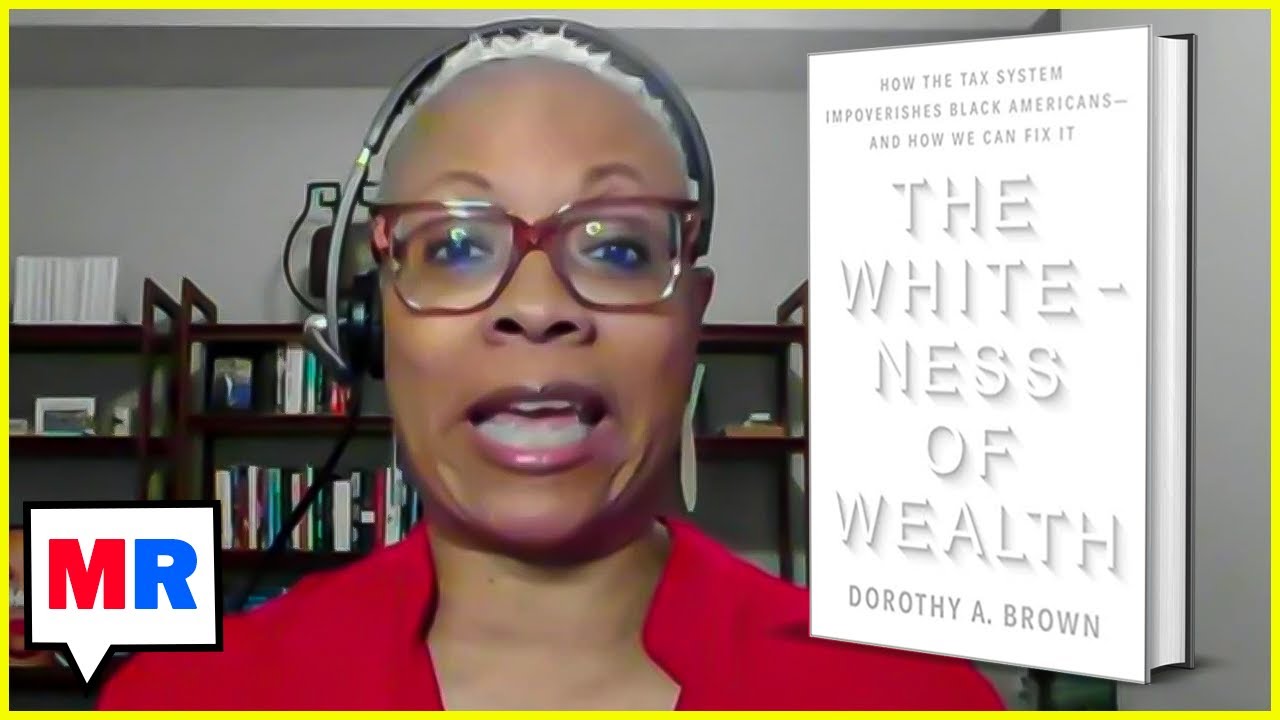
Emory Professor of Law Dorothy A. Brown to discuss her new book, The Whiteness of Wealth: How the Tax System Impoverishes Black Americans–and How We Can Fix It, on how the tax code is not as color blind as we once thought. Sam Seder and the Majority Report crew discuss this.
The Whiteness of WealthHOW THE TAX SYSTEM IMPOVERISHES BLACK AMERICANSAND HOW WE CAN FIX IT By DOROTHY A. BROWN »
We stream our live show every day at 12 PM ET.
We need your help to keep providing free videos! Support the Majority Report's video content by going to
Watch the Majority Report live MF at 12 p.m. EST at youtube.com/samseder or listen via daily podcast at
Download our FREE app
SUPPORT the show by becoming a member
We Have Merch!!!
LIKE us on Facebook
FOLLOW us on Twitter
SUBSCRIBE to us on YouTube
Sam Seder: We are back Sam Seder on The Majority Report. with me on the zoom, as it were, Professor Dorothy Brown is a professor of law at Emory University and author of the whiteness of wealth how the tax system impoverishes black Americans. Professor, welcome to the program.
Dorothy A. Brown: thanks so much for having me.
Sam Seder: I was just saying this before we started to record, that is so impressive and enlightening I think. particularly we're in an era where there has been an as the more i think that people begin to become aware of our history of reconstruction, of the assaults on black success frankly, that took place during Reconstruction, and then the subsequent institutional and governmental roadblocks that were put up for black people to develop wealth in this country, I think there's a greater awareness of it and to the point now where we hear well and I'm thinking you know maybe you know the subtext of this is that people are talking about reparations in a more serious manner. We hear well there is no more systematic racism in our country. And frankly i have been guilty of saying well there is systematic racism but there isn't necessarily the same level of institutional or governmental racism. But there is and your book makes that quite clear. And you know put aside the sort of the intent. Although that's debatable. But even if we stipulate there is no intent of our government in the way that it deals. I'm not talking about policing here because I think there's another story there too. Specifically the tax code, yeah and tell the story of how you came to sort of like be aware of this because I found this sort of revelatory. And it is it tells so much about the tax code about the development of black wealth in this country. But it also tells a lot about what you can do with statistics and statistics that you do not pursue. but start with your sort of I guess origin story.
Dorothy A. Brown: yeah so my origin story is I grew up in the south Bronx I dealt with racism and I didn't want a job that forced me to deal with the substance of racism on my job so I went into tax law. because I thought tax law had absolutely nothing to do with race as I like to say, the only color that was relevant was green. so I go into tax law and I'm doing my parent's tax returns like any good daughter right who has an element tax I do my parent's tax returns. and I'm doing my returns and their returns and something's not adding up. I know what I'm doing I'm doing everything right but I should be paying a lot more in taxes than my parents because I by myself am making as much money as my parents combined. but that's not how it's working out. I cannot figure it out but of course, I have a job so I finish the tax returns. I'm puzzled but I go on with my daily routine. Next April 15th I come to the same roadblock. What is going on? It isn't until I become an academic and actually have time to step back and think that I start to put the pieces of the puzzle together. But it's not until I read an article written by a then Duke law professor who was a mentor. Who wrote an article that said if you're a black law professor you should write about how systemic racism impacts the area of law you teach. So I thought this would be an interesting article. I teach tax law. I assumed it had absolutely nothing to do with me. But this professor always made me think so I read the article and a couple pages from the end it says how do you know there isn't a race and tax problem if you don't look.
Sentinel Indexing in Progress
Metadata and chapters are available. Claim extraction for this episode is pending.
All video content is delivered via YouTube embedded players in accordance with the YouTube Terms of Service. Sentinel provides research tools that promote discovery and accountability across political media.