United States Institute of Peace
@unitedstatesinstituteofpeace·110K subscribers·2.2K videos
Afghanistan Study Group Releases Final Report
Posted
February 3, 2021
Views
3,845
Likes
40
Comments
3
Engagement
February 3, 2021
3,845
40
3
1.12%
Every word spoken in this episode is indexed. Type any phrase to jump straight to the moment it was said.
Type any word or phrase that may have been spoken. Click a result to seek the player to that exact moment.
Try a name, a topic, or a quoted line
 1:27:56Now Playing
Bipartisan, Congressionally Mandated Study Group Unveils Recommendations for U.S. Strategy in Afghanistan
Afghanistan’s 40-year conflict has entered a new and potentially final phase. A real opportunity to reach a peaceful resolution now exists, and the United States can play a key role in determining whether this opportunity is realized. A responsible and coherent set of U.S. actions could greatly increase the chances of a sustainable peace agreement. But a rash and rushed approach could further prolong this long and tragic war—with negative consequences for the region and heightened threats to the security and interests of the United States and its allies.
Over the past 10 months, the Afghanistan Study Group has been exploring options for effective U.S. action in Afghanistan. The bipartisan study group, convened by USIP at the request of Congress, brought together distinguished experts and former policymakers to develop policy recommendations that consider how a peace settlement—or the failure to reach one—could affect Afghanistan’s future as well as U.S. resources and commitments in the region.
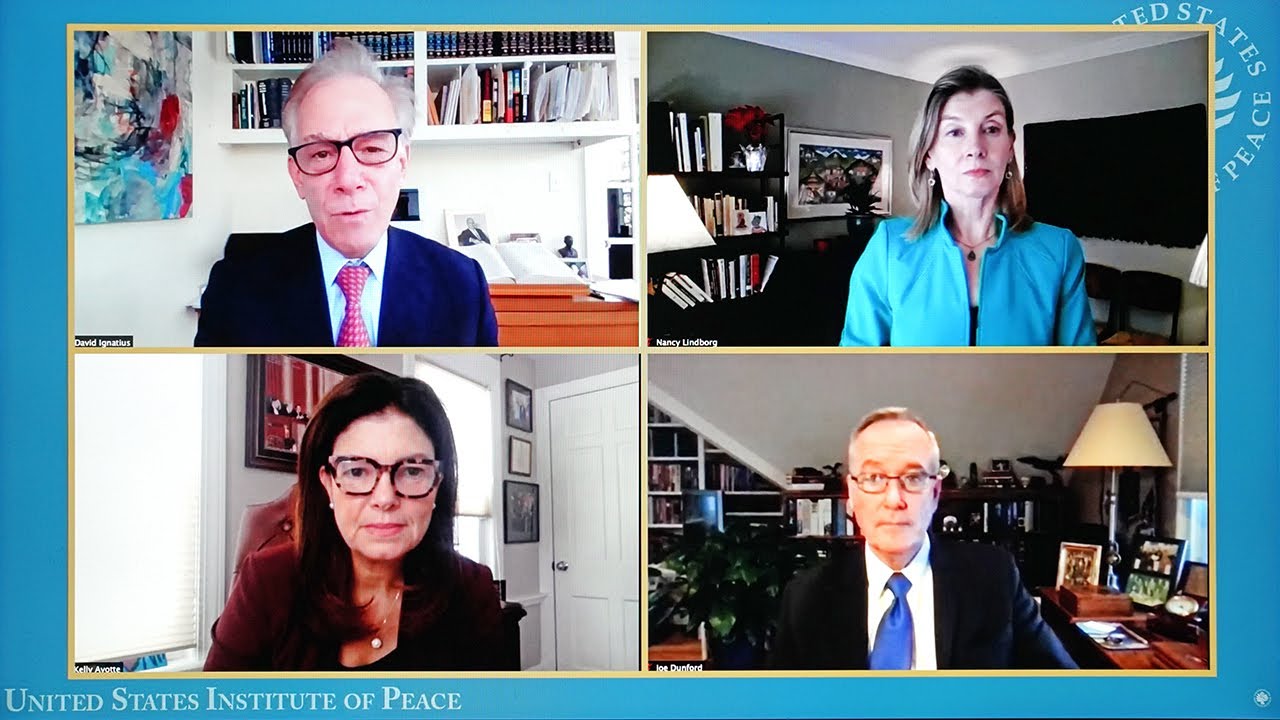
On February 3, USIP hosted the co-chairs of the Afghanistan Study Group for a discussion of the group’s findings and the report’s recommendations for how the United States can fully align our policies, practices, and messaging across diplomatic, military, and assistance efforts toward the overarching goal of achieving a durable and just peace in Afghanistan.
Speakers:
The Honorable Stephen J. Hadley, Chair, Board of Directors, U.S. Institute of Peace
Framing Remarks and Moderated Discussion
Senator Kelly A. Ayotte
Co-Chair, Afghanistan Study Group
General Joseph F. Dunford, Jr.
Co-Chair, Afghanistan Study Group
The Honorable Nancy Lindborg
Co-Chair, Afghanistan Study Group
David Ignatius, moderator
Columnist, The Washington Post
For more information about this event, please visit
Connect with us!
Subscribe to our YouTube channel
Newsletters
The United States Institute of Peace is a national, nonpartisan, independent institute, founded by Congress and dedicated to the proposition that a world without violent conflict is possible, practical, and essential for U.S. and global security. In conflict zones abroad, the Institute works with local partners to prevent, mitigate, and resolve violent conflict. To reduce future crises and the need for costly interventions, USIP works with governments and civil societies to help their countries solve their own problems peacefully. The Institute provides expertise, training, analysis, and support to those who are working to build a more peaceful, inclusive world.
Sentinel Indexing in Progress
Metadata and chapters are available. Claim extraction for this episode is pending.
All video content is delivered via YouTube embedded players in accordance with the YouTube Terms of Service. Sentinel provides research tools that promote discovery and accountability across political media.