United States Institute of Peace
@unitedstatesinstituteofpeace·110K subscribers·2.2K videos
The Building Blocks of Civil Society in North Korea
Posted
February 23, 2021
Views
2,181
Likes
30
Comments
1
Engagement
February 23, 2021
2,181
30
1
1.42%
Every word spoken in this episode is indexed. Type any phrase to jump straight to the moment it was said.
Type any word or phrase that may have been spoken. Click a result to seek the player to that exact moment.
Try a name, a topic, or a quoted line
 1:18:01Now Playing
New Report Finds that Market Activities Have Fostered the Beginnings of a Public Sphere in North Korea
Over the past three decades, market forces have gradually transformed North Korea's economy, empowering a new class of economic actors and undermining the state's capacity to control the movement of people and goods. The North Korean regime has alternated between tolerating and cracking down on markets, but market actors have proven resilient and adaptable—and may be indirectly promoting the "building blocks" of civil society.
To be sure, marketization in North Korea has not led to the development of civil society in the form of an independent associational life. And it would be mistaken to assume that the changes fostered by markets so far will result in a wholesale transformation of North Korea. However, a new report published by the National Committee on North Korea argues that the strategies North Korean market participants have adopted to succeed in a difficult environment may be slowly reshaping social relations in the country.
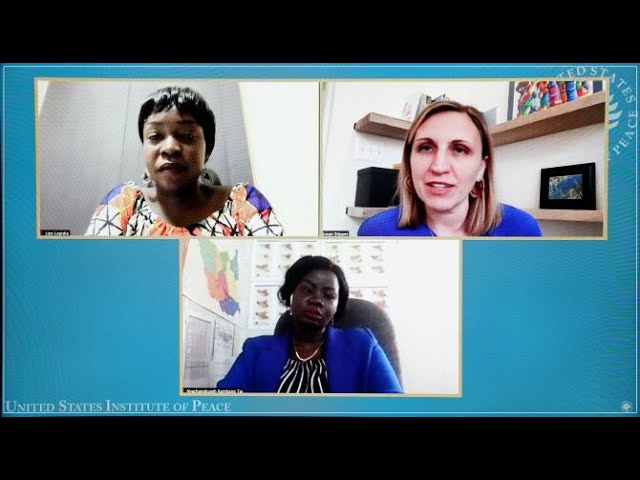
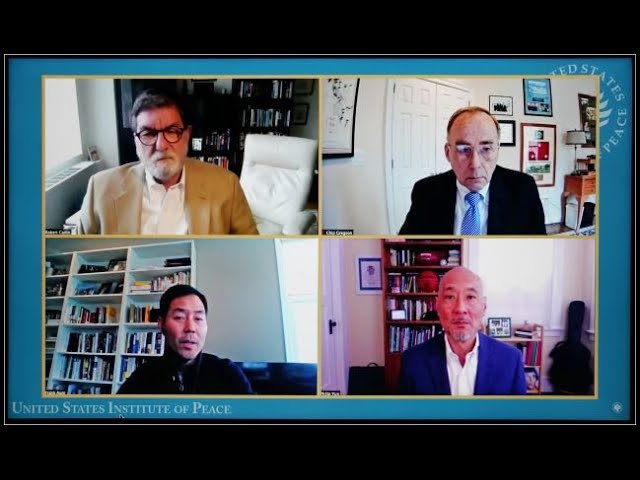
On February 23, USIP hosted a discussion of this report and the broader implications of market participation on North Korean society. The report’s authors will be joined by leading experts on the Korean Peninsula and civil society to discuss how market participation has fostered the beginnings of a public sphere and how linkages between market activities and the building blocks of civil society may help promote the rights and livelihoods of the North Korean people—and shift the ideological framework through which the state must operate.
Speakers:
Frank Aum, welcoming remarks
Senior Expert, North Korea, U.S. Institute of Peace
Celeste Arrington
Korea Foundation Associate Professor of Political Science and International Affairs, George Washington University
Jieun Baek
Fellow, Harvard Kennedy School, Belfer Center for Science and International Affairs
Justin Hastings
Professor of International Relations and Comparative Politics, University of Sydney
Andrew Yeo
Professor of Politics and Director of Asian Studies, Catholic University
For more information about this event, please visit
Connect with us!
Subscribe to our YouTube channel
Newsletters
The United States Institute of Peace is a national, nonpartisan, independent institute, founded by Congress and dedicated to the proposition that a world without violent conflict is possible, practical, and essential for U.S. and global security. In conflict zones abroad, the Institute works with local partners to prevent, mitigate, and resolve violent conflict. To reduce future crises and the need for costly interventions, USIP works with governments and civil societies to help their countries solve their own problems peacefully. The Institute provides expertise, training, analysis, and support to those who are working to build a more peaceful, inclusive world.
Sentinel Indexing in Progress
Metadata and chapters are available. Claim extraction for this episode is pending.
All video content is delivered via YouTube embedded players in accordance with the YouTube Terms of Service. Sentinel provides research tools that promote discovery and accountability across political media.