Big Think
@bigthink·8.8M subscribers·10.1K videos
Alane Salierno Mason Diagnoses Literature in Translation | Big Think
Posted
April 24, 2012
Views
1,766
Likes
1
Engagement
0.06%
April 24, 2012
1,766
1
0.06%
Every word spoken in this episode is indexed. Type any phrase to jump straight to the moment it was said.
Type any word or phrase that may have been spoken. Click a result to seek the player to that exact moment.
Try a name, a topic, or a quoted line
See what was published immediately before and after this episode.
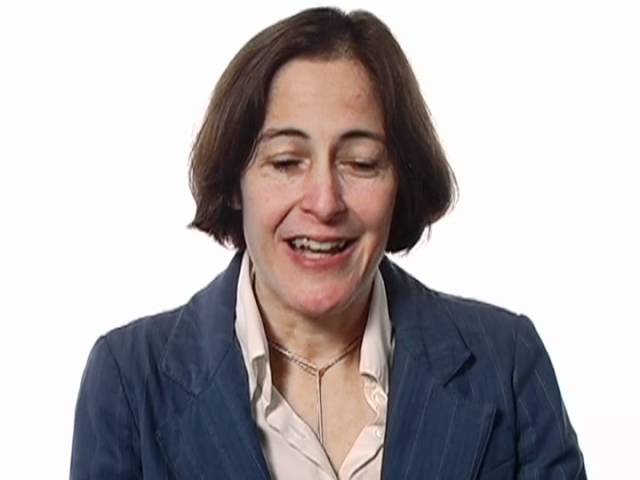 8:29Now Playing
Alane Salierno Mason Diagnoses Literature in Translation
New videos DAILY
Join Big Think Edge for exclusive videos
----------------------------------------------------------------------------------
Corporate publishing has dealt a strong blow to foreign writers trying to publish in English.
----------------------------------------------------------------------------------
Alane Salierno Mason:
Alane Salierno Mason is a senior editor at W. W. Norton & Company. She is an editor at Words Without Borders (WWB), the online magazine for international literature (www.wordswithoutborders.org).
----------------------------------------------------------------------------------
TRANSCRIPT:
Question: What factors contribute to the paucity of literature in translation?
Alane Salierno Mason: Well, one is that it’s harder to publish fiction of any kind. So, it’d be interesting to compare those figures with the figures for first novels, for instance, or first collections of short stories. It may be that just as many are being published, but fewer are being published by major publishers.
So in general, there’s a contraction of literary publishing that’s been going on since the contraction of independent bookstores, the mergers of many small publishers into larger corporations. So there are now far fewer major players in the publishing world than there were even when I started 20 years ago.
I think the fundamental change of attitude is when publishers started to look at each book as carrying its own weight financially. In the Golden Age of American publishing, publishers were well off and not looking to make more money to begin with. But for those who were in the business of profit-making they knew that only a few titles are really going to turn a profit and they expected that those few bestsellers would carry the more noble part of publishing, the serious literature that might not make any money.
But presumably as more NBA started to come into the workings of publishers and publishers became more corporate, we now believe that every book is to carry its own weight and needs to carry an equivalent share of the overhead cost as a big bestseller. So per-copy that book needs to contribute as much to salaries and health insurance and lights as a big bestseller, which really makes it much harder to publish books that might only sell a few thousand copies.
And almost all translation falls into that category and has the additional impediments of the additional cost for the translation and the fact that it is much harder to promote authors so in this period it’s become essential that authors promote themselves.
It’s very hard for a foreign language author coming in to this market with no experience with American entrepreneurship and self-marketing to be able to do that even if they speak English. And of course most of them are writing in their foreign language because that is the language they are comfortable in; they’re not comfortable writing or speaking in English. Some can speak in English but with enough of an accent that radio programs, or you, might not want to interview them. So, the foreignness becomes a handicap in more the promotion more than in the actual work.
Question: How does a foreign language manuscript arrive on the American market?
Alane Salierno Mason: The wonderful thing about publishing is that there is so much serendipity, there is no one path to publication.
In some cases, authors are living in the States because they have a teaching job at a university or they are journalists based in the United States for a period, and they formed connections that make it easier for them to get published in English.
In other cases they win a Nobel Prize and suddenly publishers are scrambling for the rights to works they have previously completely ignored.
What "Words Without Borders" has tried to do is provide the kind of roots publication that small magazines have served for English language authors; or even big magazines. So for instance, if an English-language fiction writer has a story published in the “New Yorker” and nobody has ever heard of that writer before, suddenly there’s a rush to published works by that author. Other English language writers have gotten known through the “Paris Review” or “Granta” or any number of well-regarded quarterlies.
There has been really no such thing for writers in translation, because the small journalists usually didn’t have people who could read foreign languages or didn’t have a large enough net of connections among translators. Some journalists have done some translation,
Read the full transcript at
Sentinel Indexing in Progress
Metadata and chapters are available. Claim extraction for this episode is pending.
All video content is delivered via YouTube embedded players in accordance with the YouTube Terms of Service. Sentinel provides research tools that promote discovery and accountability across political media.