Big Think
@bigthink·8.8M subscribers·10.1K videos
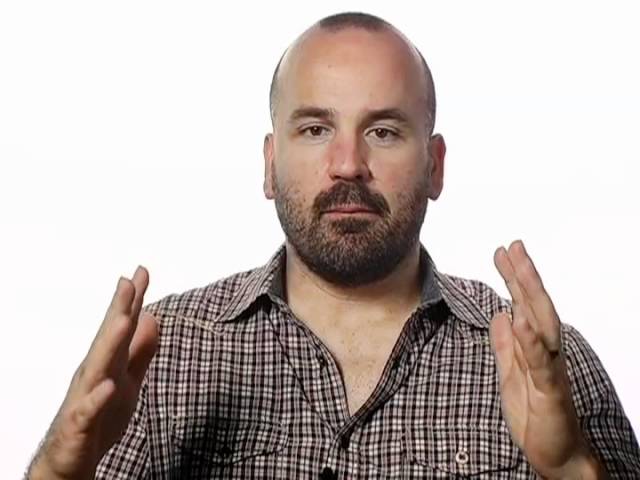
Bill Wasik Knows How to Spot a Hipster | Big Think
Posted
April 24, 2012
Views
885
Likes
7
Comments
2
Engagement
1.02%
April 24, 2012
885
7
2
1.02%
Every word spoken in this episode is indexed. Type any phrase to jump straight to the moment it was said.
Type any word or phrase that may have been spoken. Click a result to seek the player to that exact moment.
Try a name, a topic, or a quoted line
See what was published immediately before and after this episode.
 5:36Now Playing
Bill Wasik Knows How to Spot a Hipster
New videos DAILY
Join Big Think Edge for exclusive videos
----------------------------------------------------------------------------------
Conformity in hipster culture knows no bounds.
----------------------------------------------------------------------------------
Bill Wasik:
Bill Wasik is a senior editor of Harper's Magazine. He has also contributed to McSweeney's and served as Editor of The Weekly Week. Mr. Wasik revealed himself in 2006 to be the inventor of the flash mob, having anonymously organized the first recognized examples in New York City during the summer of 2003.
Wasik is the author of And Then There's This: How Stories Live and Die in Viral Culture (Viking, 2009). He is also the editor, with Roger D. Hodge, of Submersion Journalism: Reporting in the Radical First Person from Harper's Magazine (New Press, 2008)
----------------------------------------------------------------------------------
TRANSCRIPT:
Question: What is a hipster?
Bill Wasik: I use the word hipster in my book and used it just in conversation sort of reluctantly because it sounds like an insult and I don’t mean it as an insult, and when I’m talking about hipsters I’m not talking about some extreme group of ultra trendy people holed up somewhere in Williamsburg or Redhook—I’m not talking about some really small or weak group of people.
To me, I use the word to describe this kind of national or even international consensus that exists among city dwellers of a certain age and of a certain kind of cultural disposition; people who listen to Indie rock and people who dress in sort of somewhat similar ways.
And to me, as you say, what’s remarkable is how steady that kind of cultural cohort has been in their taste in the kind of uniformity of their taste and also just how undifferentiated it is from place to place to place. I mean, you talk about going to Williamsburg after four years and feeling like everything’s the same. What I find remarkable is that you go and see people in San Francisco or you see them in Chicago or you see them in Boston—all around the country—if you go and see your friends who were part of the same rough demographic you’ll find that they’re all listening to the same bands and they’re reading similar books. They’re interested in the same kind of culture and, to me, this is just one of the products of the internet. You know, it’s the fact that the internet has allowed people to find culture instantaneouslyand simultaneously. The fact that the internet has also allowed geography not to become too much of a factor in terms of what music you’re listening to or what newspaper you’re reading.
I mean, people in San Francisco are as apt to reading New York Times online as people in New York are and so you find that people are able to access the same sort of stuff and so on. So to me, when I talk about hipster culture to me it’s this kind of fascinating national urban middle brow and that it has remained remarkably stable in terms of how people dress and what people are into and that it is, it’s the way to be a kind of upwardly mobile, urban, sort of 20 and 30 something in America today. I’ve heard other people use the expression Indie Yuppie instead of Hipster and that maybe is a more aptexpression and then it gets at the kind of uniformity of this culture across the country.
Question: Why do so many hipsters look the same?
Bill Wasik: To me what’s replaced differentiators based on where you are or differentiators based on different sort of camps or schools, you know, I think that kind of young sort of intellectual culture or young sort of cultural camps use to break down in terms of, you know, in terms of camps or in terms or there will be geographical divisions.
To me today, what’s replaced all that is speed. There’s more churn. Part of the reason why there can be this uniformity and there can be this kind of sense of stasis that can last over essentially a whole decade is that there are constantly new cultural products that are being thrown to people again because of the internet, you know and this one of the main thesis of my book is that, you know, what the internet kind of culture does to us is it throws this barrage of novelty whether it’s new bands or it’s new books or it’s, you know, some new political argument or some new tiny little celebrity, you know, that will constantly being subject to these waves and waves of these new stories and that because of that we feel like we are living in this very dynamic way. We feel like we’re living in this very dynamic time and yet so much of what’s being thrown at us is forgettable, it’s disposable. A lot of it is stuff that we look back on at, you know, even just a few weeks after we find out about it and we sort of think,
Read the full transcript at
Sentinel Indexing in Progress
Metadata and chapters are available. Claim extraction for this episode is pending.
All video content is delivered via YouTube embedded players in accordance with the YouTube Terms of Service. Sentinel provides research tools that promote discovery and accountability across political media.