Big Think
@bigthink·8.8M subscribers·10.1K videos
Annette Gordon-Reed on Constitutional Law | Big Think
Posted
April 24, 2012
Views
199
April 24, 2012
199
Every word spoken in this episode is indexed. Type any phrase to jump straight to the moment it was said.
Type any word or phrase that may have been spoken. Click a result to seek the player to that exact moment.
Try a name, a topic, or a quoted line
See what was published immediately before and after this episode.
 2:30Now Playing
Annette Gordon-Reed on Constitutional Law
New videos DAILY
Join Big Think Edge for exclusive videos
----------------------------------------------------------------------------------
Annette Gordon-Reed analyzes those who see the Constitution through the strictest lens.
----------------------------------------------------------------------------------
Annette Gordon-Reed:
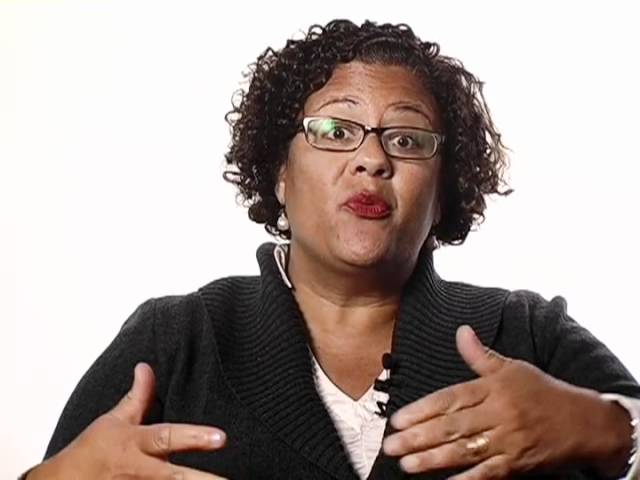
Annette Gordon-Reed is a professor of law at New York Law School and a professor of history at Rutgers. She earned a place in history with her first book, Thomas Jefferson and Sally Hemings: An American Controversy, which had an acclaimed but stormy reception when published in 1997, and which The New Yorker described as “brilliant.” She is recognized as one of our country’s most distinguished presidential scholars.Gordon-Reed spent her early career as an associate at Cahill Gordon & Reindel, and as Counsel to the New York City Board of Corrections. She speaks or moderates at numerous conferences across the country on history and law-related topics. Gordon-Reed is a graduate of Dartmouth College and Harvard Law School, where she was a member of the Law Review. She lives in Manhattan with her husband, daughter, and son.
----------------------------------------------------------------------------------
TRANSCRIPT:
Gordon-Reed: It’s a strange notion. It’s a strange idea and I think that, well, I think the framers of the constitution, Jefferson had ideas about the constitution but he was in France while it was being written. I think it’s a strange notion and I think they would be surprised if the idea that we would be sort of constraining ourselves based on, you know, what we thought they were thinking at that particular time. I'm not a strict constructionist in that way. Jefferson thought there should be a new constitution every 20 years, because you have to start over, you can’t have people. But we’ve come to view the constitution almost like a scared document and we don’t want to fool with it and so we keep trying to, you know, make things work under it and it’s really a tough thing, but I’m not a strict constructionist. I mean, I really think, you know, John Marshall said it’s a constitution we expound and with that suggest is that every generation of people has to come to its understanding of what liberty means and what, you know, due process means given where we are at this moment, so I don’t believe in that.
Question: How can we explain the Supreme Court’s constructionist positions?
Gordon-Reed: Well, they are thinking that if you, what is the, their argument be what is the constitution mean if, you know, the people who sit down and draft it and they say, you know, here’s what we want and here’s what we think constitute. This is why we’re putting this together. If you don’t agree with it they’d say amend it, because they know that that’s next to impossible to do politically. It’s very, very hard to do. So, I can understand the ideas what is the, you know, for people, there’s some people who think, well, rules are rules. And, you know, and if the rule on its plain face says one particular thing that’s why I’m going to stick with but it doesn’t make any sense to me given that it is a constitution, it’s not a [statue of book]. It is something that has to be interpreted for ourselves and since we can’t really know what those people were doing, that’s an…it’s an illusion to think that you can read the mind of James Madison perfectly or, you know, Alexander Hamilton.
Sentinel Indexing in Progress
Metadata and chapters are available. Claim extraction for this episode is pending.
All video content is delivered via YouTube embedded players in accordance with the YouTube Terms of Service. Sentinel provides research tools that promote discovery and accountability across political media.